
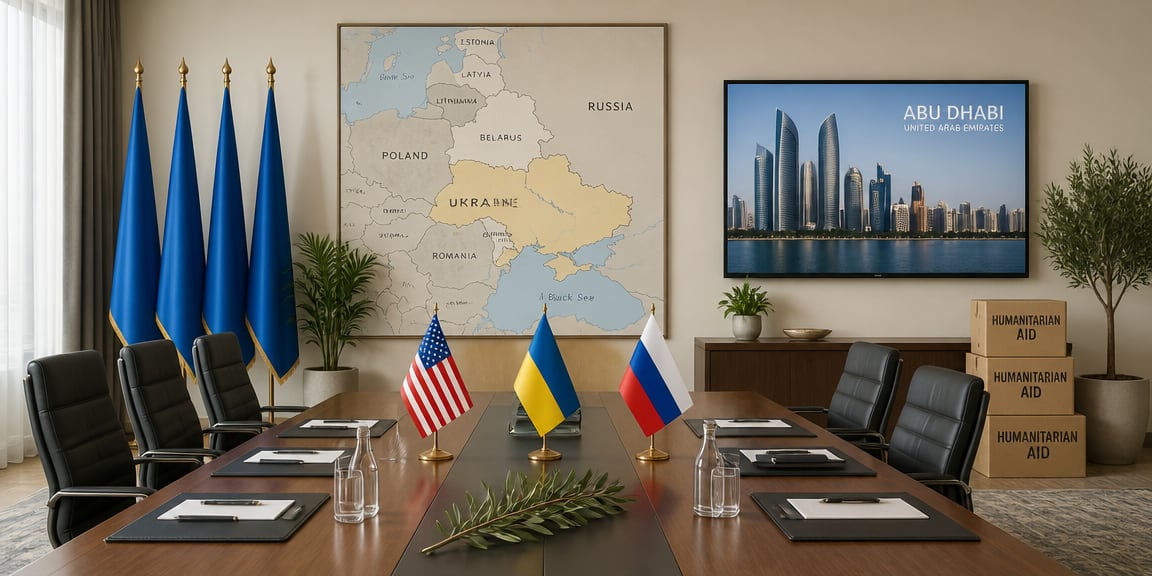
Melania Trump hosts Ukrainian and Russian envoys at the White House as the U.S. readies Abu Dhabi talks
Narrative Snapshot
Across outlets, there is broad acknowledgment that the U.S. first lady shepherded a localized humanitarian pause around Oleshky/Alyoshki and used it to convene representatives from Ukraine and Russia at the White House. U.S. outlets emphasize her convening power and messaging around an “enduring” truce, while European and Asian coverage layers this into a wider, U.S-led diplomatic track culminating in talks in Abu Dhabi. Russian and Ukrainian state-linked sources register the same facts while situating them within their own frames: Russian media describes the city as part of the “Russian region of Kherson,” whereas others call it “Russian-controlled” or “occupied.”
On process, most reports align that the U.S. will mediate technical-level talks on November 10–11, but they diverge on Europe’s role. U.S. and European reporting highlights parallel consultations in Brussels with EU and NATO on security guarantees and reconstruction, while Moscow reiterates that Europeans will be excluded from the Abu Dhabi room.
Coverage also embeds the meeting in an active-war context. Russian officials publicly reject any pre-talks ceasefire “respite,” and reporting highlights reciprocal strikes on energy infrastructure as winter approaches. Several outlets register skepticism that the diplomatic sequence will deliver a breakthrough, even as counterparts spotlight symbolic gestures around the White House event and its humanitarian framing.
What Happened
First Lady Melania Trump hosted representatives from Russia and Ukraine at the White House on November 5, following a six-day humanitarian ceasefire in Oleshky/Alyoshki credited across outlets to her office’s involvement. She urged that the pause become “more enduring,” calling the ceasefire a potential “spark” for broader peace. Russian participants were identified as Human Rights Commissioner Yana Lantratova and special envoy Kirill Dmitriev, with Kyiv represented by Human Rights Commissioner Dmytro Lubinets and ruling-party leader David Arakhamia. Lubinets presented her with the Order of Princess Olga, and Dmitriev offered a child’s drawing from Alyoshki. The White House event precedes U.S.-mediated, working-level talks between Russia and Ukraine in Abu Dhabi on November 10–11, led by U.S. envoys Steve Witkoff and Jared Kushner, focused on post-war security, de-escalation, humanitarian issues, and next steps. In parallel, U.S. negotiators have met European and NATO counterparts in Brussels, while Moscow has ruled out European participation in the Abu Dhabi format and rejected any general ceasefire ahead of talks.
Why It Matters
The episode underscores a U.S.-designed negotiating architecture that couples a trilateral room in Abu Dhabi with a separate European consultative track. Russian officials say the talks will remain strictly trilateral with U.S. mediation, while U.S. and European reporting points to Brussels consultations on Ukraine’s security guarantees, a post-war European security framework, and reconstruction. That bifurcation highlights a structural tension: operational bargaining among belligerents versus alliance-wide buy-in on outcomes. The first lady’s role in initiating a local ceasefire and hosting interlocutors reflects the elevation of unconventional diplomatic channels when formal processes are constrained, even as Russian officials stress unchanged strategic positions and “indivisible security” principles. With active strikes on energy infrastructure continuing, the process tests whether humanitarian arrangements can be scaled amid hostilities. The White House’s outline of a broader European security plan signals an effort to link battlefield de-escalation to a longer-term security architecture with transatlantic endorsements.
Diverging Narratives
Outlets agree on the facts of the White House meeting and the Oleshky/Alyoshki pause, but they differ on attribution, framing, and prospects. U.S. coverage credits Melania Trump’s initiative, with Fox News relaying her call for an “enduring” truce and NBC casting the event as a rare meeting she convened; the New York Times adds that both Moscow and Kyiv had reasons to deliver her a humanitarian win. The BBC notes her role was “key though unspecified.” Russian media emphasizes the ceasefire’s implementation in a locale it describes as part of the “Russian region of Kherson,” contrasting with other outlets’ “Russian-controlled/occupied” descriptors. On process, U.S. and European sources highlight Brussels consultations with EU and NATO on guarantees and reconstruction, while the Kremlin rules Europeans out of Abu Dhabi. Assessments of momentum vary: RFE/RL flags doubts about a breakthrough; Ukrainian commentary carried by Ukrinform argues talks will yield no tangible results and links expected Russian participation to a potential return to the Istanbul track; Al Jazeera reports President Zelenskyy’s hope that Abu Dhabi could open a path to a meeting with President Putin, even as Russian officials say their position is unchanged and combat will not pause.
What Happens Next
Abu Dhabi’s format and delegations will shape scope and leverage. Moscow has said Europe will not be at the table and has trailed its lineup, while U.S. officials say Witkoff and Kushner will lead on a post-war security, de-escalation, and humanitarian agenda. Analysts should watch final delegation announcements and opening statements for signals on whether “indivisible security” and mutual guarantees dominate, as Russian officials indicate, or whether Ukraine-centric guarantees foreground the talks as suggested by Brussels consultations. A second hinge is the military tempo: the Kremlin has rejected a ceasefire “respite,” and reporting notes continued strikes on energy infrastructure in both countries; any localized extensions akin to Oleshky would be an indicator of humanitarian scaling. A third is transatlantic alignment: the White House’s emerging European security framework, and EU/NATO reactions to it, will indicate whether outcomes from a trilateral room can be anchored in a wider security architecture acceptable to Kyiv’s partners.