
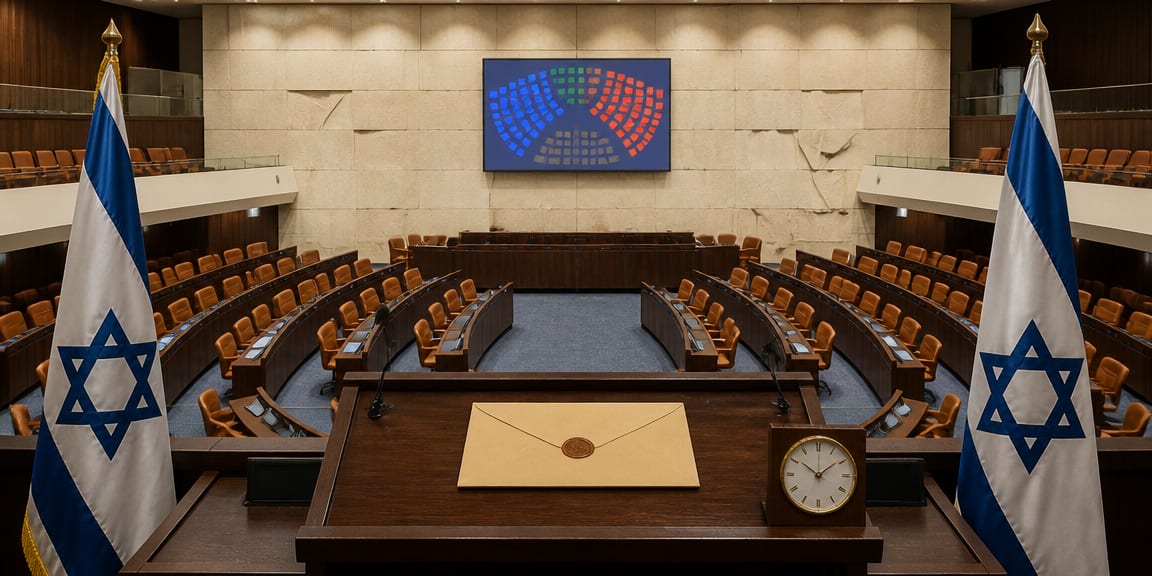
Herzog tasks Gadi Eisenkot with forming Israel’s next government after securing 67 recommendations
Narrative Snapshot
Across international and Israeli outlets, there is broad agreement on the arithmetic and the process: Gadi Eisenkot received 67 recommendations to Benjamin Netanyahu’s 46 in consultations with President Isaac Herzog, and now has 28 days, with a possible 14-day extension, to try to assemble a coalition. Reports from the Guardian, South China Morning Post, Sky News, and RT commonly frame the move as a setback for Netanyahu, while several Israeli outlets stress that endorsements do not translate automatically into a workable coalition, given mutual vetoes between blocs and internal red lines (RT; CGTN; Telesur; The Times of Israel).
Coverage diverges most over the role and legitimacy of Arab-led parties. Al Jazeera, Japan Times, and Middle East Eye emphasize the unprecedented 19 seats won by Arab-majority lists and their decision to back Eisenkot. France24 underlines that these endorsements increase the Arab parties’ leverage despite Eisenkot ruling out a coalition with them, and Le Monde notes that some opposition leaders remain unwilling to govern alongside Arab factions. Israeli commentary in Haaretz argues that linking up with Arab parties may be necessary to unseat Netanyahu and could help in restoring U.S. bipartisan support, while Fox News and Haaretz highlight Netanyahu’s warnings against a government “dependent” on parties he accuses of supporting terrorism.
A second axis of coverage centers on ultra-Orthodox leverage. The Bangkok Post, The Hindu, and Fox News report that at least one ultra-Orthodox party long aligned with Netanyahu withheld a recommendation, weakening his bloc. France24 reports signs of opposition flexibility on the ultra-Orthodox draft, a potential bridge to Haredi partners; The Times of Israel flags indications some Haredi factions could consider abandoning Netanyahu. Process-focused pieces from CGTN and Telesur spell out the legal fallback options if coalition efforts fail, while The Times of Israel critiques Herzog’s unusually public push for a unity government that many lawmakers rejected.
What Happened
Following consultations with party leaders after the October 27 election, President Isaac Herzog informed Gadi Eisenkot he would receive the first mandate to form a government, with the formal handover scheduled at the president’s residence on Sunday at 5 p.m. (The Guardian; La Repubblica; CGTN; Fox News). Eisenkot’s recommendations total 67 lawmakers, including 48 from four opposition parties and 19 from Arab-led lists; Netanyahu received 46, after an ultra-Orthodox party declined to back any candidate (CGTN; RT; Fox News; Bangkok Post; The Hindu). Under Israeli law, Eisenkot has 28 days to assemble a coalition, with a possible 14-day extension, after which the mandate can pass to another candidate or trigger steps toward new elections if no majority emerges (Middle East Eye; CGTN). Netanyahu called for a unity government “with all his allies in tow,” while Eisenkot’s camp said Likud could join a coalition “without extremists,” and Eisenkot publicly urged Likud and Religious Zionism to support his principles (The Times of Israel; Le Monde; ANSA).
Why It Matters
The tally reinforces a structural shift in Israeli coalition politics: Arab-led parties and ultra-Orthodox factions are pivotal to government formation when neither major bloc reaches 61 seats (Al Jazeera; CGTN). Arab parties’ 19 seats and their endorsements have increased their bargaining power despite resistance to formal inclusion in government by parts of the anti-Netanyahu camp (Japan Times; Le Monde; France24). Ultra-Orthodox parties’ withholding of support from Netanyahu highlights their kingmaker status and opens space for policy trades, notably around military conscription, as suggested by reported opposition flexibility (Bangkok Post; France24).
Institutionally, Herzog’s public-facing consultations and push for a unity option underscore the presidency’s informal convening role during deadlock, even as many lawmakers opposed that path (CGTN; The Times of Israel). For external stakeholders, Israeli commentary links an Arab-backed alternative to restoring elements of bipartisan support in Washington, though this would require compromises by all sides (Haaretz). Prolonged stalemate could force repeat elections, extending policy uncertainty on issues from security governance to budget priorities (CGTN; Telesur).
Diverging Narratives
One core divide is over reliance on Arab-led parties. Eisenkot has publicly declined to “join forces” with them even as their endorsements help deliver a paper majority (The Hindu; France24). Le Monde stresses several opposition figures resist governing with Arab factions, while Haaretz argues Eisenkot “has no choice” but to coordinate with them to remove Netanyahu. Al Jazeera, Japan Times, and Middle East Eye emphasize the Arab lists’ record gains and decisive backing, contrasting with Netanyahu’s portrayal of such dependence as intolerable, including warnings against “Hamas supporters” and “parties that support terrorism” (Haaretz; Fox News).
A second tension concerns the meaning of “unity.” Netanyahu seeks a unity government that includes his existing allies (The Times of Israel), while Eisenkot’s camp signals openness to Likud participation “without extremists,” and ANSA quotes Eisenkot’s “Free Ben Gvir” message, indicating exclusion of far-right figures. Finally, reporting varies on coalition feasibility: some international outlets cast the mandate as a major blow to Netanyahu (Sky News; SCMP), while others stress that endorsements are not outcomes and coalition arithmetic remains fraught amid mutual vetoes (RT; CGTN; Telesur; The Times of Israel).
What Happens Next
Three decision points will shape the next phase. First, whether ultra-Orthodox parties pivot: if Haredi factions that withheld recommendations move toward Eisenkot, watch for compromises on the draft issue, which France24 reports is already softening among potential partners; such a move would materially alter the coalition map. Second, the scope of “unity”: Eisenkot has invited Likud and even Religious Zionism to back a government based on his stated principles (Le Monde), while his party says Likud could join “without extremists” (The Times of Israel) and ANSA relays his call to exclude Ben Gvir; signals from Likud on accepting such conditions will be decisive. Third, external support versus participation: Eisenkot signaled readiness to govern as a minority (Haaretz), but Avigdor Lieberman rejected that path; whether Lieberman maintains or revises this stance, and what Arab-led parties seek in exchange for outside backing, will determine viability. If no path emerges within 28 days (plus any extension), Herzog can reassign the mandate or the Knesset may move toward new elections (CGTN).