
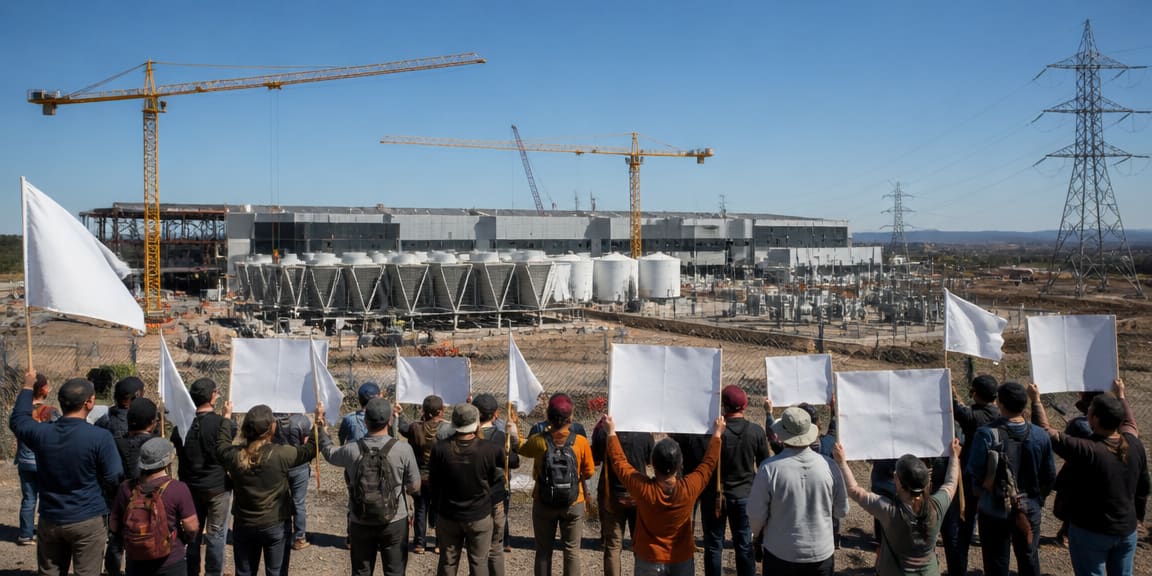
Activists breach Microsoft Amsterdam data center site amid Europe-wide protests
Narrative Snapshot
Across outlets, the event is situated within a continent-wide push to slow AI-driven infrastructure growth, with shared emphasis on resource strain but differing focal points. Deutsche Welle and Al Jazeera frame the Amsterdam action inside a coordinated European campaign objecting to the AI data center buildout’s pressure on water supplies, power grids, and climate targets, with protests planned in multiple countries. The Guardian underscores both the transnational dimension and on-site direct-action tactics, linking the backlash to perceived social and environmental harms of the AI boom. Middle East Eye adds a distinct throughline: an anti-war flank tying Microsoft’s cloud and AI capabilities to Israel’s operations in Gaza. RT concentrates on policing methods, scale, and site specifications, while Italy’s Corriere della Sera offers a spare account centered on the breach itself. Discrepancies—such as whether the project is “planned,” “scheduled to start,” or already “being built,” and whether the site is in Westpoort or Sloterdijk—reflect varied emphases rather than fundamental disagreement over the core facts.
What Happened
A Dutch direct-action protest led by Geef Tegengas targeted a Microsoft data center project in Amsterdam, with several hundred activists breaching the construction site on Friday, according to Middle East Eye and RT. The Guardian and RT describe clashes with police after demonstrators scaled fencing, climbed cranes, and lit flares; The Guardian also reports helium balloons tied to equipment. RT adds that police used tear gas and batons and that some protesters employed angle grinders to cut fencing. Middle East Eye, citing ANP, reports 150–200 arrests, with others leaving voluntarily, and says construction work was halted for the day. The Guardian places the site in Westpoort, while Middle East Eye and RT cite Sloterdijk. Deutsche Welle and Al Jazeera situate the action within coordinated protests across Europe over the water and power demands of AI data centers.
Why It Matters
The confrontation highlights a growing collision between Europe’s rapid AI infrastructure expansion and environmental and resource constraints. Deutsche Welle reports organizers are calling for a pause in data center construction across Europe, arguing the AI buildout threatens water supplies, power grids, and climate goals. Al Jazeera similarly foregrounds concerns over the massive computing power and water required by such facilities. The Amsterdam action—linked by The Guardian to simultaneous demonstrations across Europe—signals a transnational movement pressing for tighter scrutiny of siting, permitting, and cumulative resource impacts of hyperscale data centers. Middle East Eye’s coverage also shows how climate and justice groups are aligning with anti-war activists around AI’s role in conflict, expanding the coalition and the policy arenas implicated. For decision-makers, the issue spans local land-use and utility planning, national climate commitments, and the governance of AI-related critical infrastructure.
Diverging Narratives
Outlets concur that demonstrators breached the Microsoft site and clashed with police, but they diverge on framing and detail. Deutsche Welle and Al Jazeera emphasize Europe-wide mobilization against the resource intensity of AI data centers, while The Guardian adds specific on-site tactics and locations and situates actions outside the Amsterdam fence and across Europe the same day. Middle East Eye centers the organizers’ linkage of the data center to “AI warfare” and Israel’s operations in Gaza, quoting a spokesperson who described the project as facilitating “genocide,” and reporting that construction was halted for the day. RT highlights more forceful policing—tear gas and batons—and provides scale and specifications, including that as many as 500 activists entered the area, along with a 78-megawatt plan developed by Pure Data Centres for Microsoft. Corriere della Sera reports a briefer account of an intrusion at a site where work was scheduled to start. Descriptions of the project stage vary—“planned,” “scheduled to start,” and “being built”—and the location is identified as both Westpoort and Sloterdijk, but all accounts place the breach in Amsterdam within a broader European protest wave.
What Happens Next
Key decision points flow from the protesters’ stated demand to halt construction and from the wider call to pause European data center expansion. If local authorities or the developer proceed unchanged, the coordinated campaign—described by Deutsche Welle as involving actions in 16 countries and by Middle East Eye as part of a two-day European mobilization—signals capacity for continued disruptions. A pause or review would address the core demands cited by DW and RT but could spur counter-pressures tied to AI infrastructure timelines. Analysts should watch for official arrest figures and any legal follow-up after the 150–200 detentions reported by Middle East Eye via ANP, municipal or national responses to moratorium calls, and any statements from Microsoft or the project developer named by RT. Monitoring whether protests broaden beyond environmental frames to encompass AI-in-war claims, as reported by Middle East Eye and RT, will indicate coalition durability and escalation potential.