
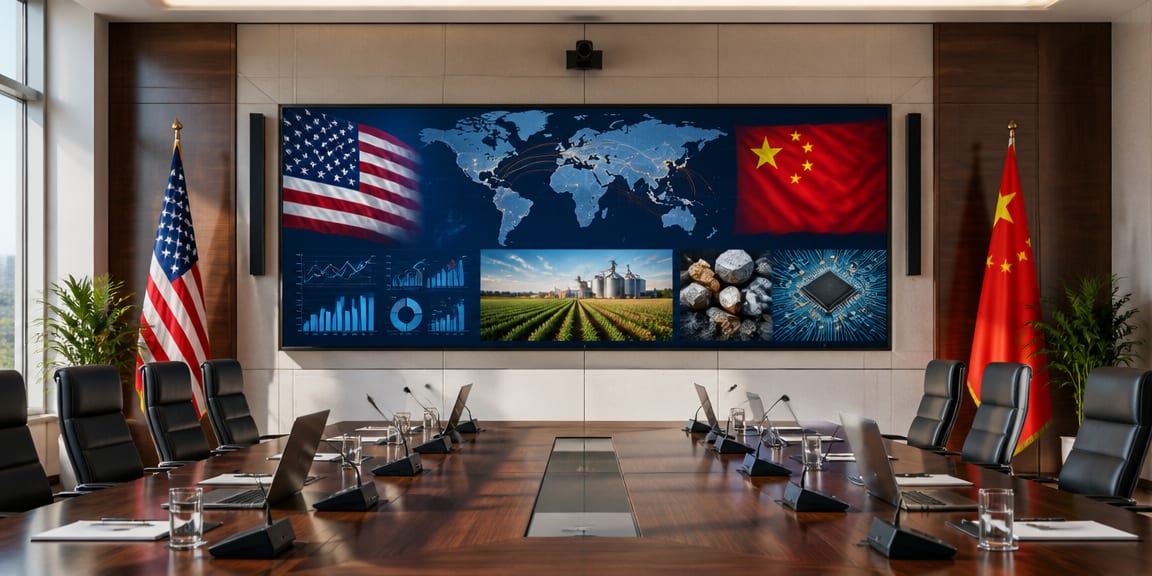
US presses Beijing on Busan accord in call ahead of APEC
Narrative Snapshot
Across outlets, the center of gravity is a high-level economic call used to restate priorities before leaders meet at APEC. Al Jazeera and Deutsche Welle place the Busan accord at the heart of the exchange, describing a U.S. push for implementation, while Deutsche Welle is the only outlet to specify agriculture and rare earths as focal commitments. The Hindu notes that both sides raised trade “concerns,” reflecting a narrower, procedural readout rather than the substance of disagreements.
Chinese and Latin American coverage accent different friction points. CGTN confirms the principals and format without characterizing demands, whereas Clarín foregrounds Beijing’s discontent with recent U.S. restrictions and highlights new sanctions on Chinese firms over Cuba links, presenting these as complicating the run‑up to APEC. The South China Morning Post shifts lens to the political backdrop, framing the upcoming Trump–Xi encounter through the U.S. president’s “lame‑duck” status after Republican midterm losses, a context absent from other reporting.
What Happened
Chinese Vice Premier He Lifeng held a video call with U.S. Treasury Secretary Scott Bessent and U.S. Trade Representative Jamieson Greer on Friday, according to Chinese state media. U.S. outlets and European reporting say Washington used the call to press Beijing to meet commitments from the 2025 Busan accord, which Al Jazeera describes as aimed at easing tariffs and technology restrictions and, per Deutsche Welle, includes agricultural purchases and reliable rare earths supply. Beijing, for its part, raised concerns over U.S. “economic, trade restrictive” measures, Deutsche Welle reports. Clarín adds that China conveyed displeasure about new U.S. sanctions on Chinese companies tied to Cuba, even as both sides sought to manage differences before the Asia‑Pacific Economic Cooperation summit. The South China Morning Post reports Donald Trump is expected to meet Xi Jinping on APEC’s sidelines in two weeks.
Why It Matters
The call situates the Busan accord as the operative framework for de‑escalation: Al Jazeera notes progress on easing tariffs and technology curbs hinges on China’s fulfillment of its commitments, and Deutsche Welle points to agriculture and rare earths as concrete benchmarks that intersect with food security and strategic materials supply. At the same time, China’s stated concerns over U.S. restrictive measures, echoed by Clarín’s reference to new sanctions on Chinese firms for Cuba links, underscore how ongoing unilateral actions can complicate implementation of bilateral undertakings. With an APEC leaders’ meeting imminent, The Hindu’s emphasis on both sides airing “concerns” suggests process continuity, while the South China Morning Post’s “lame‑duck” framing highlights a U.S. domestic context that could shape negotiating bandwidth and optics. For officials and multilateral fora, this mix of framework‑driven expectations and parallel coercive tools poses coordination and sequencing challenges.
Diverging Narratives
Accounts differ on emphasis and framing rather than on the basic facts of the call. Al Jazeera and Deutsche Welle center on U.S. leverage through the Busan accord and specify deliverables, with Deutsche Welle naming agricultural purchases and rare earths supply. Chinese state media offers a sparse, transactional readout that confirms the engagement but not the demands. Clarín, meanwhile, highlights Beijing’s dissatisfaction with recent U.S. moves and makes the sanctions on Chinese firms with Cuba links part of the immediate diplomatic context, suggesting friction that could affect near‑term confidence. The Hindu adopts neutral language about “concerns,” reflecting a cautious official tone. The South China Morning Post introduces a different axis of interpretation, focusing on Trump’s weakened post‑midterm standing as he heads toward an expected meeting with Xi. Unresolved in the coverage are thresholds and timelines for what would constitute adequate “fulfillment” of Busan commitments and how, in practice, those would interact with the persistence of U.S. restrictions.
What Happens Next
Two decision points emerge from the sources. First is whether Beijing demonstrates movement on Busan‑related deliverables, particularly agricultural purchases and rare earths supply highlighted by Deutsche Welle. Al Jazeera’s account that easing tariffs and technology restrictions depends on fulfillment implies that any verifiable steps from China could shape the tempo of relief; absent such steps, pressure to maintain restrictions will persist. Second is how Washington calibrates its “economic, trade restrictive” toolkit, including the Cuba‑related sanctions noted by Clarín, given Beijing’s stated objections reported by Deutsche Welle. The run‑up to APEC, identified by Clarín as a period for managing differences, and the expected Trump–Xi sidelines meeting referenced by the South China Morning Post, are the immediate venues to watch for readout language on Busan commitments, references to rare earths and agriculture, and any linkage—explicit or implied—between compliance signals and adjustments to tariffs or tech curbs.