
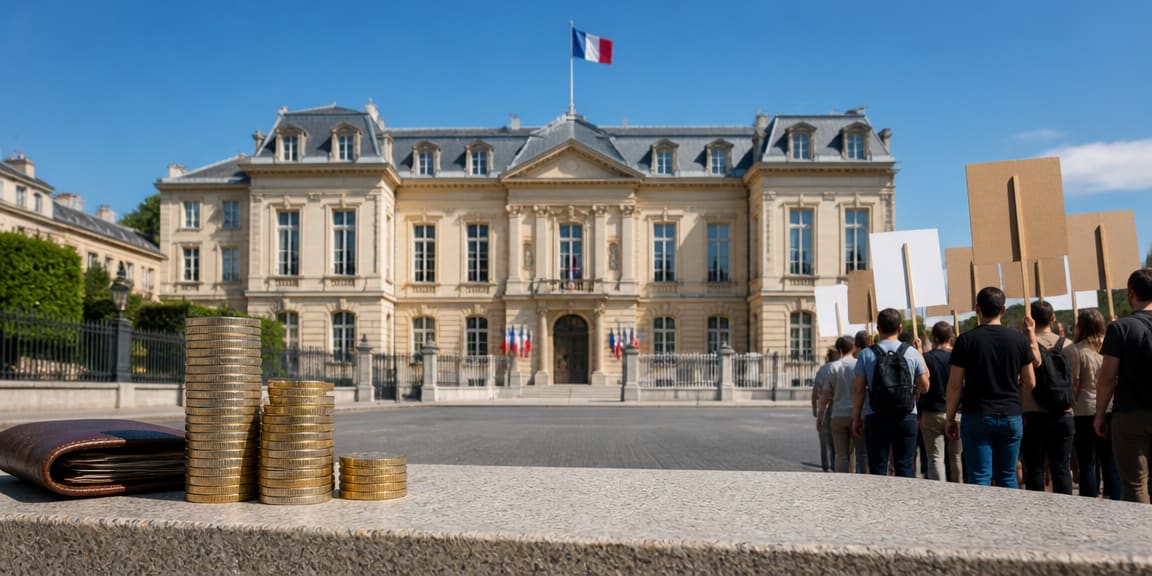
France advances minimum-wage increase to December as unions set November 17 strike
Narrative Snapshot
Across French and international outlets, coverage clusters around three frames. French reporting centers on the measure’s technical contours and immediate labor response: the 1.6% Smic increase dated to December 1 and the government’s claim that it is historically significant, met by union accusations that the offer amounts to “crumbs” and a new day of strikes (Le Monde; France24; Telesur English). International outlets widen the lens to timing and political context, linking the move to unrest ahead of the presidential election (Al Jazeera English; Clarín).
There is also divergence on causes and stakes. Hong Kong-based coverage emphasizes the protest sequence—initially over underfunded schools, escalating into October 17 riots that caught security forces off guard—underscoring a public-order dimension (South China Morning Post). France24 adds an institutional reading: even a timely wage rise offers, at best, a reprieve from a deeper crisis of political faith, with demonstrations sustained by disillusionment rather than only purchasing-power grievances.
Finally, sources differ on quantification and perceived impact. Telesur English reports a net minimum of €1,502 and a €24 monthly gain tied to the 1.6% rise, while the CGT’s Sophie Binet characterizes the tangible improvement as closer to “five euros.” By contrast, the prime minister’s framing stresses historical magnitude—“the second most significant increase in twenty years”—a claim unions immediately contested (Le Monde; Telesur English).
What Happened
On November 9, Prime Minister Sébastien Lecornu announced that France would bring forward a planned minimum-wage increase to December 1 from January to address a cost-of-living crisis (South China Morning Post; France24). Following a social conference at Matignon, the government set the rise at 1.6%, which Lecornu described as the second most significant increase in two decades, an assertion unions disputed (Le Monde). France24 reported that unions dismissed the move as “crumbs.” Telesur English cited labor-ministry details placing the new monthly net Smic at €1,502, a €24 increase over the level unchanged since June, and relayed CGT leader Sophie Binet’s view that the effective gain would be negligible. The CGT called for a national day of strikes and marches on November 17, appealing to employees, retirees, and young people; a public-service inter-union also urged action that day (Le Monde; Telesur English). Unrest had intensified after protests that began over underfunded schools evolved into broader riots on October 17 (South China Morning Post).
Why It Matters
The move tests whether targeted wage policy can stabilize a volatile pre-electoral environment and revive confidence in political institutions. Multiple outlets link the decision to unrest ahead of the presidential election, with Clarín stressing deep polarization between far-right and far-left camps six months before the vote, and Al Jazeera English noting the government’s bid to defuse tensions before campaigning intensifies. France24’s discussion with economist Renaud Foucart argues that fiscal constraints, a minority government, and declining purchasing power are now secondary to a broader erosion of faith in politics, suggesting that incremental adjustments may not restore institutional legitimacy.
For policymakers, the episode spotlights the capacity of France’s social-dialogue machinery to channel demands when unions deem offers inadequate and mobilize cross-sector action. The government’s claim of a historically large uptick—challenged by unions—raises questions about how official measures are communicated and validated, and whether wage-setting tweaks can meaningfully address cost-of-living pressures without broader policy moves that unions and students are demanding (Le Monde; Telesur English; France24).
Diverging Narratives
Government messaging presents the accelerated increase as both timely and significant. Lecornu framed the 1.6% rise as the second most substantial in twenty years and advanced its start date by a month following a social conference, positioning the decision as responsive and anchored in dialogue (Le Monde). French and international outlets alike describe the overarching goal as calming unrest tied to the cost of living (South China Morning Post; France24; Al Jazeera English).
Union leaders reject that framing. The CGT labeled the offer “crumbs” and called for a nationwide strike and demonstrations on November 17, urging participation from workers, retirees, and young people (France24; Le Monde; Telesur English). Telesur English reports that union leaders argue the concrete gain for workers is minimal—Binet cited a figure near five euros—contesting both the adequacy and presentation of the measure.
Analytical coverage introduces a systemic interpretation. France24’s Foucart contends the key driver is disillusionment with politics itself, not merely wage levels, implying that protests may persist irrespective of marginal policy changes. Meanwhile, international outlets emphasize electoral timing and polarization as central context, particularly Clarín’s account of a polarized field six months before the presidential vote, framing the wage move as part of a broader pre-election risk calculus (Al Jazeera English; Clarín).
What Happens Next
Two near-term decision points will shape trajectory. First is the November 17 mobilization: participation across public services and beyond, as urged by an inter-union and the CGT, will indicate whether opposition to the 1.6% measure consolidates or diffuses (Le Monde; Telesur English). Signals to watch include student mobilizations explicitly encouraged by CGT leadership and cross-sector adherence.
Second is the government’s response to union demands for “concrete” measures beyond the advanced Smic timetable. Any further proposals emerging from Matignon, or new details on purchasing-power support, would mark whether authorities are prepared to go beyond the announced revaluation (Telesur English; Le Monde). Implementation specifics also matter: confirmation of the December 1 start, the net figure of €1,502, and official handling of the contested “second most significant” claim will shape credibility (Telesur English; Le Monde). Analysts will also track whether protests persist into the pre-election period, as France24’s analysis links continued mobilization to deeper political disillusionment rather than a single policy lever.