
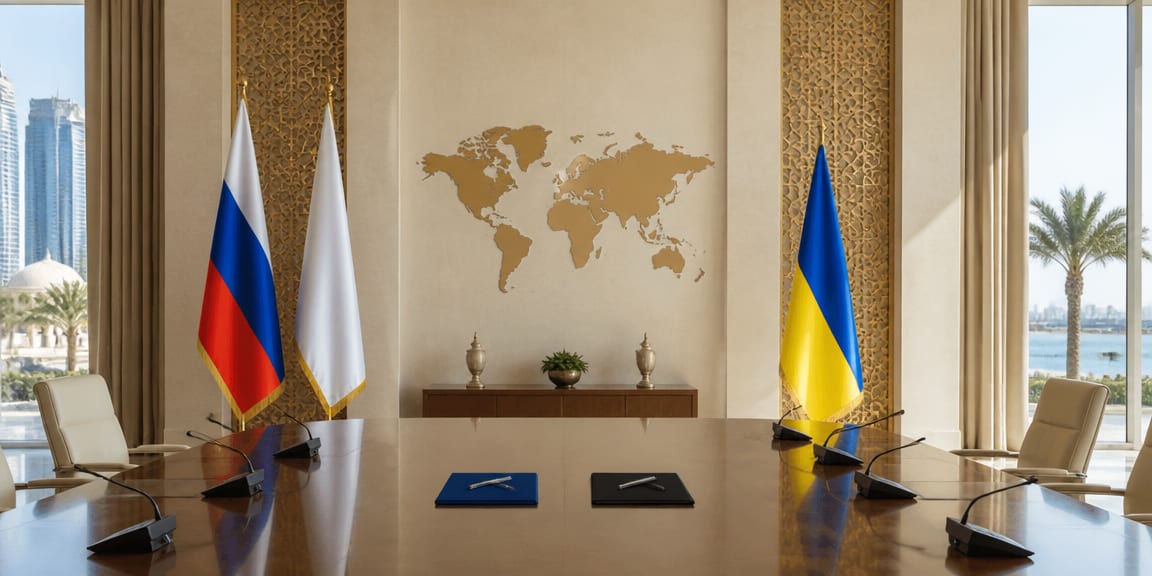
Russia and Ukraine agree in principle to a large prisoner exchange after U.S.-mediated Abu Dhabi talks
Narrative Snapshot
Across outlets, there is broad confirmation that Moscow and Kyiv reached an agreement in principle in Abu Dhabi to conduct a large prisoner exchange, with both sides publicly validating the outcome of the U.S.-mediated talks. Where they diverge is on scale and specificity: Ukrainian reporting foregrounds President Volodymyr Zelensky’s public mention of a “1,000 for 1,000” or “1,500 for 1,500” format, while Russian officials stress that no specific figures have been approved and that procedural steps remain before an exchange can occur. Russian interlocutors also describe the prospective swap as among the largest of the war, underscoring its symbolic weight, even as they avoid numbers.
Outlets differ on the breadth of the agenda beyond the humanitarian track. Several emphasize that progress was limited to the prisoner issue, citing the absence of broader breakthroughs and a persistent trust deficit, while others report that discussions also touched on European security questions. There is also inconsistency on European participation in Abu Dhabi: one account highlights European representatives in the talks, while another quotes the Russian delegation head saying there was no contact with European representatives and no European proposals received. The U.S. role is a constant across coverage, with reporting that American envoys will continue shuttle diplomacy with separate meetings with the Russian and Ukrainian presidents.
What Happened
After two days of U.S.-mediated talks in Abu Dhabi on November 10–11, Russian and Ukrainian delegations said they had agreed in principle to conduct a large-scale exchange of prisoners of war. Russia’s lead negotiator Vladimir Medinsky confirmed the understanding and said Moscow does not discuss details before final approval. Ukraine’s Defense Minister Rustem Umerov also confirmed the agreement, and President Volodymyr Zelensky had a day earlier publicly floated possible formats of “1,000 for 1,000” or “1,500 for 1,500.” Russian Lieutenant General Alexander Zorin called the prospective swap one of the largest of the conflict, adding that all procedural issues must be agreed before setting numbers and suggesting the exchange could occur within two to three weeks once approvals are in place. Media noted this was the first such trilateral meeting since February, with U.S. envoys Jared Kushner and Steve Witkoff scheduled to meet separately with Vladimir Putin and Zelensky. Reporting also recalled that thousands of POWs have been exchanged over the almost five-year war.
Why It Matters
The understanding in Abu Dhabi signals that humanitarian confidence-building remains viable despite sustained combat operations and scarce trust. Multiple accounts underline that the negotiations prioritized humanitarian issues and security, with Russian officials reiterating confidentiality until agreements are finalized. The resumption of formal engagement after months—described as the first meeting since February or in nine months—suggests that structured channels can still yield discrete outcomes even as broader settlement talks stall.
The U.S. role as mediator, coupled with planned follow-on meetings with both leaders, points to continued American convening capacity. Some reporting also indicates that European security questions were discussed, with one account describing a “mutual understanding” on a future framework, while others register no wider breakthrough. For policymakers, this mix highlights the practical utility of narrowly scoped processes to manage wartime risks, the limits imposed by a trust deficit, and the unresolved question of who is at the table—issues that will shape whether subsequent talks remain confined to humanitarian measures or broaden into more comprehensive formats.
Diverging Narratives
Ukrainian and Western reporting gives public visibility to potential swap sizes, citing Zelensky’s “1,000 for 1,000” or “1,500 for 1,500,” while Russian officials insist no figures are agreed and stress that procedures and approvals must come first. Moscow’s representatives describe the prospective exchange as one of the largest of the conflict but maintain that details will be announced only after agreement, underscoring a tighter communications posture.
On scope and momentum, several outlets frame the outcome as significant yet limited: they note little else by way of concrete breakthroughs and attribute the ceiling on progress to a persistent lack of trust. By contrast, another account reports that a future European security framework was a central theme and that a mutual understanding was reached, even as it confirms that negotiations will continue. Coverage also diverges on who participated: one report mentions European representatives in Abu Dhabi, while the Russian delegation head is quoted as saying there was no contact with European representatives and no European proposals were received. Finally, language varies from “peace talks” to “trilateral talks,” reflecting different editorial framings of a meeting that, by most accounts, produced a humanitarian step without resolving larger political issues.
What Happens Next
The immediate hinge is procedural: Russian officials say the swap requires approvals and detailed agreement on the mechanism before figures are set. Analysts should watch for formal confirmation of numbers and timelines, which Russian negotiators have said will be disclosed only once finalized, and for whether the indicative two-to-three-week window holds once procedures are complete. A second hinge is diplomatic format. Negotiators indicated talks will continue, U.S. envoys are set to meet separately with Putin and Zelensky, and a Ukrainian negotiator argued for making follow-up sessions multilateral rather than trilateral. Signals to watch include whether subsequent meetings expand participation, whether European security topics recur in official readouts, and whether references to “humanitarian issues and security” broaden into additional measures beyond POWs. Separately, press accounts that no major breakthrough was achieved suggest that absent visible trust-building, further outcomes may remain limited to discrete humanitarian steps.