
DR Congo’s Ebola response falters six months in, with frontline shortfalls and insecurity compounding spread
Narrative Snapshot
Across outlets, there is broad alignment that operational gaps at the point of care are driving continued transmission. Multiple reports relay Doctors Without Borders’ assessment that funds are not reaching frontline teams, with unpaid staff, training deficits, and supply shortages undermining response capacity. Complementing this, Russian and Japanese coverage underscores structural weaknesses inside facilities, including bed shortages and hospital-based transmission, suggesting health-system stress rather than isolated lapses.
A second emphasis clusters around security. African and global outlets report lethal attacks in North Kivu, including mass killings attributed locally to the ADF, with one raid forcing confirmed and suspected Ebola patients and high‑risk contacts to flee. This frames the outbreak not only as a public health emergency but also as an access and protection crisis that disrupts surveillance, treatment, and infection control.
Finally, scope and scale are documented through evolving case tallies and geographic spread. Pan‑regional reporting notes thousands of infections and deaths, while Latin American coverage cites official data above 11,000 cases, nearing half the lethality of the 2014–2016 West Africa epidemic. Chinese coverage adds the virological detail of a Bundibugyo‑strain outbreak and highlights North Kivu’s burden, while other accounts identify Ituri as the broader epicenter within a multi‑province spread.
What Happened
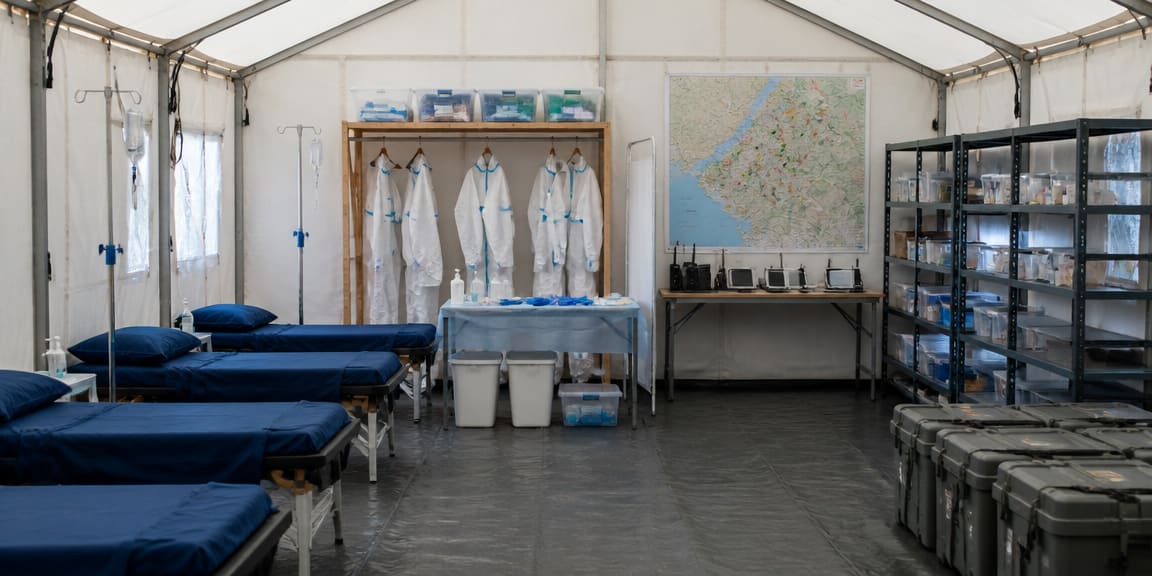
Six months after the Democratic Republic of the Congo declared its latest Ebola outbreak on May 15, Doctors Without Borders (MSF) says transmission is still out of control and many cases are likely being missed, with hospital-based spread “rife.” MSF reports that large sums of international aid are not reaching the front line, leaving medical staff unpaid, insufficiently trained, and short of essential supplies. Parallel accounts describe shortages of beds at treatment centers and logistical problems that complicate care. Insecurity has intensified pressures on the response: armed attacks in North Kivu killed scores of civilians, and one raid forced a confirmed Ebola patient, several suspected cases, and high‑risk contacts to flee a hospital, disrupting containment. Official data cited by regional media put confirmed cases above 11,000 and deaths above 5,300 by November 9, with eight provinces affected and Ituri identified as the epicenter.
Why It Matters
The reports point to a dual systems challenge: financing and security. When “millions of Ebola dollars” do not reach frontline providers, donor effectiveness and oversight mechanisms become central to outbreak control, raising questions about disbursement chains, in‑country coordination, and accountability. Weak infection prevention and control inside hospitals and persistent bed shortages indicate institutional capacity gaps that national authorities and partners must address to restore safe care and community trust. Simultaneously, attacks in North Kivu—linked locally to the ADF, which has pledged allegiance to ISIL—underscore how humanitarian access and health worker protection are now integral to public health outcomes. With infections spread across eight provinces and official contact‑tracing below full coverage, regional bodies such as Africa CDC and international agencies face a containment problem that spans governance, logistics, and security operations, not just epidemiology.
Diverging Narratives
Outlets differ in the weighting of causes behind the faltering response. European, Pan‑African, and Brazilian coverage foreground MSF’s critique that substantial aid is not reaching frontline staff, with the BBC emphasizing unpaid workers, inadequate training, and supply shortages and AllAfrica/Folha stressing the gap between pledges and delivery. Russian reporting highlights capacity and logistics—treatment bed shortages and operational hurdles—without centering financing flows. Japanese reporting emphasizes missed cases and nosocomial transmission, suggesting surveillance and infection‑control deficits inside facilities.
Security-related accounts also vary in detail and tolls. African and Qatari outlets document deadly attacks in North Kivu, with Al Jazeera reporting at least 33 killed and Daily Nation citing a separate incident that left 66 dead, while Chinese coverage adds operational consequences, including the forced flight of confirmed and suspected patients and high‑risk contacts. On epidemiology, Chinese reporting notes North Kivu accounts for about half of new infections, whereas Latin American coverage frames Ituri as the broader epicenter amid eight affected provinces. Case counts differ by cut‑off date: some reports cite “more than 10,000” cases and 5,000 deaths, while official data relayed days later place totals above 11,000 and 5,300, respectively.
What Happens Next
Key decision points center on financing channels, facility readiness, and security access. Donors and implementing partners must determine whether and how to adjust disbursement mechanisms so funds reach frontline staff; evidence to watch includes timely salary payments, documented delivery of supplies, and MSF or BBC‑style updates on training coverage. Health authorities’ choices on infection prevention, bed capacity, and logistics will be visible in reductions in hospital‑acquired transmission, alleviated bed shortages, and improved contact‑tracing performance relative to the roughly 80 percent rate reported. Security conditions will shape access: further attacks like those in North Kivu, or measures that protect clinics and patients, will affect continuity of care and isolation adherence—especially where patients and high‑risk contacts have previously fled. Updated case and fatality figures from national public health authorities will indicate whether these interventions are altering transmission trajectories across the eight affected provinces.