
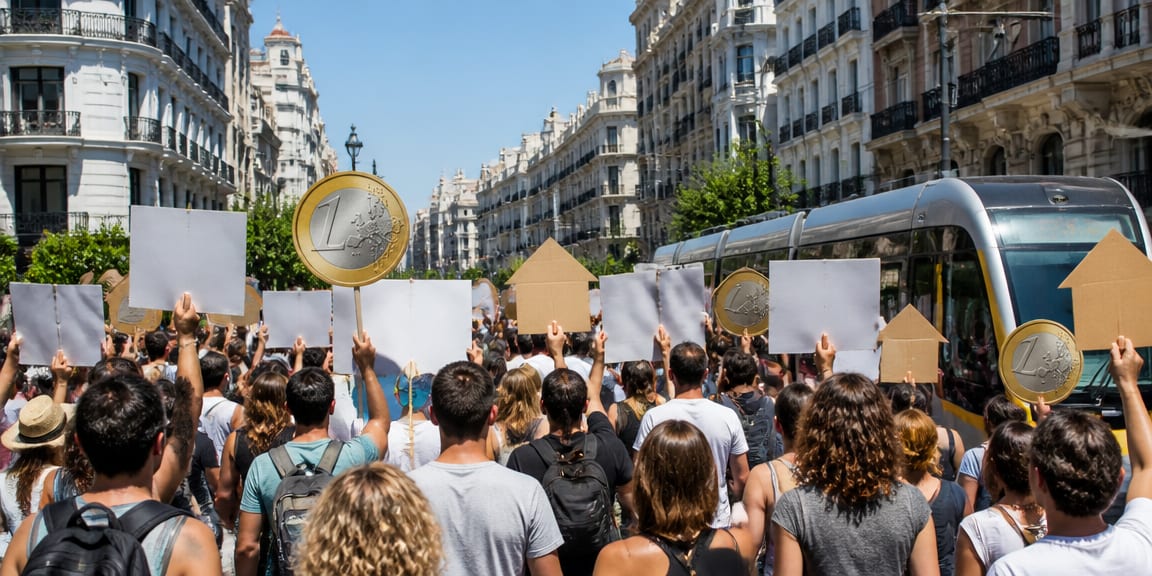
Spain’s first general strike in 14 years spotlights housing pressures, mass participation, and pockets of unrest ahead of Nov. 29 vote
Narrative Snapshot
Across outlets, there is broad agreement on the strike’s scale and nationwide reach, with disruption to transport and industry emphasized consistently. Multiple reports describe “millions” participating (The Guardian; South China Morning Post), while some quantify four million workers—about one-fifth of the workforce—and cite large marches in Madrid and Barcelona (CGTN; France24). Spain’s main unions, UGT and CCOO, are repeatedly identified as organizers, with early claims of widespread stoppages in strategic sectors (The Hindu).
Coverage converges on housing affordability as the core driver, but several sources extend the frame to purchasing power and public services. The Guardian and South China Morning Post center housing costs; Folha de S.Paulo and Telesur English tie the action to loss of purchasing power and broader living conditions; Le Monde highlights the contrast between solid macroeconomic indicators and daily hardship, placing the issue squarely in the election campaign.
Security assessments diverge in tone. France24 stresses that actions were mostly peaceful before evening clashes in Barcelona and some incidents in Madrid, while CGTN details arrests, property damage, and police use of tear gas in Barcelona, and Sky News emphasizes fiery unrest. Ahead of the strike, Fox News relayed U.S. Embassy warnings of potential violence and transport disruption, underscoring the risk-management lens applied by foreign advisories.
What Happened
On November 11, Spain held its first general strike since 2012, a 24-hour stoppage organized by UGT and CCOO with support from tenants’ associations and additional unions, demanding action on housing and living costs (The Guardian; Telesur English, Nov. 13; Telesur English, Nov. 11). Picket lines formed despite stormy weather as transport systems slowed and factories reported delays across the eurozone’s fourth-largest economy (South China Morning Post; Al Jazeera English). CGTN and France24 reported about four million participants—roughly one-fifth of the workforce—with major marches in Madrid and Barcelona; The Hindu cited significant stoppages in strategic sectors. By evening, clashes broke out in parts of Barcelona, where masked demonstrators set bins ablaze and smashed windows as police deployed tear gas; CGTN reported at least 73 arrests nationwide by 2100 GMT linked to over a thousand incidents. France24 described the day as mostly peaceful before those confrontations.
Why It Matters
The strike consolidates housing affordability, wages, and prices into a single mobilization, signaling a shift from “classic” workplace-only disputes toward household-level pressures, as framed by UGT’s leadership and the slogan “Wages. Housing. Prices.” (Telesur English, Nov. 13). Le Monde underscores a structural mismatch between Spain’s macroeconomic performance and the lived experience of many households, a gap that has moved to the center of the election campaign. Internationally, the action sits within a wider European cycle of labor and cost-of-living mobilizations, with mass industrial walkouts in Germany over pay and security (RT) and a new French strike day called for November 17 over wage measures (Telesur English, Nov. 9). For decision-makers, the episode tests institutional capacity to address acute housing constraints and purchasing power while managing public order and service continuity; it also raises cross-border considerations visible in consular risk advisories (Fox News).
Diverging Narratives
Participation and scale are reported with different levels of precision: several outlets cite “millions,” while CGTN and France24 offer a specific estimate of four million workers and large city turnout figures. Characterizations of the day’s tone also diverge. France24’s “mostly peaceful” framing with late-day clashes contrasts with CGTN’s focus on arrests and numerous incidents and Sky News’ emphasis on fiery confrontations. Telesur English’s earlier report describes police repression in multiple cities, while CGTN details tear gas use during evening disturbances in Barcelona; these accounts align on confrontations but differ in emphasis and geographic breadth.
The strike’s purpose is framed variably. The Guardian, Al Jazeera English, and South China Morning Post center housing affordability; Folha de S.Paulo and Telesur English add purchasing power and public services; Telesur English (Nov. 13) details demands including rent caps, higher wages, and price controls. Le Monde situates discontent within an economy performing well by aggregate indicators, while South China Morning Post and The Guardian underscore electoral stakes, noting the possibility of far-right gains in the November 29 snap elections. Fox News, relaying the U.S. Embassy, presents the story primarily through a security and disruption lens for travelers.
What Happens Next
The immediate hinge is political: with elections on November 29, outlets report that housing and living costs now anchor the campaign agenda (Le Monde; The Guardian; Al Jazeera English). Analysts should watch for concrete housing proposals or concessions from major parties and whether union-backed demands—rent caps, wage increases, and price controls—are taken up or rebuffed (Telesur English, Nov. 13). Organizers’ post-strike messaging, including how UGT and CCOO characterize turnout and next steps, will signal escalation or de-escalation, though no further actions are announced in these reports (The Hindu; Telesur English).
Public-order management is another determinant: the balance between largely peaceful mobilization and isolated clashes, including the scale of arrests and policing methods such as tear gas, will shape future permissions and tactics (France24; CGTN). Regionally, labor mobilizations in Germany and a scheduled French strike day on November 17 provide comparative indicators of whether cost-of-living pressures sustain cross-border momentum (RT; Telesur English, Nov. 9). Consular advisories and transport bulletins remain practical gauges of anticipated disruption (Fox News).