
FAA orders nationwide US ground stop over communications outage; departures resume after hours
Narrative Snapshot
Across outlets, consensus forms around a rare, nationwide halt to US departures triggered by a communications or telecommunications failure affecting air traffic control. Italian and Israeli coverage stresses the order’s exceptional character since 9/11 and its grounding in “safety reasons” and “extraordinary circumstances” (ANSA; Haaretz; New York Times). Others calibrate the benchmark differently: Middle East Eye pairs the event with January 2023’s system malfunction, while Folha de S.Paulo frames it as only the second such stop in roughly 25 years. These framings shape perceived severity without contradicting the core facts.
International knock-on effects receive sustained attention. Eurocontrol suspended flights bound for the United States at the FAA’s request, and Toronto’s Pearson halted US services, highlighting how quickly foreign regulators align with US directives when its airspace is constrained (Folha de S.Paulo; Toronto Star). Airline- and traveler-level impacts deepen the picture: advisories from JetBlue and Air Canada, and warnings from Britain’s Civil Aviation Authority, show carriers and foreign authorities moving to triage operations in real time (Middle East Eye). Latin American coverage also emphasizes cargo and long-haul flows, noting case-by-case handling of international flights and disruptions to trade lanes (teleSUR English).
Causal attribution coalesces around a non-malicious technical failure. Multiple outlets cite a telecommunications or communications outage, with officials later ruling out a cyberattack or a broad Microsoft failure; one account links the disruption to old equipment (Al Jazeera; Deutsche Welle; France24; Bangkok Post). Argentine reporting underscores that authorities explicitly dismissed a malicious attack and situates the episode alongside calls to modernize the air system (Clarín). A final operational nuance is scope: while most accounts stress a blanket pause on departures with in‑air flights permitted to land, Clarín reports some departures to Europe and Asia continued, underscoring how exemptions and international coordination can yield limited variability even during a national stop.
What Happened
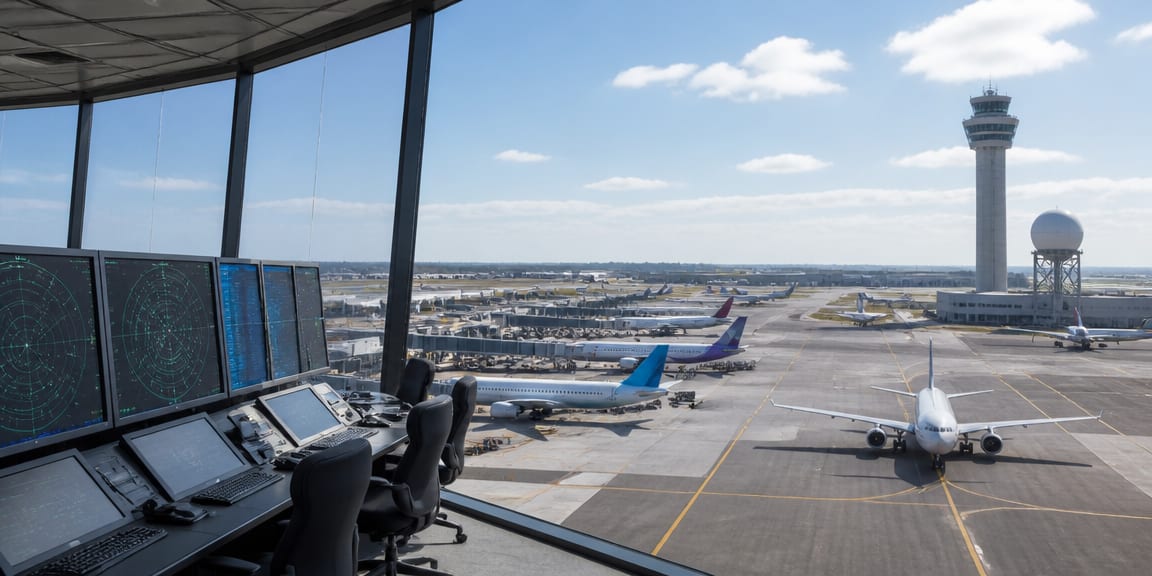
The US Federal Aviation Administration ordered a nationwide ground stop on Friday, citing a communications or telecommunications outage that affected air traffic control operations. Departures were halted nationwide, while flights already airborne were allowed to land (Folha de S.Paulo; Haaretz; Middle East Eye). Eurocontrol suspended flights to the United States at the FAA’s request, and Toronto Pearson halted US-bound services, extending the disruption across the Atlantic and into Canada (Folha de S.Paulo; Toronto Star). Flight-tracking data showed roughly 1,000 flights heading to US airports—about an 80 percent drop from a week earlier—while Italian reporting tallied over 10,000 delays and 1,700 cancellations (Middle East Eye; La Repubblica). Sports travel was among the immediate casualties, with NBA, NHL, and college teams stranded as weekend schedules approached (Toronto Star; Fox News; Clarín). Hours later, the FAA lifted the ground stop, with officials attributing the incident to a communications outage and denying a cyberattack or Microsoft-related cause; technicians continued investigating (Deutsche Welle; France24; Al Jazeera English).
Why It Matters
The episode tests the resilience of critical US aviation infrastructure and the reliability of cross-border coordination mechanisms. Foreign regulators moved quickly in response to the FAA’s order—Eurocontrol suspending flights to the United States and Toronto Pearson halting US operations—demonstrating the centrality of US airspace to global scheduling and the practical interdependence of national systems (Folha de S.Paulo; Toronto Star). Clarín’s reference to government efforts to modernize the air system, alongside officials’ explanations pointing to aging equipment, places the disruption within a longer arc of infrastructure renewal and system redundancy debates (Clarín; Bangkok Post).
The stop also carried immediate economic and operational consequences. teleSUR English highlighted impacts on cargo routes to Latin America, the Caribbean, Europe, and Asia, while Italian and Brazilian outlets pointed to mass delays and cancellations affecting millions of passengers (teleSUR English; La Repubblica; Folha de S.Paulo). For decision-makers, the event underscores the importance of transparent incident attribution, rapid recovery protocols, and clear guidance on passenger rights—such as refund entitlements for cancellations or significant delays—during nationally scaled disruptions (New York Times).
Diverging Narratives
Outlets align on the proximate cause—communications failure—but emphasize different reference points for rarity. Haaretz and ANSA stress that this was only the second blanket order of its kind since 9/11, while Middle East Eye pairs the event with the January 2023 FAA malfunction as the previous major halt. Folha de S.Paulo captures the same infrequency as “twice in 25 years.” These framings convey exceptionalism using different baselines without disputing core facts.
Causal clarity is strong but not uniform in detail. Multiple reports cite a telecommunications or communications outage and later denials of a cyberattack or Microsoft link (Al Jazeera; France24). Bangkok Post adds that officials tied the problem to old equipment, while Clarín notes authorities ruled out a malicious attack and connects the episode to modernization aims. Operational scope is also nuanced. Most accounts describe an all-departures pause with in-air arrivals allowed, but Clarín reports some long-haul flights to Europe and Asia still departed, while teleSUR English notes international flights were to be handled case-by-case. Impact lenses vary: some emphasize airport chaos and millions of affected passengers (La Repubblica; Folha de S.Paulo), others foreground sports logistics (Toronto Star; Fox News), and still others underline cargo and cross-regional connectivity (teleSUR English).
What Happens Next
Key indicators hinge on the FAA’s technical investigation and official updates. Outlets report technicians are probing the communications failure; follow-on statements clarifying root cause—particularly any linkage to aging equipment—will signal whether a modernization push advances from rhetoric to procurement and implementation (Deutsche Welle; Telesur English; Bangkok Post; Clarín). Internationally, watch how Eurocontrol and major foreign hubs adjust contingency protocols for US-dependent traffic and how quickly airline advisories from carriers like JetBlue and Air Canada normalize as schedules are reconstituted (Folha de S.Paulo; Middle East Eye). Consumer redress will unfold under established rules: passengers are entitled to refunds for cancellations or for significant delays they choose not to accept, making carrier compliance rates a tangible metric of recovery and accountability (New York Times). Finally, continued official denials of a cyber component shape public confidence; further briefings that stay consistent with France24’s and Bangkok Post’s reporting will be consequential for risk perception.