
Eisenkot rejects Netanyahu’s unity overture while courting ultra-Orthodox partners and setting a Knesset speaker test
Narrative Snapshot
Across international outlets, the focus is squarely on the contrast between a renewed call for “national unity” and a public dismissal of that appeal. France24, Al Jazeera English, the Bangkok Post, and The Hindu frame the exchange as part of an ongoing, high-stakes coalition negotiation, with France24 explicitly calling Gadi Eisenkot the incoming premier while noting he is still assembling a government. Israeli outlets drill into parliamentary mechanics and coalition arithmetic: Haaretz centers the near-term litmus test of the Knesset speaker vote as a way to force Likud and Religious Zionism to show their cards, while the Times of Israel highlights reported Haredi maneuvering and Eisenkot’s potential openness to right-wing partners.
Middle East Eye pushes two additional lines that complicate the unity narrative. First, it reports Eisenkot’s characterization of the unity call as “yet another spin move,” tied to a pre-scheduled Likud–Yesh Atid meeting that, he says, Netanyahu already knew about. Second, it juxtaposes Netanyahu’s public vilification of Palestinian-led parties—described by critics as “hate-filled”—with reporting that he sought private outreach to Mansour Abbas on coalition and legal questions. In parallel, MEE’s feature on Haredi politics underscores a structural shift: United Torah Judaism’s decision not to recommend Netanyahu, signaling fluidity in a long-standing alliance.
What Happened
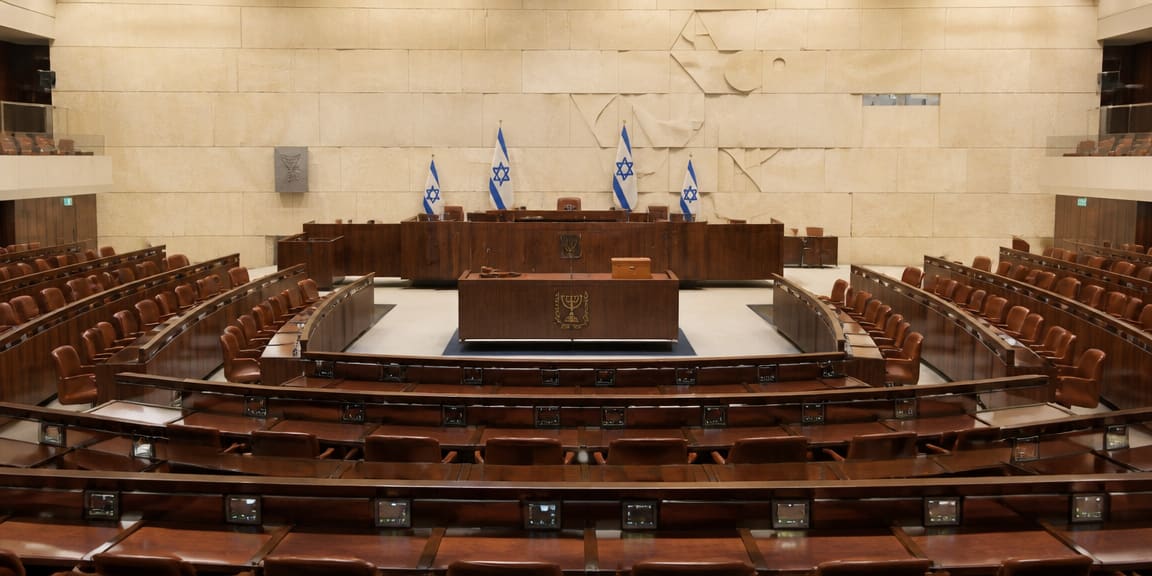
Eisenkot has been tasked with forming a government after the election produced no clear majority, with Japan Times noting he has up to six weeks before the mandate would likely revert to caretaker Prime Minister Benjamin Netanyahu. As the new Knesset convened, France24 and the Bangkok Post reported that Eisenkot’s allies launched a legislative push against Netanyahu’s legacy in a heated opening session. Netanyahu’s remarks there drew accusations of “hate speech” toward Palestinian-led parties, Middle East Eye reported, even as another MEE piece said he privately probed Mansour Abbas on positions regarding a law to bar an indicted lawmaker from serving as prime minister and coalition scenarios. Netanyahu has since renewed a unity-government appeal, which Eisenkot publicly labeled a bluff and “tricks,” per Haaretz, France24, Al Jazeera, and the Bangkok Post, challenging Likud and Religious Zionism to back his Knesset speaker candidate. The Times of Israel reports Eisenkot is prioritizing negotiations with ultra-Orthodox parties, with United Torah Judaism considering an interim arrangement on Haredi draft exemptions, and that he is mulling opening the door to Likud and Religious Zionism. Middle East Eye adds that a Likud–Yesh Atid negotiating meeting had already been scheduled.
Why It Matters
The episode sits at the intersection of coalition math and longer-term realignments. Middle East Eye’s reporting that United Torah Judaism did not recommend Netanyahu after the election—and the Times of Israel’s account that UTJ is weighing an interim path on draft exemptions to join Eisenkot—suggests potential reconfiguration of a long-standing Haredi–Netanyahu axis. That could reshape bargaining power over core policy portfolios and religion–state questions. The Knesset’s opening session, described by France24 and the Bangkok Post as an attempt to target Netanyahu’s legislative legacy, signals that institutional rules and political safeguards are part of the immediate contest, with implications for the durability of future governments. Simultaneously, MEE’s coverage of Netanyahu’s rhetoric toward Palestinian-led parties alongside reported private outreach to Mansour Abbas highlights the complexity of Arab-party participation in coalition-building, a factor made more salient by the unprecedented number of Palestinian-led lawmakers in the new Knesset reported by MEE.
Diverging Narratives
Outlets capture a clash of frames. Netanyahu casts “unity” as a security imperative, Al Jazeera reports, while Eisenkot labels the appeal a bluff and “political tricks,” according to Haaretz, France24, and the Bangkok Post. Haaretz emphasizes Eisenkot’s effort to operationalize this dispute by making the Knesset speaker vote a proof point for Likud and Religious Zionism. Middle East Eye intensifies scrutiny of Netanyahu’s positioning by reporting his private feelers to Mansour Abbas regarding an anti-indicted-PM law and coalition options, even as separate MEE coverage describes his Knesset speech as “hate-filled” toward Palestinian-led parties. On coalition prospects, the Times of Israel highlights UTJ’s consideration of an interim draft-exemption arrangement and Eisenkot’s reported openness to engage Likud and Religious Zionism, while MEE’s feature underscores UTJ’s earlier choice not to recommend Netanyahu as a signal of shifting Haredi politics. International wires largely present the exchange as a political standoff during government formation, with France24 calling Eisenkot the incoming premier and The Hindu noting his designation to form a government as of mid-November.
What Happens Next
Several decision points will determine trajectories. First, the Knesset speaker vote, flagged by Haaretz and Al Jazeera as imminent, will indicate whether Likud and Religious Zionism are prepared to cooperate tactically with Eisenkot or maintain a hard opposition line. Second, the Times of Israel’s report that UTJ is weighing an interim arrangement on draft exemptions is a coalition hinge; movement there would signal Haredi openness to an Eisenkot-led alignment. Third, reports that Eisenkot is considering opening talks with Likud and Religious Zionism, alongside MEE’s note of a scheduled Likud–Yesh Atid negotiating meeting, point to multiple negotiation channels whose sequencing will matter. Finally, the statutory clock noted by Japan Times—six weeks to form a coalition before the mandate likely returns to Netanyahu—sets the outer boundary. Analysts should watch whether the legislative moves against Netanyahu’s legacy reported by France24 persist, and any concrete steps related to legal standards for prime ministerial eligibility referenced in MEE’s Abbas interview.