
Winter floods intensify Gaza crisis as Western governments and UN press Israel on aid access
Narrative Snapshot
Across outlets, there is broad agreement that early winter storms have devastated already precarious displacement sites in Gaza and that aid flows are not meeting stated needs. Israeli and international reporting converge on the same structural pinch points: flooded tents, degraded water and sanitation, and rising respiratory disease. What divides coverage is attribution and emphasis. Israeli reporting highlights official data and political dynamics, noting a relative increase in food deliveries but persistent shortfalls in medical supplies and shelter materials, alongside security arguments over “dual-use” items. Anglo-European and regional outlets foreground blockages at border crossings, with multiple reports citing about 150,000 winter tents held up outside Gaza and diplomatic statements urging “rapid” and “unimpeded” access.
Advocacy-oriented and regional sources frame the crisis as a product of policy, not just weather, amplifying calls from Hamas officials for “unhindered” repairs to sewage and drainage and alleging deliberate restrictions. Others document unusual pressure from audiences typically aligned with Israel: a rare rebuke by the Trump-aligned Board of Peace and a joint intervention by Australia, the UK, Canada, and Italy. Meanwhile, Israeli coverage also tracks a counteroffensive in public diplomacy, including UN ambassador tours of Hamas tunnels meant to deflect a “winter campaign” of blame. Local Palestinian outlets contribute texture from the ground, emphasizing the human toll of rain, cold, and displacement.
What Happened
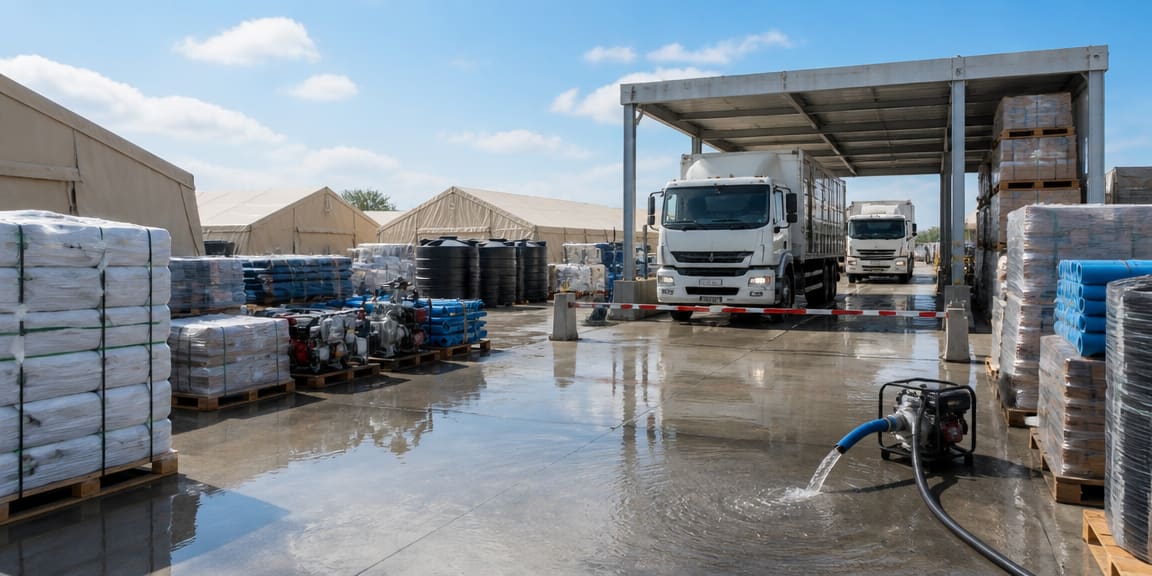
Heavy rains in early November flooded tens of thousands of tents sheltering displaced Palestinians, with Palestinian rescue services reporting at least five deaths, and Gaza authorities saying about 70,000 tents were inundated and hundreds of thousands left outdoors. The World Health Organization warned that overcrowding, poor shelter, and cold conditions are driving a rise in respiratory infections, already accounting for roughly 11% of consultations. The European Union and, separately, Australia, the UK, Canada, and Italy urged Israel to allow “immediate” and “unimpeded” humanitarian access, with several of these governments and UN officials citing approximately 150,000 winter tents and other vital supplies stranded at border crossings, including consignments in El Arish. Israeli military data reported by Haaretz show aid volumes since March averaging about half the 18,000 trucks per month pledged under the cease-fire deal, with food increasing relative to severe shortfalls in medical and shelter items. Hamas leaders called for urgent sewer and drainage repairs and “unhindered” aid access. Amid criticism, Israel arranged a tour for UN ambassadors of a Hamas tunnel and a kibbutz, while Prime Minister Netanyahu rejected responsibility after the Board of Peace labeled Israel’s flood response “insufficient.”
Why It Matters
This episode tests whether cease-fire implementation mechanisms can deliver baseline humanitarian standards under winter conditions. Israeli data cited by Haaretz and Middle East Eye indicate persistent gaps between commitments and actual aid volumes, sharpening scrutiny of COGAT procedures and the US-led International Gaza Support Center’s coordination role. The joint démarche by Australia, the UK, Canada, and Italy, alongside EU statements, signals allied willingness to publicly press Israel over access constraints, including shelter and winterization materials often restricted as “dual-use.” Public health warnings from WHO link access delays to foreseeable disease burdens, tying border policy to health system overload.
The crisis also interacts with broader norm debates: humanitarian access obligations in protracted sieges, infrastructure denial, and environmental harm. At COP31, Turkey’s president escalated the framing to “ecocide,” while high-profile advocacy, including from Lewis Hamilton, sustains public pressure. For decision-makers, the core policy questions are operational: opening crossings, clearing backlogged shelter stocks, and enabling repair of WASH systems before recurrent storms entrench preventable morbidity and mortality.
Diverging Narratives
Israeli sources emphasize both logistical throughput and security caveats. Haaretz reports that while overall trucks are below the cease-fire target, food deliveries have comparatively improved, with acute deficits in tents and medical supplies. The Times of Israel spotlights domestic and international pressure to show “flexibility” on dual-use materials amid winter, and documents a diplomatic effort to counter what Israel’s UN envoy calls a blame-shifting “winter campaign.” In contrast, Middle East Eye, IRNA, Al Jazeera, and Telesur frame restrictions as deliberate policy, citing stranded winter tents and asserting that the crisis blends weather with blockade dynamics; Hamas officials explicitly accuse Israel of intertwining starvation, destruction, and aid limits.
On accountability, Western governments’ statements concentrate on access imperatives and quantifiable bottlenecks without adopting accusatory language beyond urging Israel to “stop the delays,” while the BBC notes the Board of Peace criticized Israel’s response yet also blamed Hamas for civilian suffering. RT reports Netanyahu’s denial of responsibility following that criticism. There are also nuances in the aid data: Haaretz notes relative increases in food, whereas Middle East Eye describes a “growing shortfall in food deliveries” alongside other scarcities, a difference that underscores how selective metrics shape perceptions of compliance.
What Happens Next
Key decisions center on whether Israel aligns actual aid flows with cease-fire benchmarks and clears winterization backlogs. If COGAT authorizes the release and entry of roughly 150,000 tents and eases controls on shelter and repair materials, indicators would include sustained weekly truck counts approaching 4,200, visible movement of stocks from El Arish, and reported distribution of tents and WASH repair kits. If restrictions persist, expect continued allied statements like those from the EU and the Australia-UK-Canada-Italy group and further WHO alerts on respiratory illness trends.
Another decision point is policy toward “dual-use” items. The Times of Israel reports pressure for flexibility; movement here would be reflected in updated COGAT guidelines and IGSC reporting on the mix of cargo. On narrative management, Israel’s UN diplomacy suggests sustained efforts to contest blame; watch for additional ambassador tours and briefing materials. Finally, Hamas’s call for sewer and drainage repairs creates a test of access for infrastructure teams; evidence would be permits for repair crews, fuel allocations, and procurement of pipes and pumps noted by humanitarian agencies.