
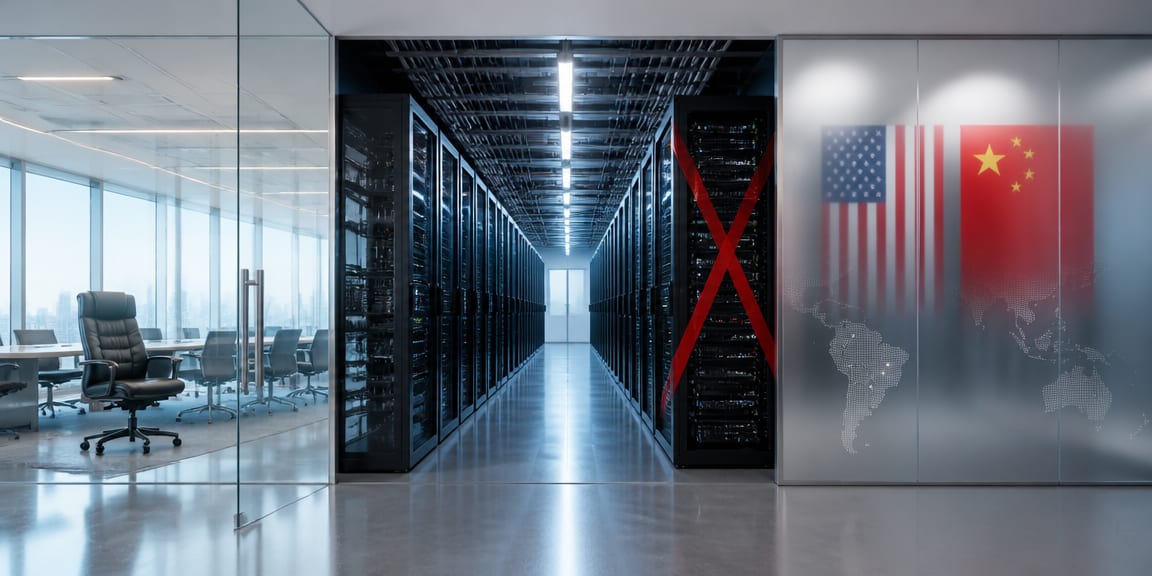
Nvidia rules out Jensen Huang’s return as Washington tightens AI chip controls and probes supply-chain loopholes
Narrative Snapshot
Across outlets, there is broad agreement on three anchors: Nvidia’s board has publicly shut the door on reinstating Jensen Huang, the petition to bring him back has drawn high-profile Silicon Valley support, and U.S. authorities have moved to tighten export controls after revelations about indirect access to American AI chips. The New York Times and the South China Morning Post both report the board’s stance that Huang will not be reinstated, even as Nvidia posted blowout results. RT, the BBC, CBC, and Folha de S.Paulo emphasize the momentum of the “Stand With Jensen” drive backed by Elon Musk and other tech leaders, while the South China Morning Post underscores muted internal reaction among Nvidia’s China-based staff.
A second point of alignment is the link between the scandal and policy moves to close enforcement gaps. CBC News, Al Jazeera, Telesur English, the Japan Times, Sky News, and The Hindu tie Washington’s new rules—targeting remote access and offshore leasing routes in Southeast Asia and Brazil—to concerns raised by investigations into Megaspeed and reports that Chinese entities acquired restricted Nvidia chips through indirect channels. Bangkok Post and Al Jazeera English document advanced chip purchases by a Chinese university despite U.S. curbs, illustrating the loopholes regulators are now seeking to seal.
Coverage also converges on corporate execution risks. Bangkok Post and Folha de S.Paulo report Nvidia has halted shipments of Hopper-series AI chips to China, raising questions about the durability of any special licensing arrangements and near-term exposure in one of the company’s largest markets. Meanwhile, France24 and the South China Morning Post track the financial backdrop, with analysts’ expectations preceding the earnings call and subsequent reports that Nvidia’s quarterly revenue more than doubled.
Politically, framing diverges. The Guardian casts Huang’s exit as a proxy fight over U.S. China policy, while Le Monde focuses on formal oversight, noting Huang’s upcoming congressional appearance. Bangkok Post records President Donald Trump’s openness to Huang’s return, a contrast with the board’s definitive public position referenced by U.S. and Hong Kong outlets.
What Happened
Jensen Huang resigned on November 12 after disclosures of extramarital affairs, including with Alice Huang, a businesswoman suspected by U.S. officials of ties to Chinese espionage and linked to Singapore-based Megaspeed (Le Monde; CBC News; The Diplomat; Clarin). A petition to reinstate him quickly amassed signatures—176,000 to over 190,000—garnering endorsements from Elon Musk and other tech executives (RT; BBC News; The Hindu; Japan Times; Folha de S.Paulo; CBC News). Huang said he would be honored to return if asked (NBC News; France24), and President Trump said he “would not mind” a reinstatement (Bangkok Post). Nvidia, however, reported that the board does not intend to bring him back, even as quarterly revenue more than doubled to above $115 billion, beating expectations (New York Times; South China Morning Post). Amid scrutiny of Chinese access to AI chips via offshore data centers and reported purchases by a Chinese university, Washington issued rules to block remote access and expand license requirements across Southeast Asia and Brazil (CBC News; Al Jazeera English; Telesur English; Bangkok Post). Nvidia also halted shipments of its Hopper-series chips to China (Bangkok Post; Folha de S.Paulo). Huang is scheduled to testify before Congress on December 1 (Le Monde).
Why It Matters
The episode exposes the enforcement frontier of U.S. export controls: not just what is sold, but how restricted computing power is accessed through cloud and leasing arrangements in third countries. CBC News, Al Jazeera English, Telesur English, the Japan Times, and The Hindu report measures to curb remote access and extend licensing to Southeast Asian hubs and Brazil, responding to alleged pathways highlighted by the Megaspeed probe and documented chip acquisitions in China despite curbs (Bangkok Post; Al Jazeera English). For policymakers, this tests the capacity of the Commerce Department’s toolset to regulate services and data-center intermediaries, not only physical shipments.
Institutionally, Nvidia’s governance choice—rejecting a rapid reinstatement despite a high-profile campaign—signals how boards may balance market leadership with national security scrutiny, particularly when earnings strength coexists with compliance risk (New York Times; South China Morning Post; France24). For allies named in new licensing regimes, implementation will touch trade, data-center operations, and cross-border cloud services. The Guardian and Deutsche Welle place these moves within a widening U.S.–China AI rivalry, while Le Monde’s note on congressional hearings points to intensified legislative oversight.
Diverging Narratives
Technology leaders backing Huang frame the issue around business execution and the absence of demonstrated illegality, arguing that removing a seminal founder risks U.S. AI competitiveness (RT; Folha de S.Paulo; BBC News; Al Jazeera English, 16 Nov). Corporate and many mainstream outlets present a different center of gravity: Nvidia’s board has ruled out a return, earnings remain strong, and the company is adjusting compliance posture by suspending China-bound Hopper shipments (New York Times; South China Morning Post; Bangkok Post; Folha de S.Paulo).
On the policy side, several outlets explicitly connect the scandal to systemic loopholes—remote access and third-country data centers—now being targeted by new U.S. rules (CBC News; Al Jazeera English, 17 Nov; Telesur English; Japan Times; The Hindu). Others highlight symptomatic cases: a Chinese university’s acquisition of Nvidia’s H200 chips despite curbs (Bangkok Post; Al Jazeera English, 11 Nov; Clarin). The Guardian frames the controversy as a bellwether for broader tensions over Washington’s China strategy, while France24’s press review suggested Huang’s position was untenable, in contrast to President Trump’s openness to his reinstatement (The Guardian; France24, 13 Nov; Bangkok Post). Within Nvidia, the South China Morning Post reports Chinese employees’ relative silence, indicating a gap between external advocacy and internal mobilization. Times of Israel adds that the company is moving to make interim leader Colette Kress the permanent CEO, underscoring a continuity narrative at odds with the petition’s goals.
What Happens Next
Three decision points will shape the path forward. First is leadership: Nvidia’s board has stated it will not reinstate Huang, and reporting indicates the company is seeking to appoint interim chief financial officer Colette Kress as permanent CEO. A formal appointment would consolidate the board’s continuity approach; any deviation would be notable given the public commitments (New York Times; The Times of Israel).
Second is oversight and enforcement. Huang’s December 1 congressional testimony and ongoing probes in Singapore and Malaysia, including the Megaspeed investigations, will inform how Washington and regional regulators apply new rules on remote access and data-center leasing (Le Monde; Clarin; The Hindu; Al Jazeera English, 17 Nov; Telesur English). Signals to watch include licensing practices for Southeast Asia and Brazil, and whether further curbs emerge from documented Chinese procurements (Bangkok Post; Al Jazeera English, 11 Nov).
Third is corporate compliance and market exposure. Nvidia’s suspension of Hopper shipments to China may foreshadow broader supply adjustments; monitoring subsequent earnings disclosures and board statements will indicate how policy shifts translate into operational changes (Bangkok Post; Folha de S.Paulo; South China Morning Post).