
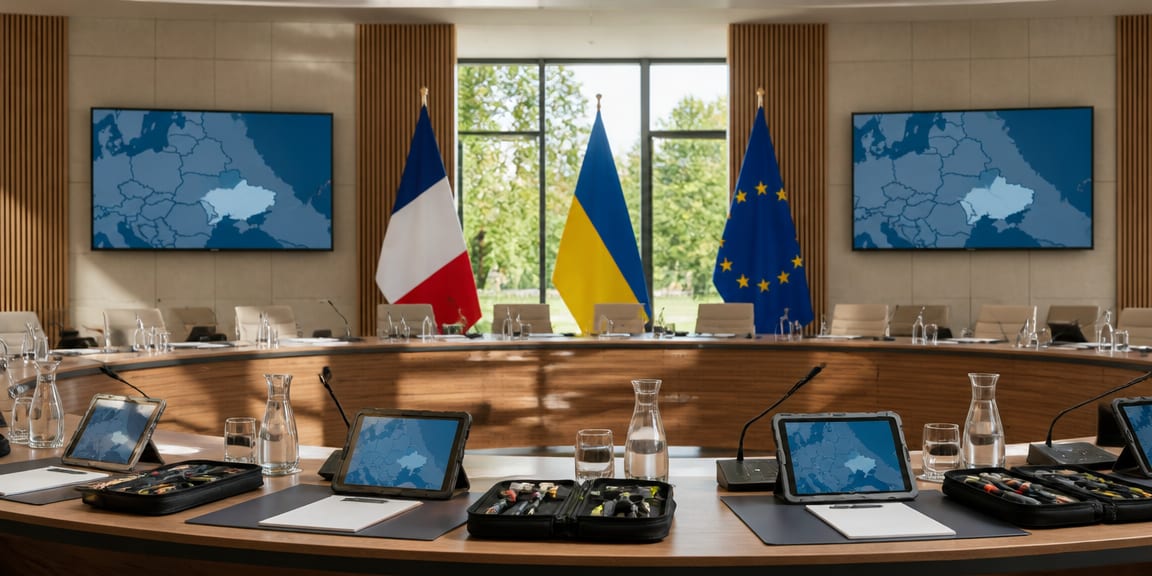
France acknowledges limited military presence in Ukraine for training and maintenance as Moscow calls it “direct participation”
Narrative Snapshot
Across outlets, there is broad convergence that French personnel are present in Ukraine in non-combat roles tied to training and maintenance of French-supplied systems. Italian reporting draws on RFI to underline the non-combat character and the use of cover arrangements linked to activities in Poland, situating the mission as deliberately calibrated to minimize escalation risks. French coverage foregrounds the legal and political implications at home, including questions about co-belligerency, exposure to Russian retaliation, and whether parliamentary consultation is warranted.
Where narratives diverge is in the labeling and framing of the missions and their legal cover. France 24 cites RFI’s identification of a confidential mission known as “Volia,” while Corriere della Sera, also referencing RFI, points to “Gerfaut” in Poland as the cover vehicle. Russian state media emphasizes an embassy-affiliated footprint comprising a small cadre of service members and specialists, including military engineers, and pairs that with Moscow’s assertion of France’s “direct participation.”
Regional context also differs. North American wire-based coverage highlights France’s confirmation that it periodically sends personnel and Russia’s forceful rhetorical response. Ukrainian state media spotlights concurrent multinational exercises in Poland—“Koalicja”—designed for post-ceasefire security tasks, offering a forward-looking framework for how allied support could be organized without implying present combat roles inside Ukraine.
What Happened
An RFI investigation on November 17 reported a confidential French military presence in Ukraine, with France 24 noting the code name “Volia” and Corriere della Sera, also citing RFI, saying personnel were non-combat and used the “Gerfaut” mission in Poland as cover. The Associated Press, via the Toronto Star, reported that France confirmed it periodically sends military personnel into Ukraine to provide training and maintenance for French-supplied weaponry. Le Monde said the government acknowledged deploying troops on Ukrainian territory for such missions, which reignited domestic debate. Russia accused France of direct involvement, as reflected in Italian and French coverage. TASS, citing Minister Delegate Alice Rufo, described the activity as part of an embassy mission involving several service members and experts, including military engineers. La Repubblica stressed that France had previously concentrated training in France and Poland to avoid a confrontation. Ukrinform reported the “Koalicja” multinational exercises in Poland focused on post-ceasefire security tasks.
Why It Matters
This episode tests the boundary between military support and co-belligerency, a line French outlets say now figures centrally in domestic debate. Le Monde reports that Paris’s acknowledgment of deployments has revived questions about whether Moscow might target France and whether parliamentary consultation is needed, underscoring institutional and legal accountability stakes. La Repubblica’s emphasis on prior training outside Ukraine highlights a shift with potential implications for escalation management and alliance burden-sharing practices, even if roles remain limited to training and maintenance.
Russia’s framing of “direct participation,” echoed across European outlets and the AP report, signals a contested legal-political narrative that could shape risk calculations. TASS’s embassy-mission characterization and the presence of engineering specialists point to an effort to situate activity within diplomatic and technical channels. Ukrinform’s account of “Koalicja” exercises suggests allied planning for post-ceasefire security tasks, indicating that decisions made now could set precedents for how future guarantees and on-the-ground support are structured.
Diverging Narratives
French and Italian outlets converge on the tasks—training and maintenance—while differing on operational labels and cover mechanisms. France 24 attributes to RFI the existence of a confidential mission called “Volia,” whereas Corriere della Sera, also relying on RFI, points to “Gerfaut” in Poland as the cover framework and stresses that personnel are not engaged in combat. Le Monde adds that the government has acknowledged deployments, prompting debate about co-belligerency, exposure to potential Russian targeting, and whether parliamentary input is required.
Moscow’s position, covered by Corriere, La Repubblica, France 24, and the Toronto Star, is that France’s presence constitutes direct participation. TASS advances a distinct framing by quoting Minister Delegate Alice Rufo to anchor the activity in an embassy mission with a small group of service members and engineering experts. Meanwhile, La Repubblica notes that France had largely kept training in France and Poland to avoid confrontation risks, and Ukrinform contextualizes allied activity around “Koalicja” exercises in Poland aimed at post-ceasefire security—reinforcing that not all reported multinational activity pertains to current in-country roles.
What Happens Next
Key decisions will likely revolve around French domestic oversight and legal positioning. Le Monde indicates debate over whether parliamentary consultation is necessary; movement toward a formal mandate would clarify scope and constraints, while inaction would leave the current executive-led arrangement intact and politically contested. Analysts should watch for official statements that specify mission parameters, locations, and legal bases, including any clarification of the “Volia” and “Gerfaut” references reported from RFI.
On the external front, Russia’s characterization of “direct participation” and the risk discourse noted by Le Monde frame the escalation environment; shifts in Russian rhetoric or signaling would affect French risk assessments. Operationally, reporting from TASS about an embassy-linked, specialist footprint suggests a contained model; any French adjustments to frequency or composition, as described by the AP report on periodic deployments, would be noteworthy. In parallel, Ukrinform’s “Koalicja” exercises in Poland establish a post-ceasefire template; indications that these drills evolve into structured security tasks would shape how allied support is organized after hostilities pause.