
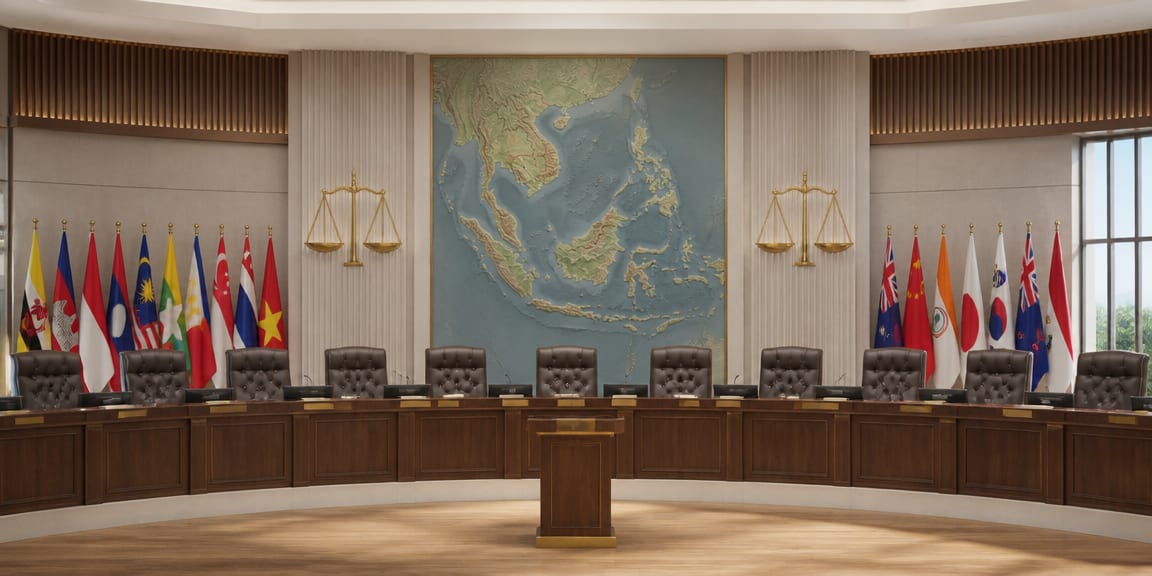
ICJ poised to deliver landmark ruling on whether Myanmar committed genocide against the Rohingya
Narrative Snapshot
Across outlets, there is broad convergence that the ruling is procedurally and symbolically significant: it would be the ICJ’s first genocide judgment in over a decade and, as the BBC and the Guardian both underscore, no international court has ever found a state responsible for genocide. Several reports emphasize that the legal hinge will be how the judges handle genocidal intent, a notoriously demanding threshold highlighted by Deutsche Welle and the Guardian.
Coverage diverges on emphasis. Israeli outlets including the Times of Israel and Haaretz frame the decision as a potential preview of how the court may assess South Africa’s case concerning Israel’s conduct in Gaza, a link also noted by the Guardian. Others resist treating the Rohingya as a proxy. The Diplomat carries a Rohingya perspective insisting this is not a “legal test case” but a people seeking justice, while the Bangkok Post and the Toronto Star (AP) foreground refugees’ hopes that accountability could open paths home or ease their conditions.
A political layer runs through European coverage. Le Monde flags what it calls multiplying American attempts to intimidate the court’s judges, and the Guardian reports fears of possible US sanctions on ICJ judges, naming Navi Pillay, if the court finds Myanmar responsible. In contrast, explainer-style pieces from the South China Morning Post, Al Jazeera, and Deutsche Welle concentrate on the court’s mandate under the Genocide Convention and the case’s seven-year trajectory, with the New York Times grounding stakes through detailed reporting from a destroyed Rohingya village.
What Happened
The International Court of Justice is set to issue its judgment on whether Myanmar committed genocide during the military’s 2017 campaign that drove hundreds of thousands of Rohingya Muslims into Bangladesh. The case was brought by The Gambia under the 1948 Genocide Convention, which defines genocide and obligates states to prevent and punish it, as outlined by the South China Morning Post and Al Jazeera. Deutsche Welle notes the core question will be whether Myanmar’s operations in Rakhine State were carried out with intent to destroy the Rohingya, in whole or in part. Reporting from Haaretz and the New York Times details survivors’ accounts of systematic killings, including children drowned and entire villages such as Zammona effectively erased. The BBC and Guardian highlight the historic context: no state has been found guilty of genocide by an international court, and this will be the ICJ’s first genocide ruling in more than a decade.
Why It Matters
The ruling will clarify how the ICJ operationalizes the Genocide Convention’s intent requirement in a modern mass-atrocity context, with implications for states’ prevention and punishment duties. As the Times of Israel and Haaretz note, observers see the decision as a potential guide to how the same bench may approach arguments in the separate case concerning Israel’s actions in Gaza. The Guardian adds that any move by the United States to sanction ICJ judges, as some fear, would test political tolerance for judicial independence in multilateral institutions. For governments and international organizations, the judgment will signal how far the court is prepared to go in attributing responsibility to a state for atrocity crimes and how it articulates evidentiary thresholds. For host and donor states managing protracted displacement, the Toronto Star (AP) and Bangkok Post suggest that a clear legal finding could shape leverage for humanitarian access, protection, and prospects for safe return.
Diverging Narratives
Legal framing varies in emphasis. Deutsche Welle and the Guardian stress the centrality and difficulty of proving specific intent to destroy a protected group, with the BBC underscoring the unprecedented nature of a potential state-level genocide finding. Al Jazeera highlights that this is the court’s first genocide ruling in over a decade, signaling doctrinal significance beyond Myanmar.
Geopolitical interpretations split. Israeli outlets and the Guardian frame the case as instructive for proceedings related to Gaza, while The Diplomat carries Rohingya voices rejecting the notion that their suffering should be reduced to a “test case.” Le Monde and the Guardian spotlight alleged US pressure on the court, including fears of sanctions on judges such as Navi Pillay, while other outlets either do not address this or remain focused on legal process rather than political backlash.
Human impact receives uneven weight. The Bangkok Post and Toronto Star (AP) foreground refugee expectations that accountability could improve conditions or enable return, echoed in survivor accounts in Haaretz and the New York Times. By contrast, several explainers from the South China Morning Post, Deutsche Welle, and Al Jazeera center institutional process and treaty law, leaving downstream enforcement and protection questions largely implicit.
What Happens Next
Two decision points will shape trajectories. First, the court’s articulation of genocidal intent—flagged by Deutsche Welle and the Guardian—will determine whether it finds Myanmar responsible under the Genocide Convention or sets a narrower standard that stops short of genocide. Analysts will parse how the judges weigh patterns of violence, orders, and survivor testimony, as reported by Haaretz and the New York Times, and how they link findings to states’ prevention and punishment duties noted by Al Jazeera and the South China Morning Post.
Second, political reactions could constrain or reinforce the court’s authority. Le Monde’s report of American attempts at intimidation and the Guardian’s account of fears of US sanctions on judges identify a potential backlash; whether such measures materialize will signal the operating space for international adjudication. Observers will also watch how the ruling is read against the separate ICJ case concerning Israel, as suggested by Haaretz and the Times of Israel, and whether refugees in Bangladesh see concrete changes in access, protection, or prospects for return referenced by the Bangkok Post and Toronto Star (AP).