
Hormuz shipping faces escalating attacks as Iran asserts enforcement, US flags rising costs, and Red Sea risks deepen
Narrative Snapshot
Across outlets there is broad agreement that commercial shipping around the Strait of Hormuz has come under sustained, lethal pressure, with multiple reports of tankers ablaze or damaged and crews evacuated or missing. Iranian state media characterizes recent incidents as the result of “violating” ships striking naval mines on unauthorized routes, framing Tehran’s posture as regulatory enforcement and self-defense. Western and regional outlets largely present a campaign of attacks attributed to Iran or its forces, highlighting new vulnerabilities for tankers and energy cargoes and underscoring uncertainty in incident attribution and impact.
Economic signaling diverges. Market coverage notes oil prices nudging higher on fresh reports of attacks, while one US official claims supply is “not visibly” moving yet is nonetheless increasing, even as separate reporting points to a sharp drop in LNG transits through Hormuz. Shipping sources and producers’ reticence complicate the risk picture, with insurance and capacity constraints flagged by a US maritime memo and by the UN via IMO data on mounting incidents and casualties.
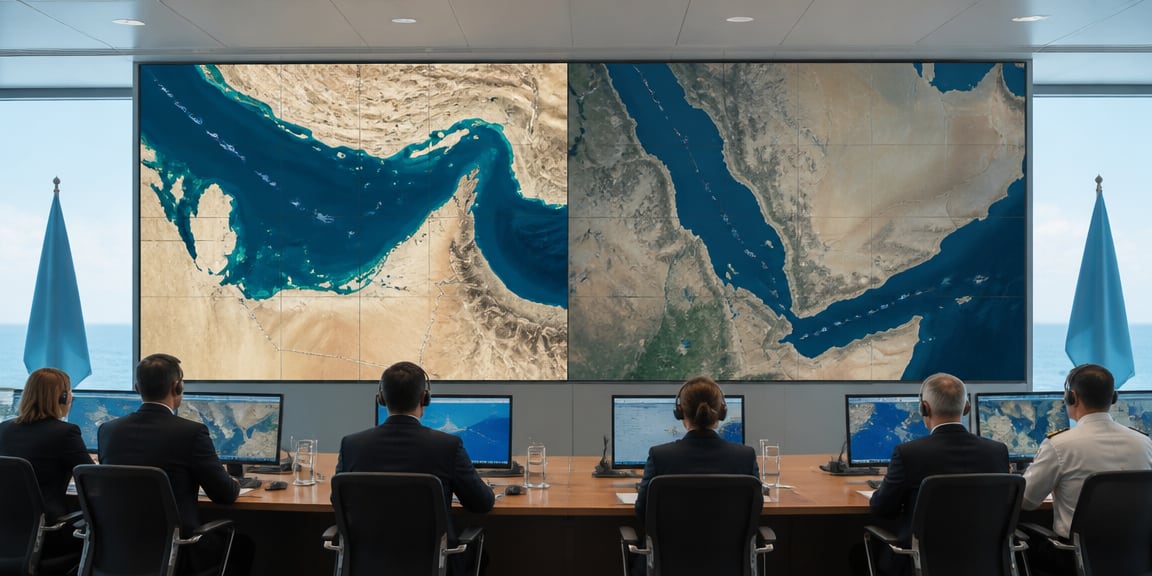
A second axis of risk is converging from the Red Sea. Reporting from Yemen indicates Saudi-backed forces have pulled back from Bab al-Mandeb as the Houthis advance toward Aden, increasing leverage over the southern maritime chokepoint. Opinion and analysis argue naval deployments alone will not restore security without a political settlement in Yemen, placing maritime stability at the intersection of Iran-related escalation in the Gulf and shifting control on the Red Sea littorals.
What Happened
Iran’s IRNA reported that the Army Air Defense shot down a US MQ-9 drone east of the Strait of Hormuz, and that two “violating” supertankers exploded after hitting sea mines while navigating an unauthorized route; the Iranian army separately said two tankers hit naval mines in a restricted area east of the strait. Middle East Eye reported that Oman evacuated 24 crew from the Panama-flagged Tara Gas after a fire near Musandam, that a UAE ADNOC vessel was attacked with 11 wounded and one missing, and that a gas tanker’s crew abandoned ship after a projectile strike off Oman, with UKMTO noting a second attack. The New York Times described unrelenting attacks, including a strike on an already disabled ship. TASS, citing Bloomberg, reported LNG transits through Hormuz plunged to a minimum, with only two vessels passing in a week. A US Maritime Administration memo acknowledged a naval blockade’s impact on insurance premiums and cargo capacity, Al Jazeera reported. The UN, via IMO data cited by Middle East Eye, recorded 25 seafarer deaths across 134 incidents since February. Haaretz reported Omani-Iranian talks on safeguarding maritime corridors. Simultaneously, Saudi-backed forces redeployed from Bab al-Mandeb as Houthis moved closer to Aden, according to Middle East Eye and RT.
Why It Matters
Attacks and navigational hazards at Hormuz are intersecting with rising insecurity at Bab al-Mandeb, stressing both of the Middle East’s critical maritime chokepoints. Al Jazeera reported that the US Maritime Administration linked a blockade to higher premiums and reduced cargo capacity, while Middle East Eye cited UN/IMO figures showing mounting incidents and casualties; together these signal systemic risk to energy, food, and goods supply chains even before volumes visibly collapse. TASS’s account of minimal LNG transits underscores how quickly specialized cargoes can be curtailed under threat.
Institutionally, Oman’s engagement with Iran, reported by Haaretz, suggests room for deconfliction, but regional polarization persists: CGTN noted Gulf states’ compensation demands and Iran’s rejection, and Middle East Eye reported a new US task force aimed at constraining Iran’s military imports amid ongoing US–Iran negotiations. In Yemen, reports of Houthi gains and Saudi-backed withdrawals, covered by Middle East Eye, RT, and Al Jazeera, reveal a shift that could entrench risk at the Red Sea’s entrance, challenging assumptions that naval deployments alone can secure lanes without political settlement.
Diverging Narratives
Iranian outlets present Tehran’s actions as legal enforcement and self-defense. IRNA said supertankers “violating maritime regulations” exploded after striking mines on unauthorized routes and reported downing a US MQ-9 near Hormuz. CGTN relayed Tehran’s rejection of GCC compensation demands and its claim to have targeted only US military assets used against Iran, while Bahrain reportedly intercepted Iranian drones. In contrast, the New York Times framed recent events as unrelenting Iranian attacks on ships, including a strike on a previously disabled vessel, implying escalation in tactics and risk. Middle East Eye and the Iranian army’s statement both referenced naval mines and fires but did not offer independent confirmation of routing violations.
Signals on market and flow dynamics also diverge. Middle East Eye noted oil prices edging higher on attack reports, while the US energy secretary asserted that more oil and refined products are coming “out of the Strait of Hormuz,” albeit “not visibly.” That claim sits uneasily alongside TASS’s report, via Bloomberg, that LNG transits dropped to a minimum with only two vessels passing in a week, and Japan Times’ observation that producers are tight-lipped, complicating assessments. Al Jazeera’s report of a US maritime memo acknowledging a blockade’s cost impact, and UN/IMO data via Middle East Eye on 134 incidents and 25 seafarer deaths, emphasize cumulative disruption even where volumes are hard to verify.
What Happens Next
Three decision points will shape trajectories. First, whether Oman’s engagement with Iran yields operational deconfliction in Hormuz; Haaretz reported ministerial talks on safeguarding corridors, so concrete indicators would include reduced incident rates east of the strait and aligned navigational advisories. Second, the tenor of US–Iran interactions: IRNA’s claim of a downed MQ-9, CGTN’s reporting on drones and Bahrain, and Middle East Eye’s note of US Task Force Iron Gate alongside negotiations suggest parallel pressure and talks; watch for de-escalatory maritime guidance from MARAD/UKMTO and shifts in Iranian public framing of “violations.” Third, control of Bab al-Mandeb as Saudi-backed forces redeploy and Houthis advance, reported by Middle East Eye, RT, and Al Jazeera; signs to monitor include further withdrawals toward Aden, Houthi positions near the strait, and changes in insurance surcharges on Red Sea routes. Across all fronts, UN/IMO incident tallies and cargo-specific transit data, such as LNG flows flagged by TASS/Bloomberg, will offer the clearest read on cumulative risk.