
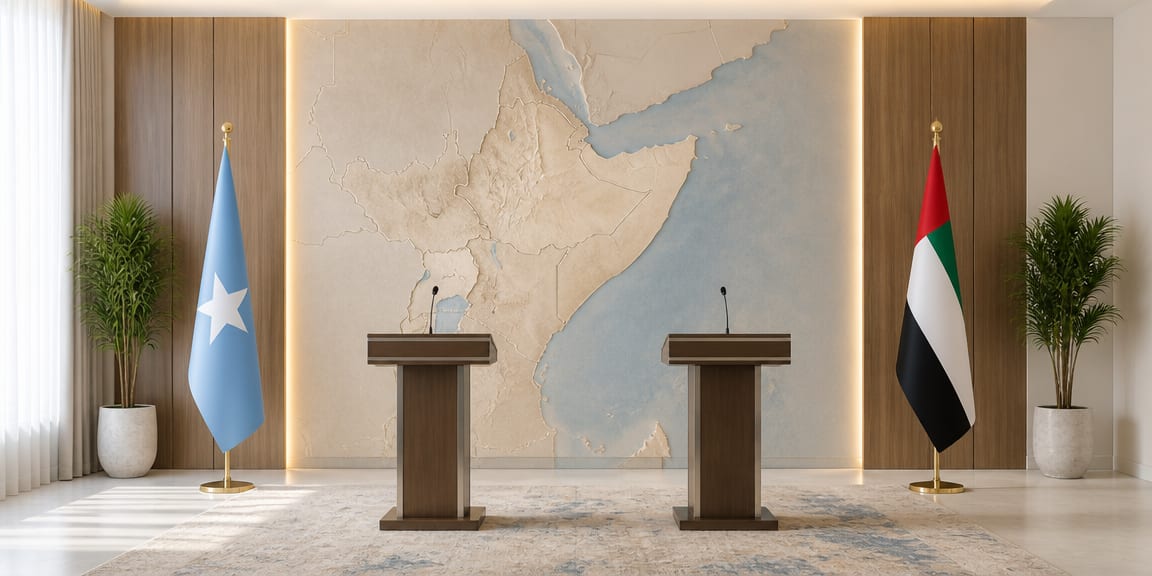
Somalia expels UAE ambassador and recalls envoy, alleging an “open invasion”; Abu Dhabi rebuffs the charge
Narrative Snapshot
Across outlets, there is broad alignment on the actions taken by Mogadishu and the rhetoric used by senior Somali officials. Where coverage diverges is on causal detail and the degree of Emirati response. Only a subset of reports adds upstream context about President Hassan Sheikh Mohamud’s allegation earlier in the week that the UAE backed regional Somali administrations opposed to the federal government, and about Somalia’s earlier decision to cancel agreements with Abu Dhabi. Other reports deliberately note the lack of specifics behind the “open invasion” claim.
Accounts also differ on the extent of the UAE’s reply. Several pieces emphasize there was no immediate foreign ministry comment, while others cite pushback from senior Emirati figures and characterize Abu Dhabi’s stance as rejecting the move as irresponsible or escalatory. The stakes most consistently highlighted concern Somali sovereignty and federal-regional contestation, set against the UAE’s broader economic, military and diplomatic footprint in the Horn of Africa.
What Happened
Somalia’s Council of Ministers ordered the United Arab Emirates’ ambassador to depart within 72 hours and recalled Somalia’s envoy from Abu Dhabi. Information Minister Abdifatah Kasim Mohamud announced the steps in Mogadishu, accusing the UAE of violating Somalia’s sovereignty and describing an “open invasion,” and warned of action against those cooperating with the alleged interference. He did not specify particular violations. Earlier in the week, President Hassan Sheikh Mohamud accused the UAE of providing economic and political support to regional Somali administrations opposed to the federal government, according to CGTN. CGTN also notes that in January Somalia terminated agreements with the UAE, including on ports and defense and security cooperation, a move rejected by three self-governing Somali regions with close ties to Abu Dhabi. While outlets reported no immediate comment from the Emirati foreign ministry, Anwar Gargash, a senior adviser to the UAE president, condemned Mogadishu’s remarks, and other reports characterized Abu Dhabi’s response as calling the decision irresponsible or escalatory.
Why It Matters
The rupture underscores a longer-running contest over the terms of external engagement in Somalia and the authority of the federal center over regional units. CGTN’s account connects the latest step to a January decision by Mogadishu to cancel port and security deals with the UAE, which some self-governing regions publicly rejected. That sequence situates today’s move within a struggle over who can strike external arrangements inside Somalia and on what terms. It also intersects with the UAE’s wider economic, military and diplomatic expansion across the Horn of Africa, as reported by CGTN, raising the prospect that a bilateral dispute could carry operational implications for Emirati-linked projects and partnerships in the subregion. For decision-makers, the episode tests norms of non-interference, highlights the policy costs of fragmented domestic authority, and may compel recalibration by governments and companies engaging Somali counterparts at federal and sub-federal levels.
Diverging Narratives
Somalia frames its action as defensive statecraft in the face of external encroachment. The information minister’s language about an “open invasion,” coupled with a warning that “measures will be taken against anyone who cooperates with the UAE,” presents the issue as a challenge to “sovereignty, security, land and unity,” according to Middle East Eye and CGTN. Yet the government did not publicly detail specific incidents underpinning the charge, an absence several outlets note.
The UAE’s side, while lacking an immediate foreign ministry statement in some reports, is represented through condemnations by senior figures and characterizations of Mogadishu’s move as “irresponsible,” “escalatory,” or an “attack,” per Bangkok Post, Daily Nation, and Middle East Eye. This positions Abu Dhabi as rejecting both the substance and tone of Somalia’s allegation. Between these poles lies unresolved ground: whether and how the UAE supported regional Somali administrations, as alleged by President Hassan Sheikh Mohamud in CGTN’s reporting, and how that interacts with earlier cancelled agreements that some regions opposed. The factual record presented publicly to date leaves the precise triggers and mechanisms of alleged interference unspecified.
What Happens Next
Key decision points now revolve around formalization and enforcement. First, watch for an official statement from the UAE foreign ministry and any adjustments to diplomatic operations; multiple outlets reported no immediate ministry comment even as senior advisers condemned Mogadishu’s stance. Second, monitor whether Somalia operationalizes the information minister’s warning of “measures” against domestic actors cooperating with the UAE; concrete steps would signal an internal enforcement phase of the federal government’s position reported by Middle East Eye and CGTN. Third, observe reactions from self-governing Somali regions that previously rejected January’s cancellation of UAE agreements, as noted by CGTN; their alignment or resistance will shape the federal-regional balance implicated in this dispute. Finally, track any practical effects on UAE-linked economic, military, or diplomatic activities in the Horn of Africa referenced by CGTN, which could indicate whether the rift remains symbolic or becomes operational.