
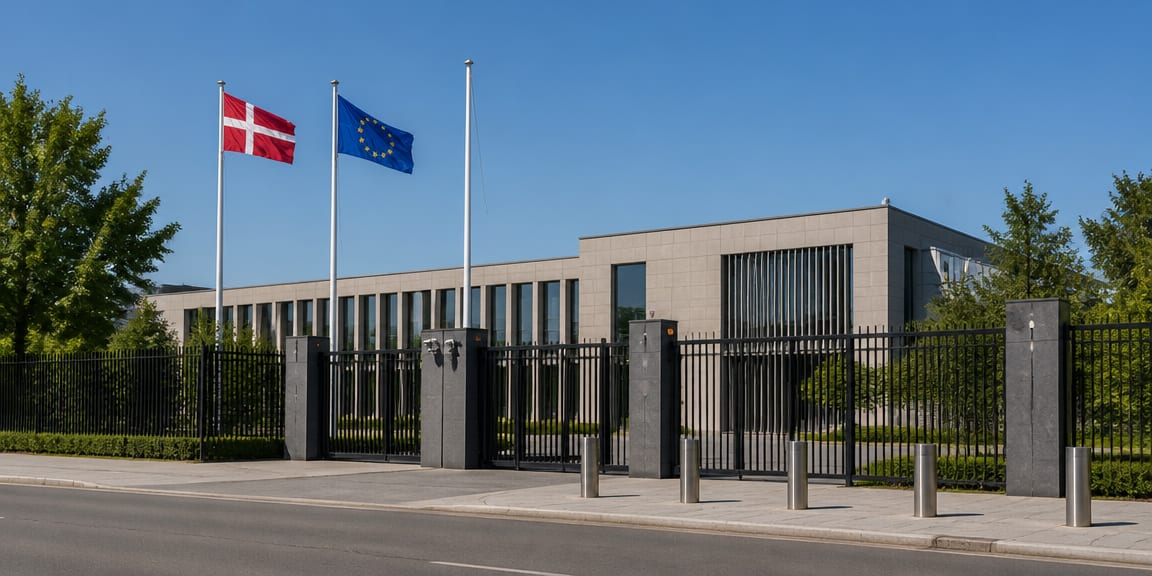
Denmark expels Russian defense attaché after alleging Moscow-backed plot to kill Ukrainian-American rapper
Narrative Snapshot
European and Danish-focused outlets center the state-to-state ramifications and policy levers. Le Monde highlights Danish authorities’ claim that Russian intelligence sought help from Loyal to Familia, a banned Danish gang, and notes Copenhagen’s expulsion of Russia’s military attaché. France24 extends the frame to the EU level, reporting the European Commission president’s condemnation and Denmark’s plan to tighten visa rules for Russian tourists, signaling an effort to socialize the issue within EU institutions.
Anglophone coverage gives prominence to the interdiction itself and the target’s identity. Sky News, the Bangkok Post, and NBC News stress that police and security services thwarted the attempt, while the Guardian and BBC describe the intended victim as a US‑Ukrainian or Ukrainian‑American rapper known as Kyivstoner. The Kyiv Independent adds specificity on timing tied to a planned concert on 25 September.
Russian state media and regional outlets emphasize contestation and retaliation. TASS reports Moscow will respond to the expulsion and foregrounds Denmark’s move to restrict non‑urgent visas for Russians while urging other EU states to follow. BBC and Al Jazeera note Russia’s denial and insistence that Copenhagen has not presented evidence publicly, with Al Jazeera underscoring Denmark’s allegation of collaboration with a banned local gang.
What Happened
Danish authorities said Russian intelligence orchestrated a failed attempt to assassinate rapper Albert Vasiliev, known as Kyivstoner, in Denmark ahead of a scheduled 25 September concert, and that the plot involved a banned Danish gang, Loyal to Familia. Following the disclosure, Foreign Minister Lars Løkke Rasmussen announced Russia’s defense attaché in Copenhagen was declared persona non grata and must leave within seven days, after Denmark summoned the Russian ambassador. Denmark also moved to restrict visas for Russians for non‑urgent travel and urged EU partners to adopt similar measures. The Danish prime minister’s office and police/security officials said the attack was thwarted. The Russian embassy denied the allegation. European Commission President Ursula von der Leyen condemned the alleged plot and expressed solidarity with Denmark. Moscow, via TASS, said it would respond to the expulsion.
Why It Matters
The episode links domestic security, EU policy, and diplomatic risk management. Copenhagen is using both diplomatic tools and mobility controls: expelling a defense attaché and restricting non‑essential visas for Russians while urging a broader EU alignment. That positions Schengen‑area entry policy as a lever in response to alleged extraterritorial operations, a choice now reinforced by political backing from the European Commission president. It also elevates the issue from bilateral dispute to EU agenda item, with solidarity language creating space for coordinated action. Russia’s stated intention to respond signals further degradation of diplomatic contacts, with potential implications for consular services and crisis management. The reported involvement of a banned Danish gang threads the case into national criminal policy, indicating that counterintelligence and organized‑crime enforcement may need tighter integration when states allege foreign intelligence collaboration with local actors.
Diverging Narratives
Core claims diverge along familiar lines of attribution and proof. Danish and several international outlets report that authorities concluded Russian intelligence planned the attack, with Le Monde and Al Jazeera specifying alleged collaboration with Loyal to Familia, while multiple English‑language reports focus more on the interdiction than on investigative detail. By contrast, BBC and Al Jazeera relay Russia’s denial and assertion that Denmark has not publicly presented evidence, leaving an evidentiary gap in open sources.
There are also differences in characterization and policy emphasis. Several outlets describe the target as US‑Ukrainian or Ukrainian‑American, while others refer to him simply as Ukrainian. On policy, TASS highlights Denmark’s intention to restrict non‑urgent visas for Russians and Copenhagen’s call for EU partners to replicate the measure, whereas South China Morning Post notes Denmark was considering suspending Schengen visas more broadly. France24 underscores EU‑level political condemnation and Denmark’s plan to tighten tourist visa rules, suggesting possible movement from national steps toward coordinated EU responses, even as specifics remain undefined in public reporting.
What Happens Next
Key decisions now center on policy scope and diplomatic reciprocity. First, Denmark’s visa move could remain a national measure targeting non‑essential travel or become an EU‑aligned step if partners heed Copenhagen’s call to follow suit; signals to watch include member‑state statements and any Commission guidance following the solidarity message reported by France24 and TASS. Second, Moscow has said it will respond to the expulsion; indicators include reciprocal expulsions or other measures announced by Russia’s foreign ministry, as flagged by TASS.
Operationally, Danish authorities have said the attempt was thwarted; further disclosures—such as additional detail from police or security officials—would address the evidentiary contention reported by BBC and Al Jazeera and clarify the alleged role of a banned local gang cited by Le Monde and Al Jazeera. EU actors may also decide whether to translate condemnation into concrete coordination on mobility or security policy, a shift that would be reflected in council-level statements or aligned national measures.