
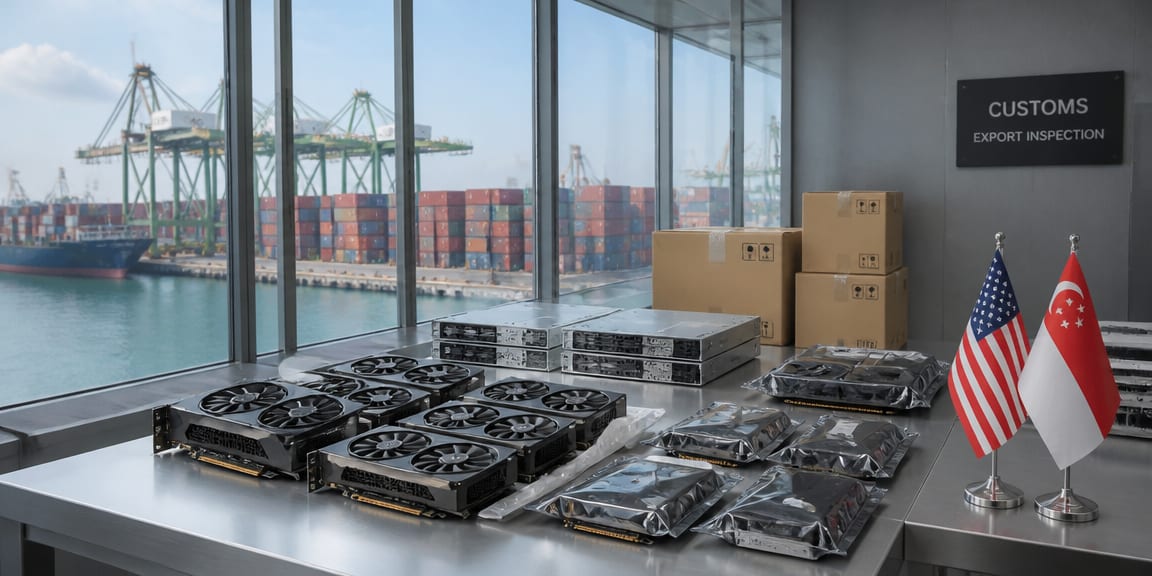
U.S. blacklists Singapore’s Megaspeed over alleged Nvidia-linked chip diversions to China
Narrative Snapshot
Across outlets, there is broad agreement that Washington’s move followed internal hesitation and outside scrutiny, but the emphases diverge. U.S. and European reporting foreground the policy machinery and the timing: the New York Times describes weeks of sparring among senior officials before adding Megaspeed to the Commerce Department’s entity list, and Deutsche Welle notes that lingering questions about that delay persisted up to the same day Jensen Huang was reinstated as Nvidia’s CEO.
Anglophone and Latin American coverage differ in how they situate culpability and method. The BBC leads with allegations that Megaspeed funneled chips to China and ties the case’s visibility to a former executive’s affair with Huang, while Clarin details operational vectors, reporting that Nvidia semiconductors were routed via third countries from Singapore and that the company had acquired high‑value components since 2025. Japan Times and Folha frame the case through espionage allegations linked to Alice Huang, whom Japan Times calls a Chinese spy suspect.
Several international outlets widen the aperture beyond a single company. Al Jazeera reports that the U.S. added Megaspeed alongside six other entities, indicating a broader export‑control sweep. Clarin underscores Singapore’s role, citing an ongoing national investigation and a public pledge by the prime minister to cooperate with Washington, an angle echoed in Kenya’s Daily Nation, which situates the probe inside Singapore’s legal process.
What Happened
On November 23, 2026, the Trump administration added Singapore‑based Megaspeed to the U.S. Commerce Department’s entity list, a trade blacklist that restricts access to U.S. technology, after weeks of internal debate among top officials, according to the New York Times. Deutsche Welle reports the step followed tensions over earlier inaction and coincided with Jensen Huang’s reinstatement as Nvidia’s CEO. Multiple outlets link the designation to allegations that Megaspeed diverted Nvidia AI chips to China. The BBC cites claims the firm funneled chips after a former executive’s affair with Huang became public, while Clarin reports that Nvidia semiconductors were sent to third countries from Singapore. Japan Times identifies Megaspeed as established by Chinese spy suspect Alice Huang. Singapore is investigating Megaspeed, with the prime minister pledging cooperation and authorities having interrogated and released Alice Huang, Clarin adds. Al Jazeera says six other entities were added alongside Megaspeed.
Why It Matters
The designation extends U.S. efforts to police the flow of advanced semiconductors to China through export controls and third‑country transshipment hubs. By placing Megaspeed on the entity list—an action that requires companies to obtain licenses to trade with it, as Clarin notes—Washington signals stricter enforcement after weeks of hesitation reported by the New York Times and Deutsche Welle. Al Jazeera’s reporting that six additional entities were listed situates this as part of a broader tightening, not a one‑off penalty.
The case also tests partner‑state alignment with U.S. controls. Clarin reports Singapore is actively investigating and has pledged cooperation with Washington, positioning a key logistics and financial hub within U.S. tech‑control implementation. Simultaneously, Al Jazeera’s account of a congressional probe into Commerce Secretary actions shows domestic oversight pressing the executive branch for consistency. For governments and firms, the episode highlights growing compliance demands around high‑end chips and the risk of enforcement reaching beyond primary markets to intermediary jurisdictions.
Diverging Narratives
Outlets converge on the fact of the designation but differ on causal framing and salience. The New York Times and Deutsche Welle stress institutional process, emphasizing weeks of internal sparring and the reputational cost of delay. Al Jazeera’s earlier reporting adds congressional pressure, citing a lawmaker probe into possible conflicts of interest tied to not listing Megaspeed sooner. By contrast, the BBC and Folha emphasize the scandal context—alleged chip diversions wrapped in personal and espionage allegations—while Japan Times characterizes Alice Huang as a Chinese spy suspect and ties Megaspeed’s founding to her.
There are unresolved questions embedded in these accounts. Clarin’s reporting on re‑exports via third countries and component purchases since 2025 points to potential networks and timelines, but not all outlets detail the evidentiary basis. The BBC’s reference to an affair elevates the profile dimension, yet other sources do not indicate how that detail bears on enforcement decisions. Clarin’s note that Alice Huang was interrogated and released indicates judicial movement in Singapore without clarifying potential charges. Finally, Al Jazeera’s mention of six additional entities broadens the enforcement frame, while most reporting centers almost exclusively on Megaspeed.
What Happens Next
Three decision points emerge from the reporting. First, U.S. licensing and enforcement posture toward Megaspeed and related entities will shape the practical impact of the listing. Clarin notes that trade now requires permits; Al Jazeera’s report of multiple simultaneous listings suggests further compliance actions are possible. Analysts should watch for license decisions, additional designations, or related advisories.
Second, Singapore’s investigation, described by Clarin and Daily Nation, will determine whether national authorities bring cases, expand inquiries to alleged third‑country routings, or share findings with U.S. counterparts. Signals include public updates from Singapore’s government and any law‑enforcement actions following Alice Huang’s interrogation and release.
Third, congressional oversight flagged by Al Jazeera may sustain pressure on the Commerce Department’s process. Hearings, letters, or reports stemming from the probe into the commerce secretary’s handling of Megaspeed will indicate whether internal U.S. interagency dynamics are stabilizing or remain contested.