
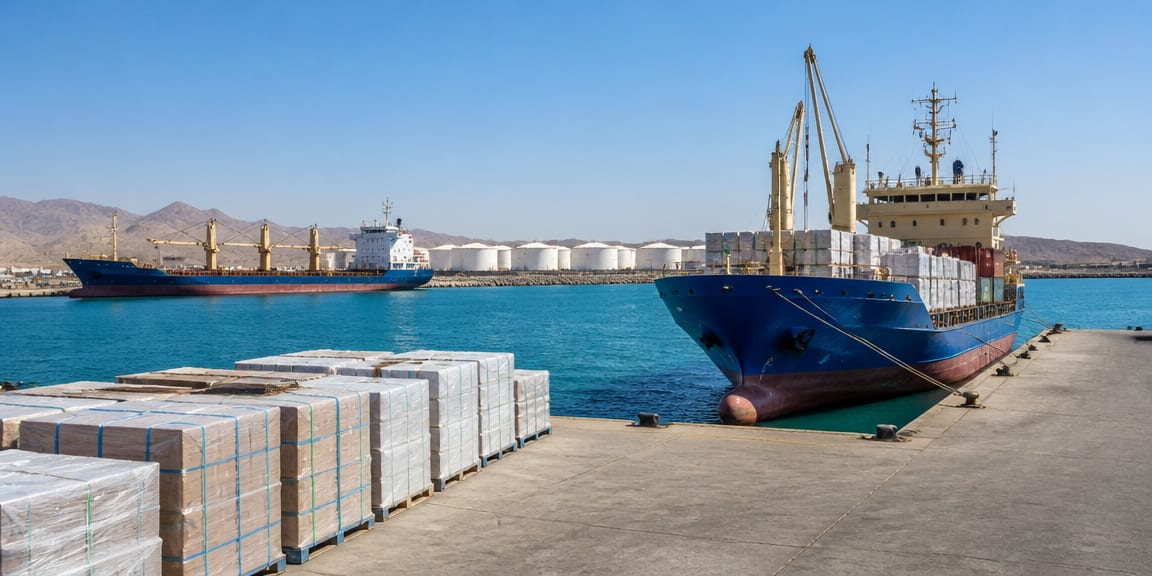
Houthi attacks target Saudi ports and energy facilities after coalition strikes in Yemen
Narrative Snapshot
The coverage presents different measures of the escalation’s significance. TASS foregrounds the Saudi-led coalition’s account of minor damage and no civilian casualties at Jizan port. Middle East Eye focuses on the vulnerability of strategically important assets despite Saudi interceptions, citing Arab and Western officials who say most incoming Houthi missiles and drones are being shot down. These accounts are not necessarily contradictory: limited damage in one acknowledged incident does not establish the effectiveness of protection across the wider infrastructure network.
The humanitarian and economic stakes receive uneven attention. Al Jazeera English’s dedicated Hodeidah report foregrounds aid experts’ warnings that disruption at Yemen’s largest seaport could worsen hardship for millions. Middle East Eye gives greater prominence to Saudi energy infrastructure and the growing importance of Red Sea export routes. The resulting distinction is between the consequences of interrupted access for Yemen’s population and the security of infrastructure supporting Saudi economic activity.
The evidentiary base is narrower than the number of reports might suggest. Several outlets relay the same Houthi claims or coalition statements, while the two supplied Middle East Eye reports titled “Loud explosions rock Riyadh” substantially overlap. CGTN explicitly says that reported Yemeni casualties and claimed damage in Saudi Arabia could not be independently verified. Publication across multiple countries therefore should not be mistaken for independent confirmation of every attack or its effects.
What Happened
On November 20, Middle East Eye reported that the coalition had launched a “special operation” against Hodeidah and targets in Sanaa, Saada and Taiz. The coalition said it struck weapons-smuggling operations and missile and drone facilities; the Houthis reported 41 deaths. CGTN subsequently relayed the same death toll, explicitly noting that it was unverified.
The Houthis claimed an attack on Rabigh refinery on November 22, without immediate Saudi comment. On November 25, they claimed strikes on Ras Tanura and the ports of Jeddah and Jazan. The coalition acknowledged a projectile strike causing minor damage at Jazan, with no casualties. Deutsche Welle reported a fire at Ras Tanura and another attack on Riyadh’s financial district; other reports described explosions and missile interceptions.
Why It Matters
The attacks connect infrastructure protection with the credibility of deterrence. Middle East Eye’s reporting distinguishes successful interception of most incoming weapons from reliable protection of individual high-value assets. For Saudi decision-makers, interception rates alone consequently provide an incomplete measure of security.
There is also a transport-route dimension. Middle East Eye reports that Saudi Arabia has increasingly used its East-West pipeline and western ports to export crude rather than moving it through the Strait of Hormuz. Claimed attacks along the Red Sea coast put the security of that alternative route under scrutiny, although the supplied reports establish no export-volume losses.
For humanitarian organizations, the central operational question is different: whether strikes disrupt Hodeidah’s functioning. Al Jazeera’s warning concerns the consequences for millions dependent on access through Yemen’s largest seaport.
Diverging Narratives
The clearest competing frames concern justification. Coalition spokesman Turki al-Malki described the Hodeidah targets as operational capabilities used to smuggle weapons and ballistic missiles. Houthi statements cast attacks on Saudi infrastructure as retaliation for strikes on Yemeni ports, power facilities and civilians. Bangkok Post, Le Monde and Al Jazeera convey this retaliatory framing through attribution; it is an actor’s explanation, not an independently established justification.
Damage assessments remain uneven. The Houthis claimed damage at both Jeddah and Jazan, while the coalition acknowledged only minor damage at Jazan in the supplied accounts. Middle East Eye cites commodity-market specialist Argus Media as reporting successful hits on Ras Tanura’s refinery and export terminal. Deutsche Welle reports a fire, but the excerpts provide no common assessment of operational disruption.
Regional framing also differs. Le Monde, Bangkok Post and Deutsche Welle identify the Houthis through their Iranian alignment. That characterization supplies geopolitical context but does not establish Iranian operational involvement in these particular attacks.
What Happens Next
The most explicit decision point is the Houthis’ stated linkage between further strikes on Yemeni ports or power facilities and “immediate retaliation” against comparable Saudi infrastructure. Analysts should distinguish renewed threats, claimed launches, confirmed impacts and demonstrated operational disruption when assessing whether that linkage is being acted upon.
Port functionality and verified damage assessments will be more informative than claims alone. Continued operations with limited damage would carry different implications from confirmed interruptions at Hodeidah, Saudi export terminals or refineries.
Aviation is another indicator, but attribution requires care. Clarín reports Houthi threats against Saudi airspace, while The Times of Israel describes an Etihad flight turning back amid recent Iranian attacks on Saudi Arabia and Bahrain. That report does not establish a Houthi cause; subsequent routing decisions would need similarly careful contextual assessment.