
Nvidia Shipment Halt Reported in Four Southeast Asian Countries as US Tightens Chip Controls
Narrative Snapshot
The coverage broadly agrees on Washington’s objective but offers different levels of detail about implementation. ANSA emphasizes restrictions intended to curb Chinese access to AI, while Folha de S.Paulo describes the target more broadly as access to computational power. TASS and The Hindu explicitly attribute their shipment reports to the Financial Times. Their accounts therefore should not be treated as separate confirmations of Nvidia’s instructions.
The most substantive difference is between a hardware-centered account and one focused on access to computing services. Deutsche Welle describes Chinese companies using offshore computing capacity, particularly in Southeast Asia, to work around US restrictions. Clarín’s November 26 report connects tighter controls to both chip smuggling and third-party computing rental. These accounts make the location and ownership of chips only part of the enforcement question.
Singapore receives more sustained attention than the other affected countries. CBC frames the issue around its position in global chip trade and efforts to prevent circumvention. The South China Morning Post instead foregrounds the limits of official confirmation. Together, these accounts highlight both the pressure on Singapore’s commercial role and uncertainty over the reported corporate response.
What Happened
The South China Morning Post dates US restrictions on exports of Nvidia’s advanced AI chips to China to 2022, citing national security concerns. By November 24, Clarín was reporting tighter licensing requirements in Southeast Asia and an investigation into Megaspeed’s role in facilitating access to sensitive technology.
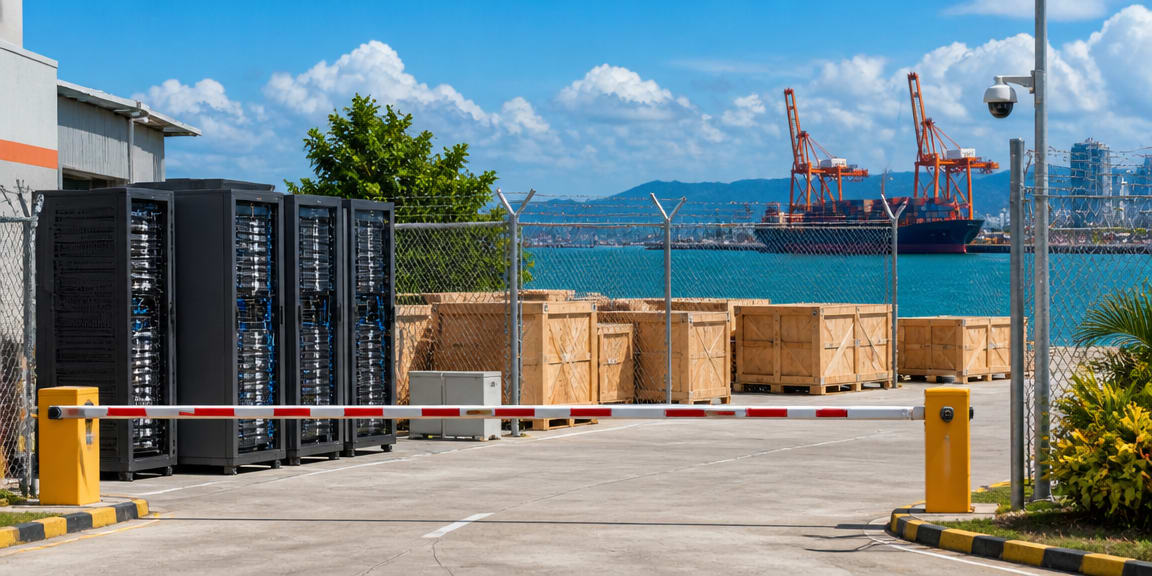
On November 26, reports described Nvidia instructing manufacturing partners to suspend shipments. The Hindu, citing the Financial Times, identified the destinations as Malaysia, Singapore, Thailand and Indonesia. Clarín reported effects on partners including Dell. The New York Times linked the halt to a new US rule that would require licenses for companies in those countries to buy advanced AI chips.
On November 27, Singapore reported engagement with local businesses, but Deputy Prime Minister Gan Kim Yong could not confirm the shipment halt.
Why It Matters
The accounts describe export controls reaching beyond direct sales to China into the regional infrastructure through which computing capacity is supplied. Deutsche Welle’s emphasis on offshore access shows why restricting physical chip transfers and restricting their use are distinct enforcement problems. Clarín’s reporting on third-party rental places that distinction within Washington’s tightening approach.
For Southeast Asian governments, the immediate institutional issue is how domestic commercial oversight interacts with US licensing requirements. Singapore’s engagement with businesses illustrates the coordination burden, while CBC’s account identifies its role in global chip trade as a particular source of exposure. For manufacturers and system suppliers, the reported instructions show how regulatory changes can affect shipments to intermediary markets, not only the country ultimately targeted by restrictions.
Diverging Narratives
The clearest unresolved issue is the shipment halt’s verification and scope. Several headlines present Nvidia’s action as established, but the South China Morning Post records Singapore’s inability to confirm it. That does not disprove the reports; it distinguishes reported company instructions from public confirmation by an affected government. The supplied accounts also alternate among chips, chip-containing systems and AI servers, without establishing that these descriptions cover identical products.
A second distinction concerns the mechanism of circumvention. Clarín’s November 24 report emphasizes suspected diversion toward China and an investigation involving Megaspeed. Deutsche Welle focuses on offshore computing, which can provide access without moving the underlying chips into China. Those are related but different compliance problems.
CBC’s “scandal” framing places greater weight on Singapore’s exposure and corporate scrutiny. Its description of Megaspeed’s connection to a figure involved in the controversy does not, in the supplied material, establish wrongdoing by the company.
What Happens Next
The first decision-relevant indicator is confirmation of Nvidia’s instructions and their product coverage. Singapore’s stated engagement with businesses provides an official channel through which the reported disruption may be clarified, but its current position leaves the halt unconfirmed. Confirmation would establish the operational reach of the reported suspension; a narrower account would limit conclusions drawn from the broader headlines.
The second indicator is how the reported licensing requirements apply to purchases and access arrangements. The New York Times describes purchase licenses, while Deutsche Welle and Clarín identify offshore computing and rental as enforcement concerns. Whether implementation addresses those services as well as hardware transfers will determine which reported access mechanisms fall within the controls. Further findings concerning Megaspeed would also help separate suspected circumvention from established conduct.