
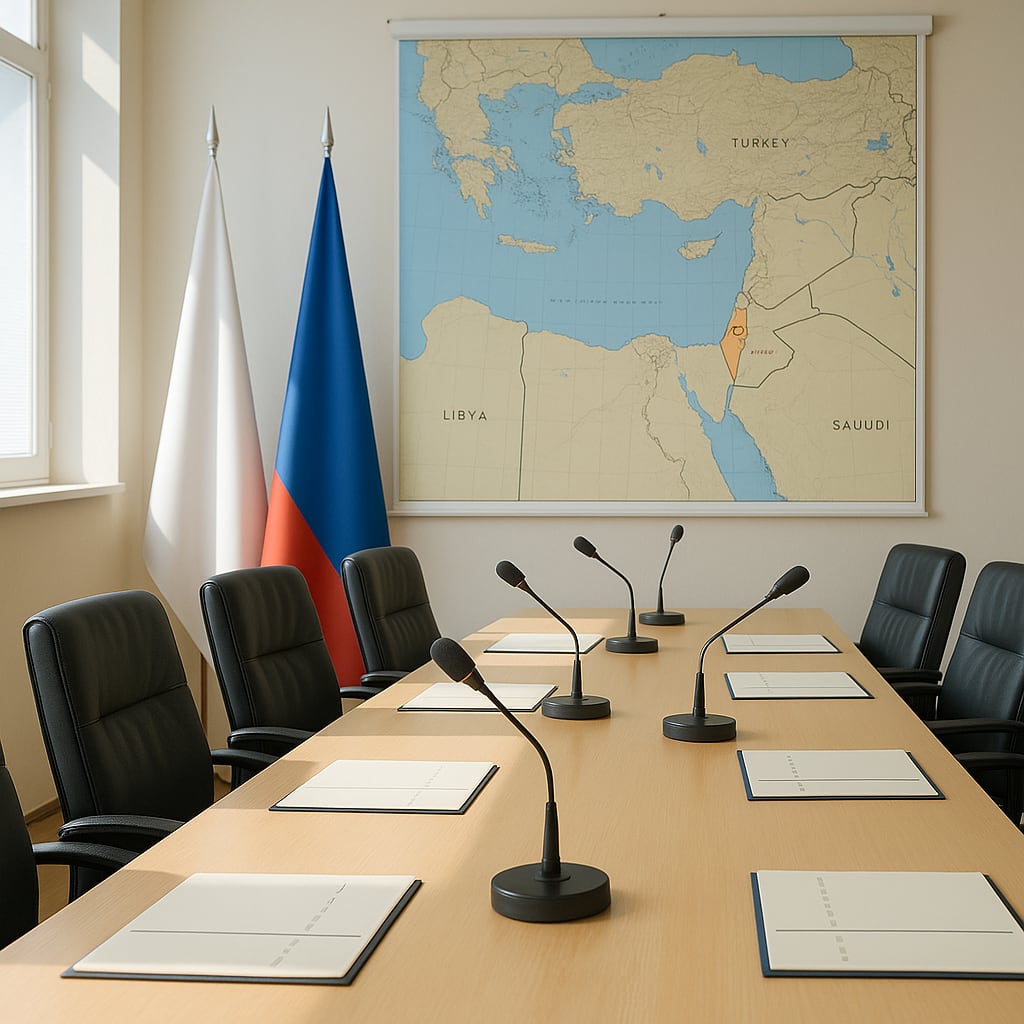
Trump announces Gaza disarmament-for-withdrawal plan as Hamas signals acceptance and Israel voices concerns
Narrative Snapshot
Across outlets, the sharpest divergence centers on how closely Israel is aligned with Washington’s announcement. Al Jazeera reports that Israel has not agreed to a plan under which Hamas would surrender weapons in exchange for full Israeli withdrawal from Gaza, despite US claims of an “understanding.” The Times of Israel underscores this gap, quoting an Israeli official insisting there will be no pullback until “real” disarmament occurs and noting Prime Minister Benjamin Netanyahu has not endorsed the deal; France24 relays the same sequencing stance from Israeli sources. The Toronto Star (via AP) adds that Israel conveyed “serious security concerns” to the White House, while Serbia’s Politika reports Israel learned of the decision from a social media post even as President Trump said it was made “together with Israel.”
Coverage of Hamas’s position is also mixed. Telesur says Hamas approved the final draft of a roadmap for the ceasefire’s second phase, with Egyptian, Qatari, and Turkish mediators awaiting Israel’s response; Middle East Eye relays that Qatar’s prime minister welcomed Hamas’s acceptance. By contrast, the New York Times highlights the absence—at the time of the announcement—of official statements from Hamas or the Israeli government acknowledging the deal, underscoring uncertainty over implementation.
Regional signaling is largely supportive of moving to implementation. Middle East Eye reports Saudi Arabia called the “demilitarisation deal” historic and praised US leadership, while Telesur highlights active mediation by Egypt, Qatar, and Turkey. ANSA adds that Trump pointed to a possible signing in Cairo next week but notes the withdrawal of the Israel Defense Forces remains a sticking point, reinforcing France24’s portrayal of sequencing as the core operational hurdle.
Substantively, Haaretz surfaces Palestinian concerns that the new “Board of Peace” roadmap is more an implementation mechanism for previously discussed ideas than a solution to unresolved issues, warning it might help avert renewed escalation without settling fundamental questions about Hamas’s future, Gaza’s governance, and reconstruction. That critique defines what is at stake if disarmament and withdrawal steps proceed without a broader political framework.
What Happened
President Donald Trump announced an understanding for Hamas to disarm in exchange for a full Israeli withdrawal from Gaza, asserting Israel was “very happy” with the plan. Al Jazeera reports Israel has not agreed to such a trade, and the Times of Israel cites an official saying no pullback would occur before “real” disarmament. France24 similarly reports the Israeli position on sequencing, while also noting Hamas insists Israel must withdraw first. Telesur says Hamas approved the final draft of a second‑phase ceasefire roadmap and that Egyptian, Qatari, and Turkish mediators are awaiting Israel’s response; Middle East Eye reports Qatar welcomed Hamas’s acceptance, and later that Saudi Arabia called the deal historic. ANSA relays Trump’s claim of a signing in Cairo next week, with IDF withdrawal still unresolved. The Toronto Star (AP) reports Israel shared serious concerns with the White House. Politika notes Israel learned of the decision via social media. The New York Times flags the lack of official statements from Hamas or Israel acknowledging the deal.
Why It Matters
This moment tests whether a demilitarisation‑for‑withdrawal bargain can anchor the second phase of Gaza’s ceasefire architecture and whether Washington can translate presidential announcements into implementable steps with Israeli buy‑in. The roles of Egypt, Qatar, and Turkey as mediators, highlighted by Telesur and Middle East Eye, show regional actors shaping sequencing and verification design—areas where Israel’s insistence on “real” disarmament before pullback and Hamas’s demand for withdrawal first, reported by France24 and the Times of Israel, directly collide. Saudi Arabia’s endorsement, noted by Middle East Eye, signals a broader Arab willingness to back movement if core security concerns are addressed. Haaretz’s reporting that Palestinians view the “Board of Peace” roadmap as an implementation tool that sidesteps governance, Hamas’s future, and reconstruction warns policymakers that absent a political settlement, the plan may reduce near‑term escalation risks without resolving structural drivers of conflict.
Diverging Narratives
The most immediate split is over Israeli consent and sequencing. Trump’s assertion that Israel is on board contrasts with Al Jazeera’s reporting that Israel has not agreed, the Times of Israel’s account of a firm no‑withdrawal‑before‑disarmament stance, and the Toronto Star/AP report that Israel has raised “serious security concerns” with the White House. France24 crystallizes the core procedural gap: Israeli sources say withdrawal requires verified disarmament, while Hamas insists withdrawal must come first.
There is also ambiguity over Hamas’s formal posture. Telesur reports Hamas approved the final draft of the phase‑two roadmap and Middle East Eye says Qatar welcomed Hamas’s acceptance. Yet the New York Times, on the day of the announcement, emphasized that neither Hamas nor the Israeli government had issued official statements acknowledging the deal, which helps explain why implementation details remain opaque.
Process and presentation are in contention too. ANSA relays Trump’s claim of a Cairo signing next week, even as Politika reports Israel learned of the decision via social media and the Times of Israel shows Netanyahu signaling caution. Finally, Haaretz introduces a different axis of debate from the Palestinian side: even if disarmament and withdrawal proceed, the roadmap risks becoming a dead end if it fails to address governance, Hamas’s future role, and reconstruction.
What Happens Next
Three decision points will determine traction. First, an explicit Israeli position: a public endorsement, conditions, or a formal demurral. Indicators include cabinet statements, the terms Israel sets for “real” disarmament, and whether the Toronto Star/AP’s reported security concerns lead to revisions. Second, sequencing and verification design: France24 and the Times of Israel highlight the disarmament‑before‑withdrawal demand, while Hamas’s withdrawal‑first stance persists. Watch for mediator‑brokered technical annexes on verification, timelines, and territorial pullback stages. Third, procedural follow‑through: ANSA’s mention of a Cairo signing next week hinges on Israel’s response, which Telesur says mediators await. Additional signals include whether Hamas and Israel issue the official acknowledgments the New York Times noted were missing, how Qatar and Saudi Arabia sustain diplomatic backing reported by Middle East Eye, and whether Haaretz’s governance and reconstruction gaps are addressed in any accompanying framework.