
Lead
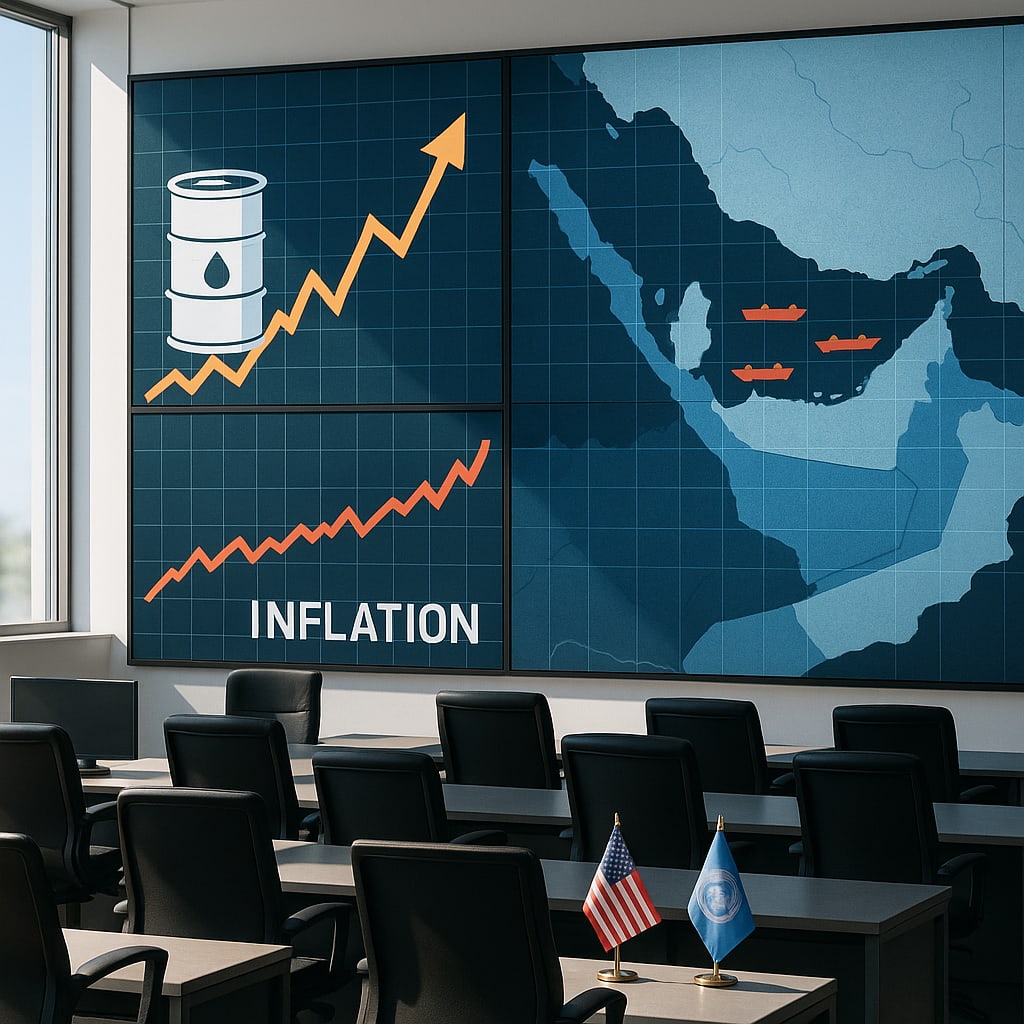
A Middle East conflict that has disrupted energy flows is now showing up unmistakably in Western consumers’ daily lives and in the most closely watched economic data in the United States and Europe. In late May, multiple outlets across regions converged on the same signal: inflation pressures have re-accelerated sharply, with the US Federal Reserve’s preferred measure rising to its highest level in roughly three years, as fuel and food costs climb. At the same time, political messaging around the conflict and its endgame—whether through coercion, negotiation, or a managed de-escalation—has hardened, with Washington publicly setting stringent terms on Iran’s nuclear material and senior US officials framing the disruption to maritime traffic as intolerable.
What Happened
In April, the United States’ key inflation gauge—the Personal Consumption Expenditures (PCE) price index—rose 3.8% from a year earlier, the highest annual rate since 2023. Coverage across US and international business desks aligned on the basic drivers cited in the data narrative: a renewed burst of price pressures tied to energy costs and knock-on effects in essentials, particularly food. The reporting also converged on the practical household impact: Americans’ purchasing power is being squeezed, and cost-of-living frustration is becoming a prominent feature of domestic politics.
The inflation story is tightly interwoven with developments in the Gulf and broader Middle East. Reporting during the same period described a conflict environment in which strikes have continued even as both Washington and Tehran appear to calibrate against an uncontrolled spiral. Maritime disruption—widely framed as involving a blockade or severe impediments affecting a critical chokepoint for global oil shipments—has become the economic transmission mechanism. A senior US official was quoted promising that the Strait of Hormuz would be reopened “one way or another,” characterizing the situation there as illegal; the remark underscored that Washington is treating shipping access as a strategic red line.
Markets, meanwhile, have oscillated with diplomatic signals. Oil prices were reported dropping below $100 a barrel at one point as investors weighed the possibility of talks and a potential easing of tensions—evidence that traders see negotiations as a plausible (if uncertain) route to lower energy costs. US messaging on what any deal would require has been stark: the president publicly demanded that Iranian uranium be handed over or destroyed as part of an agreement, setting a bar that implies far-reaching concessions rather than a narrow ceasefire.
In Europe, the economic reverberations have been described less through monthly macro indicators and more through the lived reality of household budgets and corporate exposure to higher input costs. UK-focused reporting emphasized that consumer prices could remain elevated for months even if fighting subsides, citing how supply chains and pricing practices can lag behind the end of a shock. French reporting similarly highlighted distributional consequences inside the country, arguing that the energy-driven inflation surge is widening existing inequalities and hitting some regions harder—especially areas more dependent on diesel, heating oil, or gas.
Why It Matters
The immediate significance is monetary and political. A jump in the PCE inflation rate to multi-year highs complicates the Federal Reserve’s path at a moment when households are already absorbing higher fuel and food bills. Even without prescribing a policy outcome, the shared implication across coverage is straightforward: hotter inflation narrows the room for interest-rate relief and intensifies scrutiny of economic stewardship.
The inflation pulse is also a measure of how geopolitical shocks travel. Disruption to energy routes and risk premiums in oil markets quickly feed through to gasoline prices; those costs then ripple into freight, food production, and retail pricing. The April US data, coming as conflict-related energy headlines dominated, provided a quantifiable link between distant military and diplomatic developments and domestic economic reality.
Politically, the cost-of-living effect is being mapped directly onto leadership evaluations. US-focused political framing cast inflation and gasoline prices as a mounting vulnerability for the administration, with public frustration rising as key elections approach. The dispute is not over whether prices are rising, but over causality and responsibility: whether the inflation spike should be read primarily as an imported wartime shock, a product of policy choices, or an argument for reshaping the central bank’s approach.
For Europe, the importance lies in persistence and inequality. The emphasis on months-long pressure even if the conflict ends reflects a concern that energy shocks do not unwind cleanly: suppliers may lock in higher contracts, retailers may delay price cuts, and households may alter spending patterns. The French regional lens adds that energy inflation is not evenly experienced; reliance on particular fuels and commuting patterns can make the same price shock far harsher in some areas than others, feeding political and social tension.
Finally, the diplomatic stakes are sharpening. Publicly maximal demands on Iran’s uranium, paired with vows to restore maritime transit by force if necessary, suggest that any de-escalation—if it comes—will be contested, conditional, and closely bound to broader security objectives rather than limited to shipping alone. That matters for markets because the risk premium in oil is as much about expectations of escalation as about today’s supply.
Diverging Narratives
Across outlets, the core facts broadly align—higher inflation readings, energy as a catalyst, and a conflict-driven squeeze on households—but the framing diverges in telling ways.
Economic data as a policy problem vs. a pocketbook story. US business coverage placed the inflation gauge at the center, emphasizing the PCE measure’s policy relevance for the Fed. Other coverage, particularly oriented toward general audiences, stressed the erosion of real incomes and spending power—what inflation means for groceries, gas, and household budgets—sometimes with less emphasis on the technicalities of the index.
Who bears responsibility. Some US political framing leaned into assigning blame: either toward the administration’s handling of the economy or toward central bank decision-making and independence. Commentary in conservative US media highlighted internal Federal Reserve dynamics and suggested that the central bank’s posture could threaten jobs, housing, and growth—treating inflation not only as a geopolitical import but as a product of policy errors or institutional overreach. Other outlets foregrounded the war-driven nature of the price shock, implying limits to what domestic policy can immediately fix.
Conflict endgame: negotiation pragmatism vs. coercive leverage. Reporting on the diplomatic track split in emphasis. One line of coverage portrayed both sides as avoiding a return to all-out war, focusing on restraint amid exchanges of strikes and the possibility of talks. Another line emphasized hardening demands and skepticism about deals, arguing that agreements that end a blockade could be temporary or invite repetition. The difference is less about the existence of talks than about what they are expected to deliver: durable settlement versus tactical pause.
Europe’s inequality lens vs. Anglo-American politics lens. French reporting centered on how energy inflation accentuates inequality within national borders, identifying regions and fuel dependencies as key fault lines. UK reporting focused on duration—how long elevated prices could last—drawing attention to business exposure and the lag between geopolitical events and shelf prices. US reporting, by contrast, frequently folded inflation into electoral politics and the Fed’s next move.
Oil price signals interpreted cautiously. The dip in Brent below $100 was presented as markets “weighing” talks rather than pricing in peace—an important tonal difference. The move was used to illustrate sensitivity to headlines, not as proof that the crisis is ending. Where outlets differed was in how much weight to give that signal: as a tentative sign of de-escalation potential or merely a temporary reprieve within a volatile trend.
Current Situation
As of late May, inflation has accelerated in the United States to a three-year high on the Fed’s preferred gauge, with energy and food pressures prominent in the public narrative. In Europe, the conflict-driven energy shock is being treated as both persistent and unevenly distributed, with expectations that higher prices could linger even if hostilities ease.
Diplomatically and militarily, the picture is one of constrained confrontation rather than clear resolution. Strikes have occurred, yet reporting also reflects an assessment that neither side is seeking a full-scale war. At the same time, US statements about reopening a vital shipping corridor and about stringent conditions for any uranium-related agreement indicate that Washington is pairing any negotiation track with overt leverage and red lines.
The immediate outlook, as reflected in the combined coverage, is defined by two uncertainties that reinforce each other: whether shipping disruptions and the conflict’s risk premium will abate, and whether inflation—now visibly re-accelerating—will force tougher choices for policymakers while deepening political pressure on leaders facing impatient voters.