
IAEA says Iran inspections “going to happen” as Tehran links access to a final US deal and sanctions relief
Narrative Snapshot
- Multiple outlets quote IAEA Director General Rafael Grossi asserting that inspections in Iran will proceed and that “modalities” are being worked out; Al Jazeera adds that an MoU “explicitly” puts the agency in charge of supervision. BBC and Middle East Eye report this confidence alongside Tehran’s caveat on timing.
- Iranian and Russia-based reporting (IRNA, TASS, Middle East Eye) center Iran’s conditions: access to sites “attacked” and to related materials only within a final agreement and after “practical steps” on US sanctions.
- TASS relays a US angle absent from other reports: President Donald Trump said US inspectors would join an IAEA trip, with “no rush.” SCMP highlights a “war of words” between Washington and Tehran that the IAEA seeks to rise above.
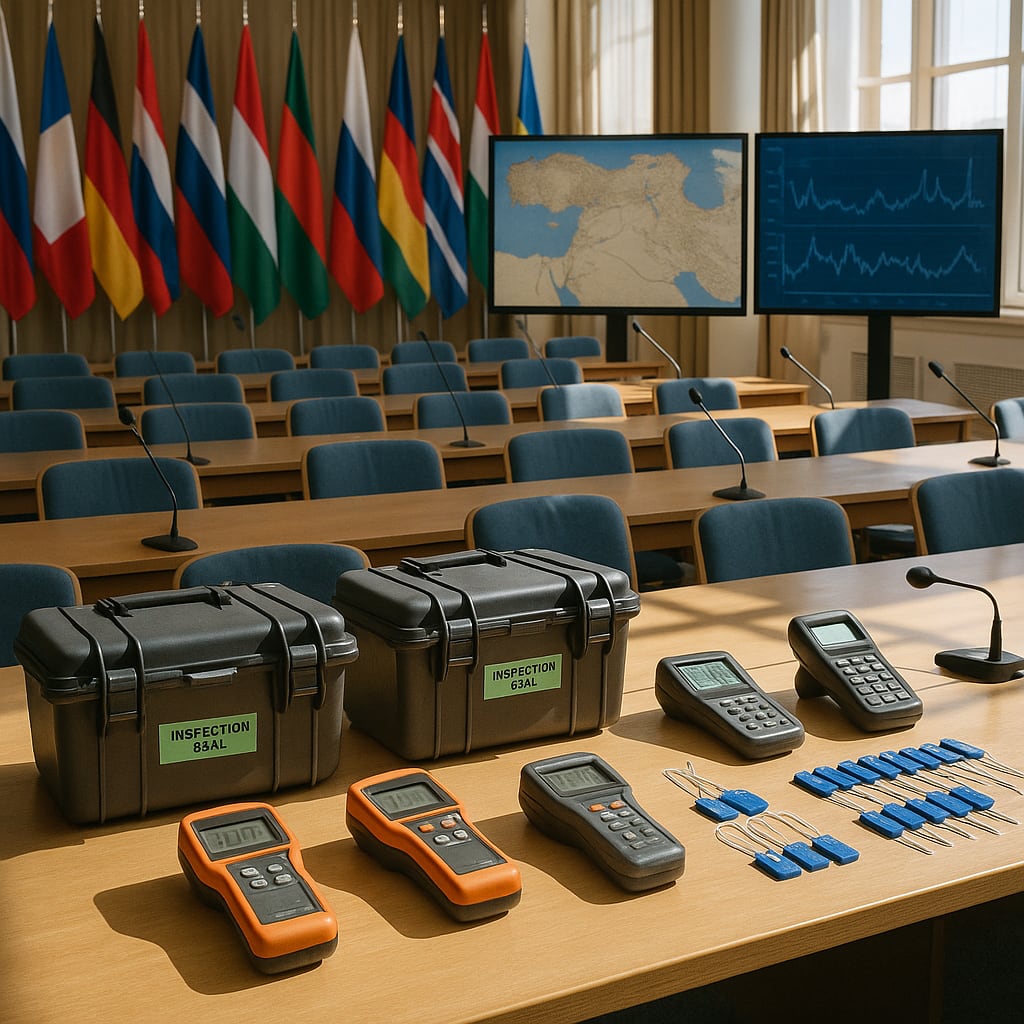
- European coverage expands the stakes: Corriere della Sera details sensors, seals, and remote monitoring — while warning of an alleged “second path” raised by opponents — and La Repubblica notes US political outreach in the Gulf to reassure allies.
What Happened
The head of the International Atomic Energy Agency, Rafael Grossi, said UN nuclear inspectors will visit Iran and that the agency is working on inspection “modalities” (BBC; Middle East Eye). Al Jazeera reports Grossi as saying a memorandum of understanding “explicitly” tasks the IAEA with supervising inspections. In parallel, Deputy Foreign Minister Kazem Gharibabadi stated that access to nuclear facilities “attacked” in recent incidents — and to related nuclear materials — would be considered only within the framework of a final agreement and after practical steps toward lifting US sanctions (IRNA; TASS; Middle East Eye). Deutsche Welle notes the IAEA’s message that inspections are “going to happen” despite contradictory statements by the United States and Iran, adding that Iran’s top negotiator characterized the deal with the US as “America’s declaration of defeat.” TASS separately cites US President Donald Trump saying US inspectors would join an IAEA trip, adding there is “no rush.”
Why It Matters
The coverage captures a verification regime under political cross-pressure: the IAEA signals operational confidence and a clear supervisory role (BBC; Al Jazeera), while Tehran conditions site access on sanctions relief within a final bilateral agreement (IRNA; TASS; Middle East Eye). This shifts inspection access from a technical safeguard into negotiated leverage, testing the separation between nonproliferation verification and geopolitical bargaining. Reports that US personnel might join inspection teams (TASS) raise questions about the perceived neutrality of verification, a core asset of IAEA legitimacy. European outlets’ focus on sensors, seals, and remote monitoring (Corriere della Sera) underscores the system’s reliance on technology to maintain continuity of knowledge when physical access is delayed or sequenced. La Repubblica’s note on US outreach in the Gulf suggests allied security assurances are being managed alongside verification talks, linking inspection outcomes to regional risk perceptions and crisis management.
Diverging Narratives
- IAEA/verification track: Grossi publicly maintains that inspections “are going to happen” and that modalities are being finalized (Deutsche Welle; BBC; Middle East Eye). Al Jazeera attributes to Grossi that an MoU “explicitly” assigns the IAEA supervisory authority, reinforcing the agency’s institutional primacy.
- Iranian conditionality track: Gharibabadi insists access to attacked facilities and related nuclear materials will be addressed only within a final agreement and after tangible sanctions relief steps (IRNA; TASS; Middle East Eye). La Repubblica echoes Tehran’s line that “access to sites at this stage is not foreseen.”
- US messaging and optics: SCMP highlights a “war of words” between Washington and Tehran that the IAEA seeks to cut through. TASS relays Trump’s claim that US inspectors would join an IAEA mission, introducing uncertainty about team composition that other outlets do not corroborate.
- Scope and methods: BBC references inspections “as part of [a] war deal,” while Corriere della Sera emphasizes technical measures — sensors, seals, remote checks — and cites opposition warnings of a potential “second path” to a weapon. Clarin frames the episode as evidence of US-Iran public bargaining, reflecting how process and sequencing are contested even when inspection intent is affirmed.
Unresolved issues across reports include the sequencing of sanctions relief and site access; whether “attacked” facilities receive distinct treatment; the precise composition of inspection teams; and the timeline for resuming “full monitoring,” which Grossi told SCMP he expects at some stage.
What Happens Next
- Sequencing and reciprocity: Iran links access to practical sanctions relief steps and a final agreement (IRNA; TASS; Middle East Eye). Analysts should watch for any US measures framed as “practical steps,” and for Iranian statements acknowledging these as sufficient to unlock access decisions.
- Technical modalities: Grossi says modalities are being worked out (BBC), with an MoU placing the IAEA in charge (Al Jazeera). Indicators include IAEA-Iran announcements on site lists, timing, and deployment of sensors, seals, and remote monitoring referenced by Corriere della Sera.
- Team composition and mandate: TASS reports Trump’s intent to include US inspectors. Clarifications from the IAEA on mission staffing and from Tehran on acceptance criteria will signal whether this claim affects implementation or remains political rhetoric.
- Regional assurance: La Repubblica’s mention of US engagement in the Gulf points to allied buy-in as a factor. Watch for Gulf statements endorsing or questioning inspection arrangements, which could influence diplomatic room for maneuver.
- Monitoring scope: SCMP quotes Grossi expecting eventual resumption of “full monitoring.” IAEA reporting on restored coverage — especially at facilities described by Iran as “attacked” — will indicate whether the inspection regime regains comprehensive reach.