
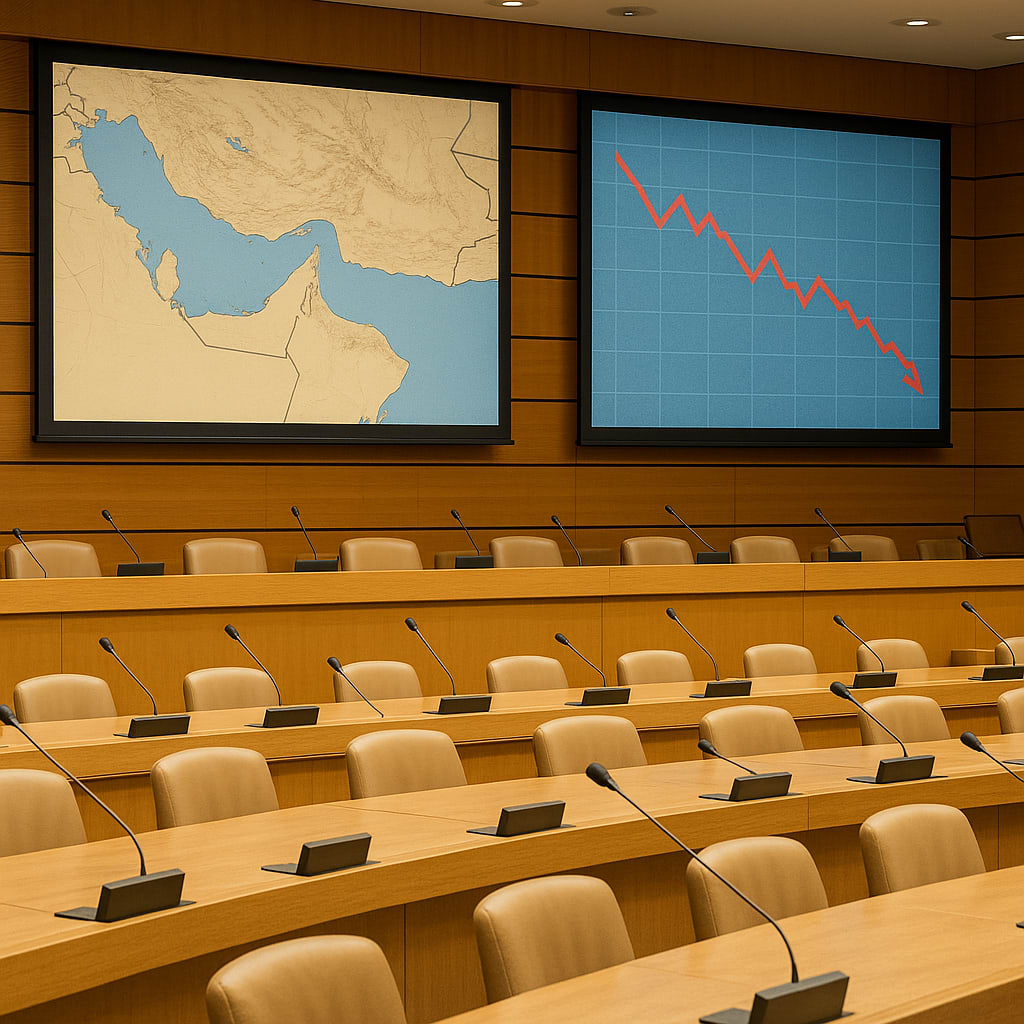
Oil prices fall as U.S. and Iran pause strikes for a second day, raising hopes for diplomacy
Narrative Snapshot
Across outlets, the price move is tied to the same catalyst—an observed halt in U.S.-Iran strikes and a corresponding easing of supply-risk premiums—but the reporting diverges on emphasis, magnitude, and additional drivers. U.S. and European sources foreground the diplomatic frame: the United States “giving talks some space” and hopes for steps toward a ceasefire and discussions on reopening the Strait of Hormuz, which several link to the market’s pullback. Japanese and Brazilian coverage center the mechanics of the selloff, detailing intraday lows and percentage declines in WTI and Brent as risk perceptions cooled. Russian and Serbian reporting highlight the scale of the drop and bring in a supply-side element: the resumption of crude loadings at the Caspian Pipeline Consortium’s Black Sea terminal as an additional headwind to prices.
There is also variance in how much confidence outlets ascribe to the pause. Some describe investor optimism or “raised hopes” for de-escalation, while others underscore uncertainty, noting that the U.S. pause followed nearly two weeks of nightly strikes without an immediate explanation and that other regional flashpoints, such as Houthi-Saudi clashes, persist. The net effect is a composite picture: alignment that the pause shaved off war premiums, tempered by reminders that the underlying geopolitical risks and shipping-lane constraints have not been resolved.
What Happened
After 13 consecutive nights of U.S. strikes on Iran, Washington halted attacks over the weekend; no new strikes were reported from either side since Friday, with U.S. officials characterizing the pause as giving space for talks. Energy markets responded. Brent futures fell sharply, with reports ranging from a drop of more than 5% in early Sunday trading to declines exceeding 7% on London’s ICE, while WTI slid roughly 5% and at one point touched the low $83 per barrel range in New York, a pullback that approached 7% from late-week levels. Prices were retracing from a two‑month high set the prior week. Several outlets linked the selloff to reduced fears of near‑term supply disruption and, in Europe, to an additional supply boost as crude loadings resumed at the Caspian Pipeline Consortium’s Black Sea terminal. Coverage also noted hopes for talks on reopening the Strait of Hormuz.
Why It Matters
The episode illustrates how quickly risk premia tied to Gulf escalation can reprice on signals of restraint and diplomatic engagement. U.S. messaging that strikes were paused to allow talks, coupled with reporting on possible discussions to reopen the Strait of Hormuz, directly intersects with the governance of critical maritime chokepoints that anchor global energy flows. For policy makers, this links military signaling to immediate impacts on import costs and fiscal planning, especially for energy‑importing economies. It also shows how non-Gulf supply nodes can modulate price swings: the reported resumption of Caspian Pipeline Consortium loadings added downward pressure, highlighting the interplay between geopolitical risk and operational continuity in other corridors. Multilateral channels matter here as well, with the U.S. UN envoy’s statement positioning the pause within a diplomatic track. For institutions monitoring market stability, the episode underscores the sensitivity of prices to incremental de‑escalatory steps even absent a formal agreement.
Diverging Narratives
Outlets differ on the clarity and intent of the pause. European and U.S. reports emphasize that Washington halted attacks to “give talks some space,” with some linking this to prospective ceasefire efforts and discussions on reopening Hormuz. By contrast, Japanese reporting notes that Washington offered no immediate explanation for abruptly stopping a 13‑night campaign, leaving open whether the lull reflects tactical recalibration or a genuine opening for diplomacy. Market framing also diverges. Several reports describe investor optimism and risk concerns “easing for now,” while others stress that the drop is partly mechanical, reversing a rally to two‑month highs. Quantitatively, accounts vary: early-session moves centered on 5–5.5% declines in Brent and WTI, while later tallies put Brent down more than 7% and WTI about 5.3%, reflecting different time stamps and venues. Finally, while most focus on the U.S.-Iran dynamic, some coverage widens the aperture: continuing Houthi-Saudi clashes and a resumed Black Sea export terminal both figure into assessments of supply security and price formation beyond the Gulf theater.
What Happens Next
Two immediate decision points flow from the reporting. First, whether the pause persists and is coupled with concrete diplomatic steps. U.S. officials have publicly framed the halt as creating room for talks, and several outlets cite hopes for discussions on reopening the Strait of Hormuz; analysts should watch for confirmations of formal channels, any reference to ceasefire parameters, and statements from Tehran that mirror or reject the U.S. framing. Second, whether operational and regional factors offset diplomatic momentum. The resumed Caspian Pipeline Consortium loadings added supply pressure; continuity there would keep a lid on prices, while any disruption could reintroduce a premium. Simultaneously, developments in adjacent theaters—such as reported Houthi-Saudi clashes—bear on Red Sea shipping risks flagged in coverage. Any resumption of U.S.-Iran strikes, incidents affecting Hormuz access, or shifts in these ancillary corridors would quickly reset market expectations.