
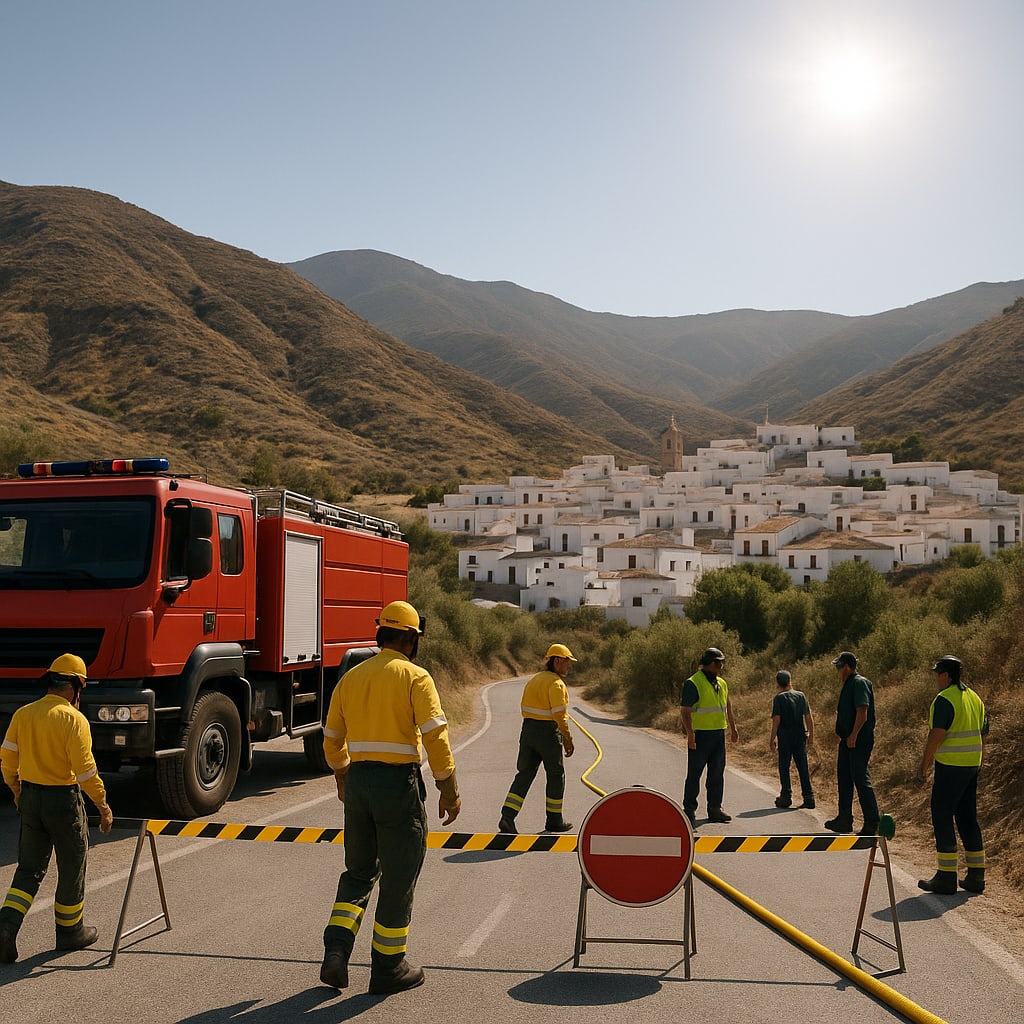
At least 11 dead and over 20 missing as southern Spain wildfire devastates Almería’s Los Gallardos–Bedar area
Narrative Snapshot
Across outlets, coverage converges on the human toll and the speed of the fire through rugged terrain popular with foreign visitors. Multiple reports highlight victims found in vehicles, apparently overtaken while attempting to flee, with authorities cautioning that several of the dead may be foreign tourists and that identities are still being confirmed. British media and several international outlets foreground that at least four of the victims are believed to be Britons, while others keep that detail tentative pending official confirmation.
There is less alignment on casualty figures and on the cause. Early tallies reported at least 11 dead and 19 missing; others raised that to at least 12 dead and 23 missing. A possible ignition from a fallen power line is reported by France24 and by Argentine coverage, while most outlets refrain from attributing cause beyond noting ongoing investigations. Accounts of the response vary as well, with some citing roughly 150 firefighters and others describing a larger deployment including military emergency units.
A second strand situates the blaze within a broader European fire season marked by extreme heat. Several outlets frame the incident as Spain’s deadliest wildfire in roughly two decades, while others characterize it more cautiously as among the country’s deadliest on record. Heatwave conditions and Spain’s disproportionate share of the continent’s burned area are prominent in European and North American reporting, while Italian coverage emphasizes scarce water and improvised tactics at the fire line.
What Happened
A fast-moving wildfire broke out Thursday in the province of Almería, sweeping through the Los Gallardos–Bedar area and prompting a major emergency response. Regional authorities and national outlets reported at least 11 fatalities initially, later rising to at least 12, with between 19 and 23 people missing and several injured. Multiple sources note that some victims were discovered in burned vehicles, apparently overtaken while attempting to escape. Authorities said many victims may be foreign tourists; several reports cite at least four Britons believed to be among the dead, though identifications were ongoing. Firefighters and Spain’s Military Emergency Unit were deployed, with figures ranging from about 150 personnel to a larger combined force. The blaze advanced amid a heatwave that triggered weather warnings. National leaders expressed condolences, and the royal family observed a minute of silence. Investigators have not confirmed a cause; some reports reference a possible fallen power line.
Why It Matters
The incident tests Spain’s civil protection architecture under climate-stressed conditions and a tourism-heavy regional economy. As Europe confronts an early, intense fire season, France24 reports Spain accounts for roughly 40% of the continent’s burned area, raising questions about resource allocation across regional services and the national Military Emergency Unit. The concentration of casualties among people attempting self-evacuation points to operational issues in risk communication, route management, and last‑mile enforcement of evacuation plans in rural holiday zones. Allegations of an ignition linked to power infrastructure, if borne out, would intersect with debates over utility hardening and vegetation management under EU and national adaptation frameworks. With potential foreign victims, cross-border consular coordination and information transparency become salient. The combination of extreme heat, complex terrain, and mixed resident–tourist populations underscores the need to align climate adaptation, land-use planning, and mass-notification protocols ahead of peak season.
Diverging Narratives
Casualty reporting diverged as the situation evolved. The South China Morning Post, Japan Times, and Bangkok Post cited 11 dead and 19 missing; the BBC, The Guardian, The Hindu, France24, and others raised the toll to at least 12 with roughly 23 missing. Folha de S.Paulo also reported at least eight injured. On victim identities, some outlets highlighted unconfirmed reports of four Britons among the dead (BBC, Sky News, Bangkok Post), while others stressed that authorities were still confirming whether victims were foreign tourists (SCMP, Japan Times, Folha).
Attribution of cause remains unsettled. France24 and Clarin report that the blaze may have started when a power line fell on dry vegetation; most other outlets avoid specifying a trigger, reflecting the lack of an official determination. Accounts of the response vary: The Guardian referenced about 150 firefighters, while SCMP described a larger mobilization including roughly 400 firefighters and troops, and Deutsche Welle noted the deployment of military emergency units. Assessments of historical severity also differ in tone. France24 and Sky News call it Spain’s deadliest wildfire in two decades, whereas CBC frames it as among the deadliest on record, a more cautious formulation pending official historical validation.
What Happens Next
Key indicators will come from three tracks. First, casualty accounting and identification: regional authorities are still confirming identities, including whether four of the dead are British nationals. Confirmations will shape consular engagement and victim support, as flagged by British and international outlets. Second, cause determination: investigators have not announced findings; reports referencing a fallen power line set an investigatory hypothesis. An official statement would have implications for utility risk mitigation and vegetation management debates. Third, operational review: with multiple reports of victims found in cars and suggestions that non-designated routes became deadly, authorities may reassess evacuation planning, route control, and public messaging in tourist areas, as noted by Politika and Clarin.
Fire suppression and search operations continue, with military emergency units supporting regional services. Analysts should watch Andalusian and national announcements on resource surges during the heatwave, any revision of burned-area estimates, and whether Spain’s leadership links this incident to broader climate adaptation or civil protection reforms.