
Venezuela’s twin earthquakes leave over 5,000 dead as IMF financing and relief operations scale up
Narrative Snapshot
Across international outlets, there is broad alignment on the magnitude of loss and the centrality of La Guaira. France24 reports more than 5,000 deaths and highlights the coastal state of La Guaira as “decimated,” while The Hindu and the Toronto Star (AP) carry the 5,069 figure from Venezuelan authorities. TASS and Serbia’s Politika cite 5,119 dead, along with official tallies of 16,740 injured and 17,907 left homeless, underscoring fluid counts and evolving assessments.
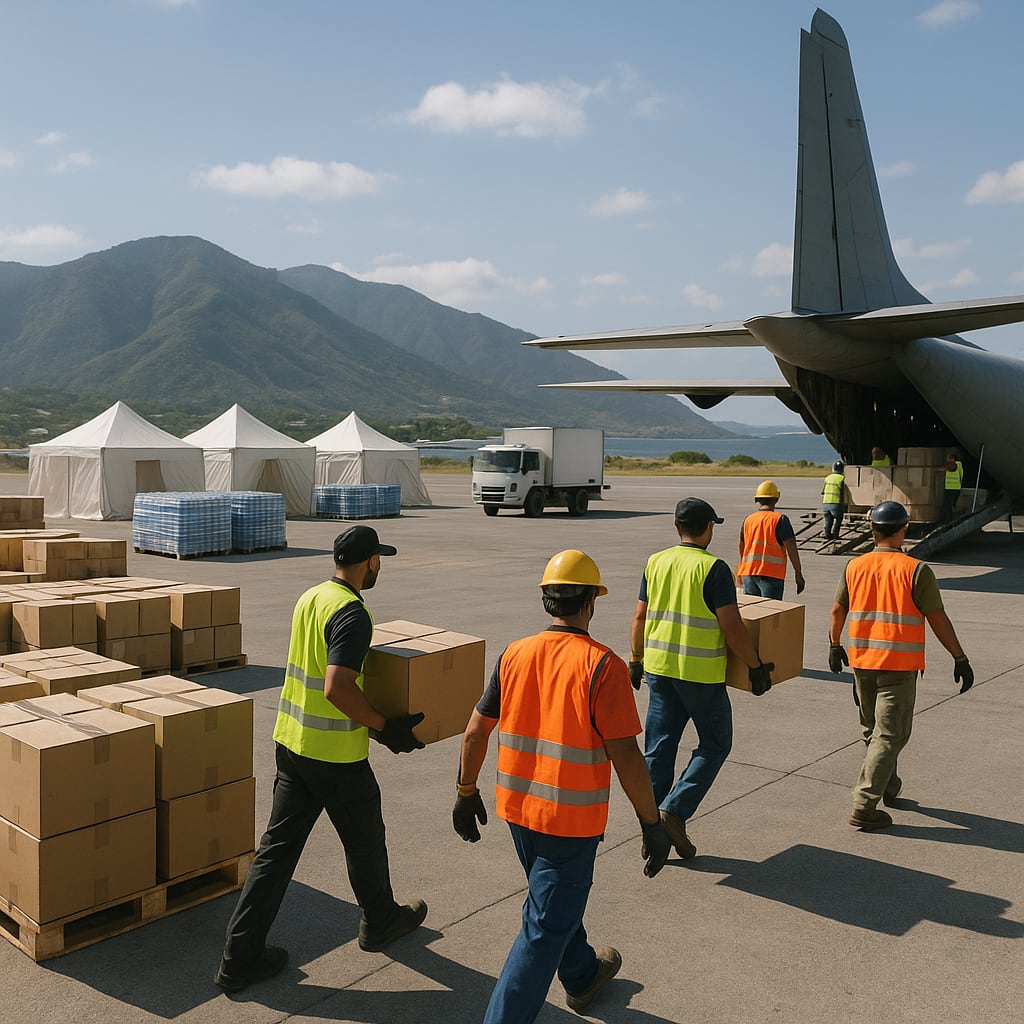
Coverage parts ways on emphasis. TeleSUR focuses on state-led and community-facing recovery: La Guaira’s 11 debris sites, more than two million tons of rubble to manage, photogrammetry, recycling, and environmental monitoring, alongside Uruguay’s second aid flight and civic initiatives like a giant cake for displaced children (also carried by Al Jazeera’s video desk). CGTN centers displacement and urban risk in Caracas, noting over 21,000 people in temporary camps and more than 800 buildings deemed unsafe.
A third strand interrogates state capacity. Japan Times reports delayed orders and confusion in the military’s initial response and cites expert expectations that the final death toll could approach 10,000, introducing a prospective gap between official updates and eventual accounting. Al Jazeera and France24 foreground the financial underpinning of recovery, noting the release of IMF emergency resources, with Al Jazeera putting the amount at £346 million and France24 at $346 million.
What Happened
Twin earthquakes of magnitudes 7.2 and 7.5 struck Venezuela on June 24, with the coastal state of La Guaira north of Caracas suffering extensive destruction. Officials raised the death toll to just over 5,000 in mid-July; The Hindu and the Toronto Star (AP) cite 5,069, while TASS and Politika report 5,119, alongside 16,740 injured and 17,907 homeless. France24 says Venezuela will tap $346 million from the IMF for reconstruction, and Al Jazeera reports the IMF has released £346 million in emergency support. TeleSUR details operational measures in La Guaira, including 11 temporary debris sites and an estimated two million tons of rubble, plus mapping, recycling, and environmental monitoring. CGTN shows ongoing displacement in Caracas, with more than 21,000 in temporary camps and over 800 buildings seriously damaged, while Uruguay dispatched a second 15-ton humanitarian aid flight, according to TeleSUR.
Why It Matters
Emergency finance and operational capacity will shape Venezuela’s recovery trajectory. The IMF’s rapid funding, reported at $346 million by France24 and £346 million by Al Jazeera, signals access to multilateral resources for reconstruction, even as humanitarian needs remain substantial, with CGTN reporting more than 21,000 people living in temporary camps and over 800 buildings unsafe. The scale of debris in La Guaira—over two million tons and 11 disposal sites per TeleSUR—implies protracted waste, environmental, and procurement challenges, with implications for transparency and sequencing across housing, infrastructure, and livelihoods. Japan Times’ account of delayed military orders raises institutional questions about civil–military coordination in disasters. For external partners, Politika’s and TeleSUR’s accounts of international aid flows, including Uruguay’s flights, underscore scope for targeted assistance aligned with verified needs, particularly shelter, urban safety assessments, and debris management.
Diverging Narratives
The factual baselines are still in motion. Death tolls vary between 5,069 (The Hindu; Toronto Star/AP) and 5,119 (TASS; Politika), and displacement figures differ: TASS cites 17,907 homeless from an official daily report, while CGTN reports more than 21,000 people in temporary camps and more than 800 buildings seriously damaged. Financial framing diverges on currency as France24 reports $346 million from the IMF while Al Jazeera cites £346 million, reflecting either conversion differences or reporting choices rather than a dispute over the fund’s release itself.
Interpretive emphasis also splits. TeleSUR’s coverage foregrounds state-led logistics—debris sites, photogrammetric surveys, recycling—and community support, including Uruguay’s second 15-ton aid flight and morale-boosting civil society efforts like a giant cake for displaced children, also noted by Al Jazeera’s video. In contrast, Japan Times highlights institutional shortcomings—delayed orders and confusion in the military response—and flags expert expectations that the final death toll could approach 10,000, indicating unresolved questions about the completeness of current counts and the performance of command-and-control systems. France24 and Al Jazeera stress the role of emergency finance and the scale of destruction in La Guaira as determinants of the recovery phase.
What Happens Next
Key decisions cluster around financing, operations, and governance. First, how authorities program and sequence the IMF resources alongside bilateral aid will influence shelter and infrastructure timelines; analysts should watch for official allocations toward housing in Caracas, where CGTN reports more than 21,000 in camps and over 800 unsafe buildings, and for earmarks to debris operations in La Guaira, where TeleSUR notes 11 disposal sites and two million tons of rubble. Second, official casualty and displacement updates—reported daily per TASS—will indicate whether the toll converges upward toward the higher estimates referenced by Japan Times. Third, the government’s response to reported command delays—any public after-action reviews or adjustments in civil–military protocols—will signal lessons learned. Finally, the scale and continuity of external assistance, illustrated by Uruguay’s second aid flight (TeleSUR) and broader international support (Politika), will shape the capacity to sustain relief while recovery ramps up.