
Lead
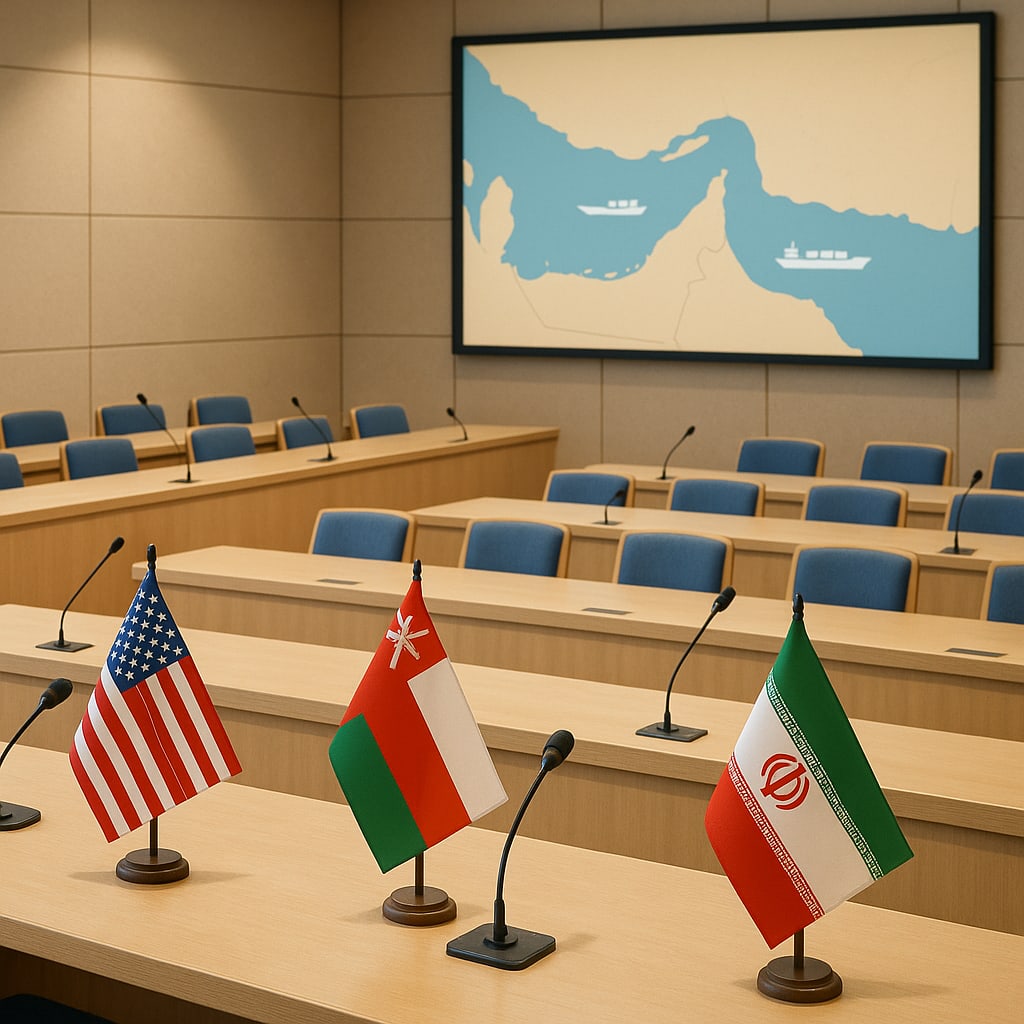
A single offhand remark by President Donald Trump—warning that the United States might “blow up” Oman if the Gulf sultanate does not “behave”—has ricocheted through an already volatile confrontation over the Strait of Hormuz. Across international coverage, the comment is treated less as a slip than as a signal: Washington is prepared to pressure even longstanding partners if they are seen to be enabling Iranian leverage over the world’s most sensitive maritime chokepoint. Within 24 hours, the rhetoric broadened from presidential bravado to explicit US Treasury warnings of sanctions, as Oman’s traditional role as a mediator between Washington and Tehran collided with an intensifying dispute over “tolls” or “fees” for shipping through Hormuz.
What Happened
The shared factual spine across outlets is clear: Trump made the “blow them up” comment publicly, during a cabinet meeting exchange that turned to the Strait of Hormuz and the idea that Iran—and possibly Oman—could play a role in regulating passage. In that setting, he said the strait must remain open, that no one should control it, and that Oman—identified repeatedly as a US ally—would have to “behave” like everyone else.
The remark landed amid fast-moving claims and counterclaims about whether Iran intended to charge ships for transiting Hormuz. Iranian messaging, reported broadly in regional coverage, sought to narrow the allegation: Tehran rejected the language of “tolls” while acknowledging it might charge for “services,” presenting any payments as administrative rather than as a blockade tactic. The dispute over terminology matters because “tolls” imply sovereignty over an international waterway and coercive economic pressure, while “fees for services” can be framed as routine maritime charges.
At roughly the same time, reporting converged around a second, related thread: discussions or proposals linking Oman to any Hormuz charging scheme—whether as a joint arrangement with Iran or as a facilitating actor—became the trigger for US warnings. The escalation did not remain rhetorical. US Treasury Secretary Scott Bessent publicly warned that Washington would not tolerate attempts to institute a toll system in the strait and indicated that the United States would “aggressively target” actors facilitating such payments. Multiple outlets treated this as a sanctions threat directed at Oman if it cooperated with Iran on Hormuz revenue collection.
The Oman-centered flare-up unfolded within a wider “Iran war” context described in international coverage as ongoing and unstable: strikes continued, the risk to shipping remained elevated, and diplomatic efforts were portrayed as halting rather than settled. Separate reporting around the same period referenced an explosion damaging a tanker near Hormuz off Oman’s coast, underscoring how quickly commercial incidents become entangled with strategic signaling.
Why It Matters
The immediate significance lies in the Strait of Hormuz itself. A major share of globally traded oil and gas passes through this narrow corridor, and even the perception of restricted transit can move energy prices, insurance costs, and shipping decisions. Coverage noting crude price volatility and heightened maritime risk reflects a market reality: the strait is not just a military flashpoint but a pricing mechanism for global energy security.
Diplomatically, the episode is striking because Oman is not typically cast as an antagonist in US Middle East policy. Across outlets, Oman is described as a long-standing partner and an important interlocutor—often the discreet channel through which Washington and Tehran communicate when direct engagement is politically difficult. In that context, a public threat to attack Oman reads as more than a warning about maritime policy; it is a stress test of a regional mediation architecture that has repeatedly helped contain crises.
Politically, the episode illustrates an American posture in which enforcement is not limited to adversaries. By pairing Trump’s threat with Treasury’s sanctions language, Washington signaled that it is prepared to use both military rhetoric and financial instruments to deter any arrangement that might legitimize Iranian control—formal or informal—over Hormuz transit.
Strategically, the confrontation turns on a core principle invoked across coverage: the strait must remain open to international shipping and cannot be “controlled” by one state. That principle is widely shared in Western reporting and aligns with longstanding US maritime doctrine. The friction comes from competing narratives about what Iran is doing—whether it is attempting an outright blockade or merely repackaging restrictions as “services”—and about whether Oman’s involvement would amount to complicity or mediation.
Diverging Narratives
1) Trump’s remark: literal threat vs. rhetorical bluster
Most outlets treat the language as extraordinary but differ in how firmly they interpret it. Some frame it as an apparent threat—highlighting the casual setting of the cabinet meeting and the bluntness of the wording—while still leaving space for ambiguity in intent. Others present it more directly as a threat to attack a regional ally, emphasizing the shock value and the diplomatic breach implied by speaking this way about a partner state.
2) The trigger: “control” of Hormuz vs. “tolls/fees”
There is a consistent dispute over what, precisely, prompted Washington’s escalation. One line of reporting focuses on the notion of “control” of the strait—Trump’s insistence that nobody can control it and that the US will “watch over” it. Another line centers the controversy on money: the idea of tolls or fees for passage, and the suggestion that Iran and Oman discussed charging ships. These are related but not identical claims. In practice, coverage splits between a sovereignty-centered dispute (who sets the rules) and a commerce-centered dispute (who collects payments), shaping whether the story reads primarily as a maritime law issue or an economic coercion issue.
3) Oman’s role: mediator caught in the middle vs. actor at risk of alignment
European-facing coverage tends to stress Oman’s balancing act and history as a mediator, portraying Muscat as squeezed between Washington and Tehran and vulnerable to being punished for trying to keep lines of communication open. Regional and some international coverage gives more weight to the allegation that Oman could “join” Iran in a toll scheme, presenting the sultanate less as a neutral broker and more as a potential enabler of Iranian pressure—an emphasis that makes the US warning appear preemptive rather than gratuitous.
4) Iran’s posture: toll denial vs. service-fee justification
Iranian-linked narratives and Tehran-focused coverage emphasize denial of “tolls” and reaffirmation of safe navigation, portraying the accusations as misinformation or as a politicized pretext for US pressure. Other outlets keep the distinction but treat it skeptically, focusing on the practical effect on shipping rather than the label. This divergence is less about whether Iran wants leverage—many accounts assume Hormuz is central to Tehran’s bargaining power—and more about how explicitly Iran is claiming the right to charge for transit.
5) Broader context: de-escalation talks vs. slide back toward confrontation
Some international coverage foregrounds diplomacy and the question of whether Washington and Tehran are near a deal or reverting to escalation. Others place the Oman threat inside a narrative of conflict expansion: continued strikes, maritime incidents, and widening pressure beyond Iran to its neighbors. The result is two different readings of the same moment—either as brinkmanship that could still be folded into negotiations, or as evidence that the conflict’s boundaries are eroding.
Current Situation
By the end of the reported period, the public posture had hardened: Trump’s warning stood on the record, and the US Treasury had explicitly threatened sanctions against actors—Oman included in the surrounding coverage—who facilitate a toll system in the Strait of Hormuz. Meanwhile, Iran continued to contest the toll characterization and to frame any payments as “services,” and broader reporting indicated that talks between Washington and Tehran were ongoing but not finalized, with neither side presenting a settled agreement.
The immediate outlook described across coverage is defined by deterrence and vulnerability: deterrence in Washington’s threat to punish any move that resembles monetized control of Hormuz, and vulnerability for Oman, whose diplomatic utility depends on being trusted by both sides. With shipping security already under strain and the language from senior US officials escalating from rhetoric to sanctions warnings, the central unresolved question is not merely what is said at cabinet meetings, but whether the strait becomes a test case for enforcing “free passage” through military threats and financial penalties—at the cost of straining alliances built on quiet mediation.