
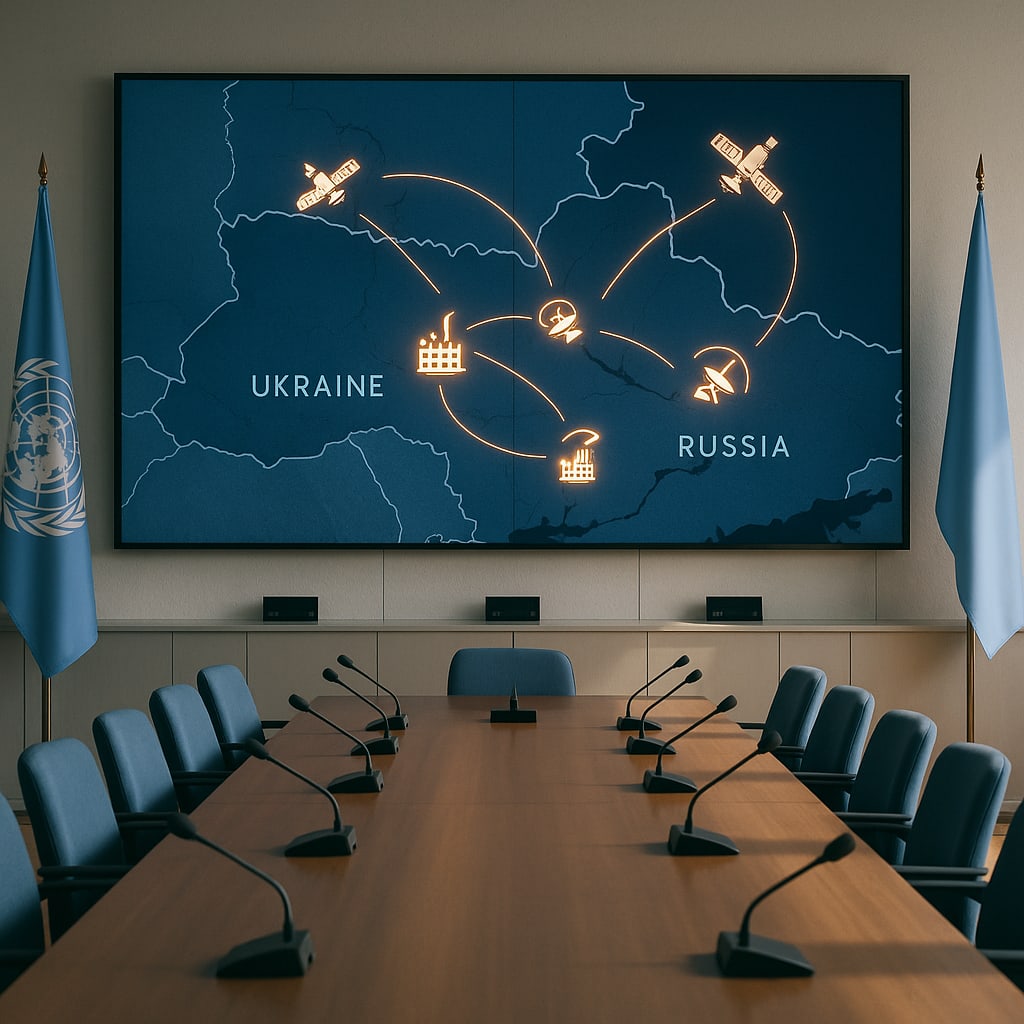
Ukraine’s long-range drones hit Russian energy and industrial sites; Moscow cites civilian deaths and fuel strain
Narrative Snapshot
- Scope and intent: Most outlets report a sustained Ukrainian campaign against Russian energy, industrial, and military-linked infrastructure; Ukraine-linked sources frame it as logistics disruption and revenue denial, while Russian officials foreground civilian harm and intercept totals (SCMP; The Hindu, June 30 and July 1; Kyiv Independent).
- Air-defense contestation: Ukrainian actors claim they have opened a corridor through Russia’s dense air defenses toward major hubs, a point absent from Russian official accounts (Le Monde). Moscow instead emphasizes large numbers of drones shot down (The Hindu, June 30).
- Domestic management inside Russia: One thread highlights operational and messaging choices—Putin’s acknowledgment of a “difficult period” alongside reported reluctance by local authorities to activate sirens or shelters (SCMP; Clarín).
- Economic stakes: Multiple reports link refinery strikes to a summer fuel squeeze and Kremlin discussions of fuel imports, stressing the campaign’s downstream economic effects (The Hindu, July 1; TASS).
What Happened
Ukrainian forces intensified long-range drone strikes deep inside Russia and in occupied territory, hitting oil refining and industrial assets and prompting competing claims about effectiveness and consequences. A major southern refinery was set ablaze and at least two people were killed, Russian authorities said, as President Vladimir Putin called it a “difficult period” (SCMP). Kyiv confirmed a second strike on the Dubna Space Communications Center near Moscow (Kyiv Independent; Corriere della Sera). Russian officials said over 400 Ukrainian drones were shot down and reported a baby’s death near Moscow in Yegoryevsk; the Kremlin directly blamed Kyiv (The Hindu, June 30; TASS). Ukrainian drones reportedly targeted a state-owned bearing plant in Penza, while strikes were also recorded in occupied Donetsk (Kyiv Independent, July 1). A Ukrainian drone unit claimed it opened a corridor through Russian air defenses enabling strikes near Saint Petersburg, Ust-Luga, and Moscow (Le Monde). The refinery campaign was linked to a summer fuel crisis inside Russia (The Hindu, July 1).
Why It Matters
These attacks intersect military logistics, domestic resilience, and energy security. Ukrainian officials present the refinery and industrial strikes as a strategy to degrade Russia’s capacity to sustain offensive operations by squeezing fuel supply and disrupting manufacturing (The Hindu, July 1). Russian acknowledgment of hardship and reported discussions on fuel imports indicate policy adjustments with economic and political costs (SCMP; TASS). The claimed air-defense “corridor” challenges perceptions of Russia’s layered air-defense integrity around core urban and industrial zones (Le Monde). Civil defense and information management choices—such as reported reluctance to activate sirens or shelters—shape public risk and regime narrative control amid sustained cross-border strikes (Clarín). For governments and institutions tracking escalation and resilience, the campaign’s effects on fuel availability, air-defense resource allocation, and industrial throughput are decision-relevant indicators of how prolonged attrition may alter the conflict’s material balance.
Diverging Narratives
Russian authorities prioritize civilian protection claims and interception metrics: the Kremlin highlighted a child’s death in Yegoryevsk and framed it as the result of the “Kiev regime,” while citing hundreds of drones shot down (TASS; The Hindu, June 30). Ukrainian and allied reporting emphasizes target selection tied to warfighting capacity—oil refineries, a space communications center in Dubna, and industrial plants—framing the strikes as means to impair logistics and revenue (Kyiv Independent; Corriere della Sera; The Hindu, July 1). A Ukrainian drone unit’s assertion of an opened air-defense corridor contrasts with Russia’s silence on systemic gaps, leaving the robustness and persistence of such a corridor an open question (Le Monde). Domestic handling also diverges: while Putin acknowledged a “difficult period” (SCMP), reportage describes authorities’ reluctance to activate sirens or shelters, suggesting a continued emphasis on minimizing visible disruption (Clarín). The extent and durability of refinery outages and the precise scale of the “fuel crisis” are reported but not consistently quantified across sources (The Hindu, July 1).
What Happens Next
- Energy policy response: The Kremlin’s discussions on fuel imports (TASS) point to a choice between increasing imports to stabilize supply or relying on domestic repair and redistribution. Indicators: import authorizations, price controls, refinery restart timelines, and regional fuel rationing (The Hindu, July 1).
- Air-defense adaptation: If Russia can close the claimed corridor (Le Monde), future deep strikes on hubs like Moscow, Saint Petersburg, and Ust-Luga should diminish; if not, continued penetrations are likely. Watch for redeployments, procurement signals, and shifts in reported intercept rates (The Hindu, June 30).
- Ukrainian targeting cadence: Officials frame the campaign as pressure on logistics and supply lines (The Hindu, July 1). Additional strikes on refineries, industrial plants (e.g., Penza), and command/communications sites (e.g., Dubna) would indicate persistence. Monitor confirmations from Ukrainian leadership and OSINT geolocations (Kyiv Independent; Corriere della Sera).
- Civil defense and domestic messaging: Whether Russian authorities expand siren use or shelter access, as contrasted with current reluctance (Clarín), will shape societal risk and public perception. Signals include new regional advisories, drills, and revised guidance from federal or municipal authorities.