
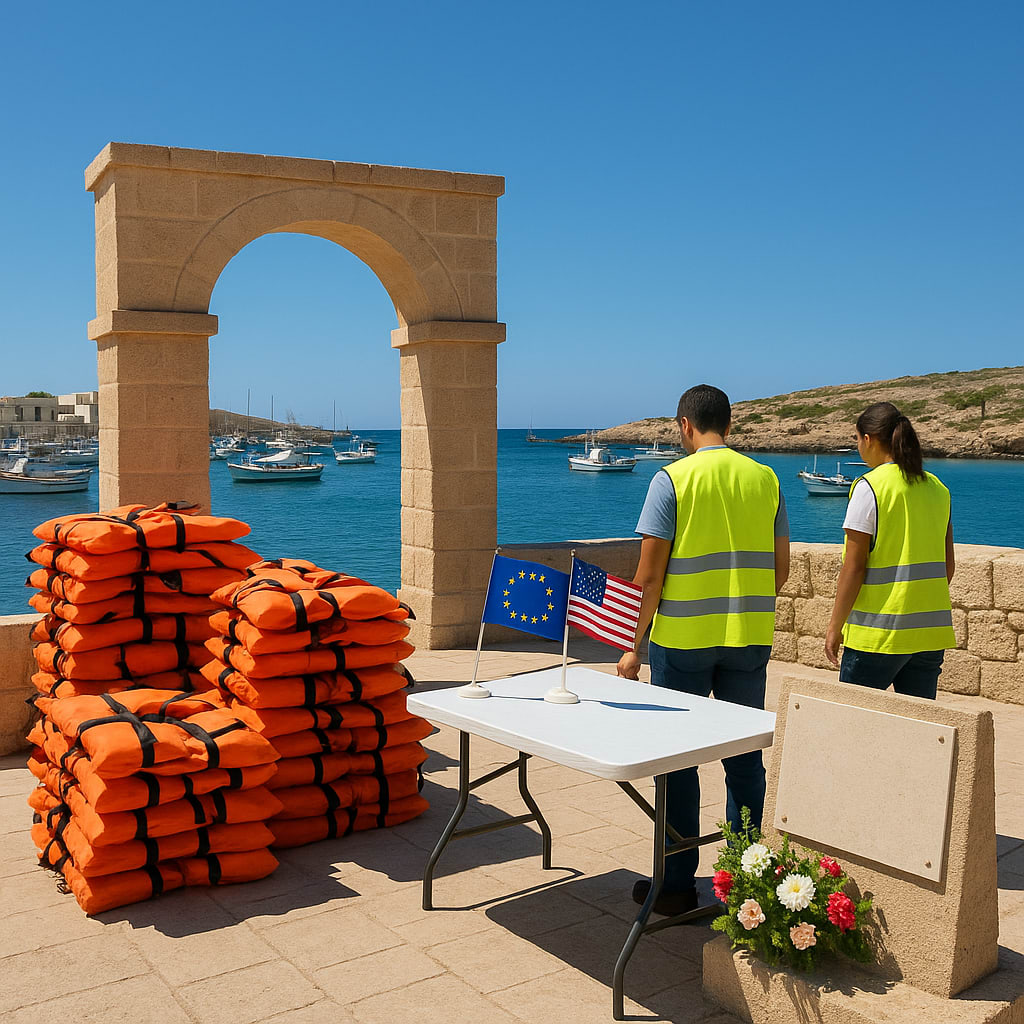
Pope Leo XIV uses Lampedusa visit and July 4 platform to press Europe and the US on migrant protection
Narrative Snapshot
- European and global outlets converge on the symbolism: a July 4 visit by the first US pope to the EU’s frontline island, positioned as a direct appeal to both Brussels and Washington (Le Monde; DW; SCMP; Al Jazeera; BBC).
- Italian reporting foregrounds gestures over rhetoric—crossing the “Porta d’Europa” alone, pausing on the rocks to scan the sea, honoring the dead, and dedicating “Molo Francesco”—as intentional signals to policy makers (ANSA; La Repubblica; BBC).
- Coverage splits on the US angle: liberal and international outlets tie the appeal to contentious US policies and a clash with President Trump (SCMP; Clarin; The Hindu), while Fox News centers the pope’s Liberty Medal address praising America’s immigrant tradition and, in separate opinion content, advances a restrictive policy case (Fox News news; Fox News op-ed).
- Quantitative grounding is sparse but present: Folha notes more than 7,000 arrivals to Lampedusa this year; SCMP situates the visit shortly after EU approval of new migrant measures, sharpening the policy backdrop.
What Happened
On July 4, Pope Leo XIV visited Lampedusa, Italy, calling on European and American leaders to receive, protect, support, and integrate migrants (DW; Al Jazeera; The Hindu). He marked the day with highly symbolic acts: crossing the island’s “Porta d’Europa” alone, descending to the shoreline to look out to sea, and paying tribute at the cemetery to those who died in Mediterranean crossings (ANSA video; BBC). ANSA reported the unveiling and blessing of a plaque renaming Molo Favarolo as “Molo Francesco,” honoring his predecessor’s 2013 visit (ANSA; Le Monde). Local testimony featured a letter from “little Leo,” who arrived alone a decade ago and recounted the joy of a simple paper ball, urging the same for other children (ANSA). The visit followed a virtual address in Philadelphia in which Leo, accepting the Liberty Medal, urged Americans to remember the nation’s immigrant heritage (Fox News).
Why It Matters
The visit spotlights a stress test for transatlantic migration governance. In Europe, it lands as the EU advances new migration measures, raising questions about how security, returns, and burden-sharing will align with commitments to protection and integration (SCMP; DW). In the United States, the pope’s appeal intersects with a live legal-political landscape: a Supreme Court ruling allowing the administration to proceed with sending back temporary refugees from Haiti and Syria, and ongoing national debate over the scope and permanence of humanitarian protections (Fox News op-ed). By choosing July 4 and Lampedusa, Leo links US political identity and EU border practices to a common normative frame. For decision-makers, the episode crystallizes competing imperatives—deterrence and enforcement versus reception and integration—and tests whether symbolic interventions can shift policy baselines or implementation choices in Brussels, Rome, and Washington (Le Monde; The Hindu; Al Jazeera).
Diverging Narratives
International outlets broadly align on the core message to “do more,” but stress different targets and meanings. European and Vatican-focused reporting highlights ritual and continuity—gestures that “speak louder than words,” the memorial at sea, and the dedication of “Molo Francesco”—as a pastoral challenge to political timidity (ANSA; La Repubblica; BBC; Le Monde). Global coverage frames it as a transatlantic admonition amid “rising intolerance and indifference” (DW), with SCMP and Clarin explicitly casting it as a pointed message to US leadership and to President Trump’s policies (SCMP; Clarin). The Hindu emphasizes the pope’s policy lexicon—“comprehensive,” integrating immediate relief with long-term plans—moving beyond symbolism to programmatic aims.
US-focused coverage is split. Fox News’ straight reporting amplifies the Liberty Medal speech’s conciliatory appeal to America’s immigrant tradition (Fox News news), while its opinion page argues for limits on temporary protections and endorses stricter enforcement following a Supreme Court ruling (Fox News op-ed). Meanwhile, Folha adds operational context—7,000 arrivals to Lampedusa to date—underscoring pressures on frontline capacity (Folha). Unresolved in all coverage is how recently approved EU measures will be implemented and whether US federal actions will adjust in light of the pope’s appeal (SCMP; Fox News op-ed).
What Happens Next
- EU implementation choices: The EU recently approved new migrant measures; watch for Commission guidance and member-state practice on reception, processing, and returns, and whether any elements are recalibrated toward the pope’s call for protection and integration (SCMP; DW; The Hindu).
- US federal trajectory: After the Supreme Court allowed the administration to proceed with returning temporary refugees from Haiti and Syria, monitor Department of Homeland Security timelines, exemptions, and congressional responses against the pope’s July 4 appeal and his Liberty Medal remarks (Fox News op-ed; Fox News news; The Hindu).
- Italian and local signaling: Track whether Lampedusa’s symbolic acts—memorialization and public gestures—are accompanied by resource allocations or coordination shifts with Rome and EU agencies as arrivals continue (ANSA; Folha).
- Public and elite response: Look for formal statements from EU and US leaders acknowledging or contesting the pope’s framing; shifts in rhetoric or agenda-setting would indicate whether the intervention is shaping policy debate (DW; SCMP; Clarin).