
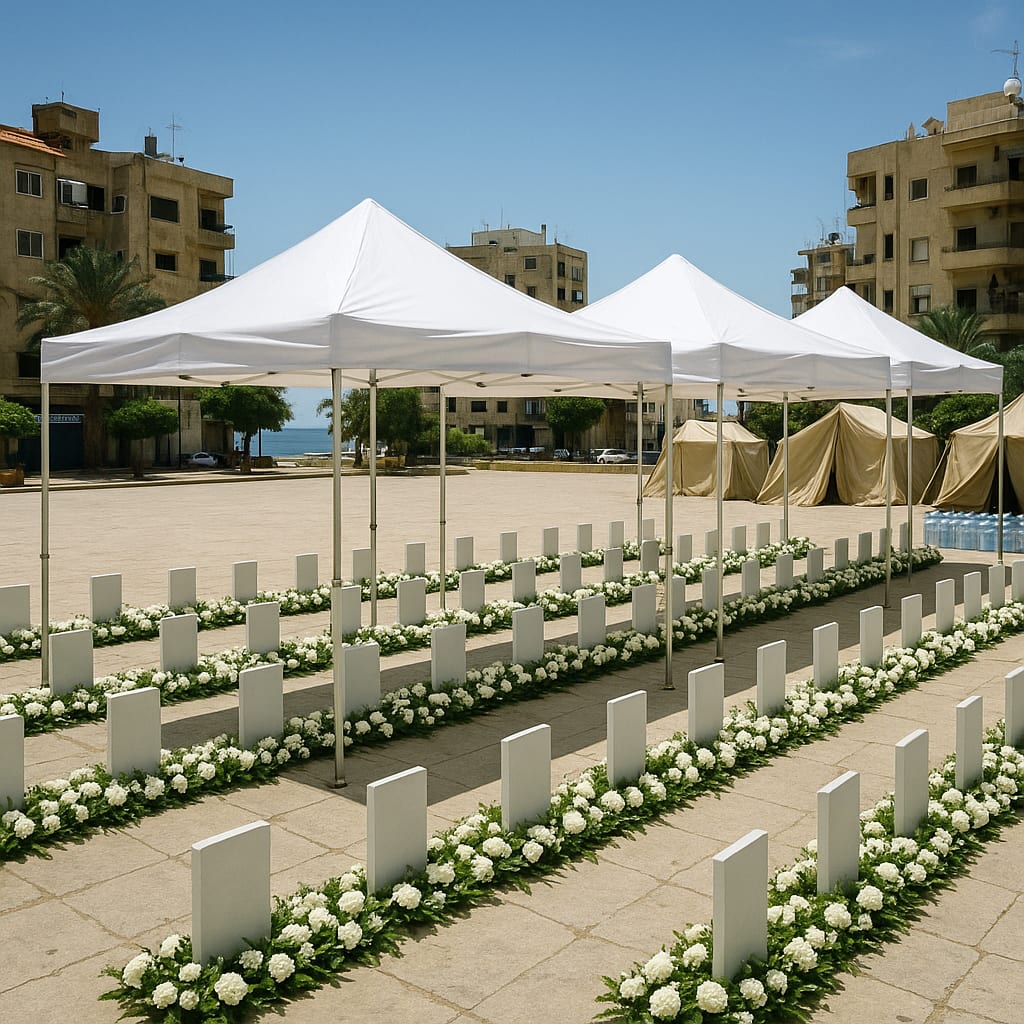
Mass funeral in Gaza for 112 people recovered from 2023 Israeli strike
Narrative Snapshot
Across outlets, there is broad agreement on the scale and symbolism of the ceremony: 112 remains were interred after being recovered from a 2023 Israeli airstrike that brought down residential buildings, with international reporting converging on visuals of a tightly packed funeral procession and a burial that drew large crowds (NBC News; Sky News; BBC; Le Monde; The Guardian). Many accounts situate the victims within extended family networks and link the delay in recovery to continued hostilities that slowed rubble clearance until recent months (BBC; The Guardian).
Key points of divergence center on attribution, framing, and specifics. Several outlets identify the dead as members of two extended families, the Abu Shreia and al-Hassayna clans (BBC; Al Jazeera), while others describe a single clan (Middle East Eye; Folha de S.Paulo; Tehran Times). Some reports fix the strike date as November 22, 2023 (Toronto Star/AP; Japan Times), others as November 23 (Telesur). The original death toll is consistently described as above 300, but counts and composition vary: The Guardian highlights 40 children among the 112 buried, whereas RT, citing Palestinian authorities, places 40 children among the 308 killed in the strike overall; Corriere della Sera reports “dozens of children” among the more than 300 dead.
Outlets also differ in characterizations of agency and context. The Times of Israel frames the event as a Hamas-led funeral following a months-long extraction effort, and links it to reports that the IDF is tightening its strike policy; other coverage emphasizes the human and logistical aftermath of prolonged bombardment, noting that strikes have “slowed, though not halted,” since an October ceasefire, enabling the recovery (The Guardian). Geographic references vary between Gaza City, including the Sabra neighborhood (BBC; RT), and “central Gaza,” with some reports datelined from Deir al-Balah (Toronto Star/AP).
What Happened
A mass funeral was held in Gaza on August 4, 2026 for 112 people whose remains were recovered last month from rubble left by an Israeli airstrike in November 2023 that destroyed residential buildings (NBC News; BBC; Sky News; The Guardian). Multiple outlets attribute the victims to the Abu Shreia and al-Hassayna extended families, while others describe them as members of a single clan (Al Jazeera; BBC; Middle East Eye; Folha de S.Paulo; Tehran Times). International reports cite Palestinian authorities stating that more than 300 people were killed in the original strike—variously dated November 22 or 23—including children among the dead (Toronto Star/AP; Japan Times; Corriere della Sera; Telesur; RT). The bodies remained under debris for years amid ongoing hostilities; recovery was made possible after months of excavation, with coverage noting that Israeli strikes have slowed since an October ceasefire, though they have not ceased (The Times of Israel; The Guardian).
Why It Matters
The funeral crystallizes how operational tempo shapes the civilian aftermath: several accounts tie the delayed recovery to continued Israeli strikes that impeded rubble clearance until a relative lull, underscoring the practical link between active hostilities and basic post-strike recovery work (The Guardian). The Times of Israel’s reporting that the IDF is tightening its Gaza strike policy places the event within an evolving debate over targeting and civilian harm mitigation inside Israel, suggesting that how such incidents are processed can feed back into operational guidelines. Repeated international references to a strike that killed more than 300 people, with varying breakdowns of victims, highlight the difficulties of casualty documentation under protracted conflict and the weight such figures carry in shaping external perceptions and policy discussion (Toronto Star/AP; Japan Times; Corriere della Sera; RT; The Guardian). For institutions engaging Gaza, the episode signals that access conditions and security dynamics remain determinative for recovery efforts.
Diverging Narratives
The composition of the bereaved is a primary fault line: BBC and Al Jazeera identify two extended families—the Abu Shreia and al-Hassayna—while Middle East Eye, Folha de S.Paulo, and Tehran Times describe a single clan. Reported dates of the original strike split between November 22 (Toronto Star/AP; Japan Times) and November 23 (Telesur). There is convergence that the 2023 strike killed more than 300 people, but the distribution of child fatalities is not consistently presented. The Guardian reports 40 children among the 112 now buried, while RT, citing Palestinian authorities, lists 40 children among the 308 total killed in the strike; Corriere della Sera broadly cites “dozens” of children among the more than 300 dead. Framing differs as well: The Times of Israel emphasizes that Hamas organized the funeral and describes the deaths as from an “apparent IDF strike,” adding that sources say the IDF is tightening its Gaza strike policy; Tehran Times uses “martyred,” and several outlets simply call it an Israeli airstrike. Geography is variously given as Gaza City, including the Sabra neighborhood, versus “central Gaza” (BBC; RT; Toronto Star/AP).
What Happens Next
Two decision points emerge from coverage. First, whether reported adjustments to Israeli strike policy materialize and how they manifest operationally. The Times of Israel says sources report the IDF is tightening its policy on Gaza strikes; analysts should watch for formal guidance, public briefings, or observable changes in targeting patterns that would corroborate a shift. Second, whether the relative slowdown in strikes noted since the October ceasefire continues to permit recovery work. The Guardian links the recent recovery to reduced, though ongoing, Israeli fire; any re-acceleration of hostilities would likely constrain similar efforts, while sustained lulls would facilitate them. Monitoring will also focus on whether casualty tallies and victim identifications consolidate around figures repeatedly cited by international outlets—such as the 308 deaths reported by Japan Times and RT—or are revised as excavation accounts and official statements are updated.