
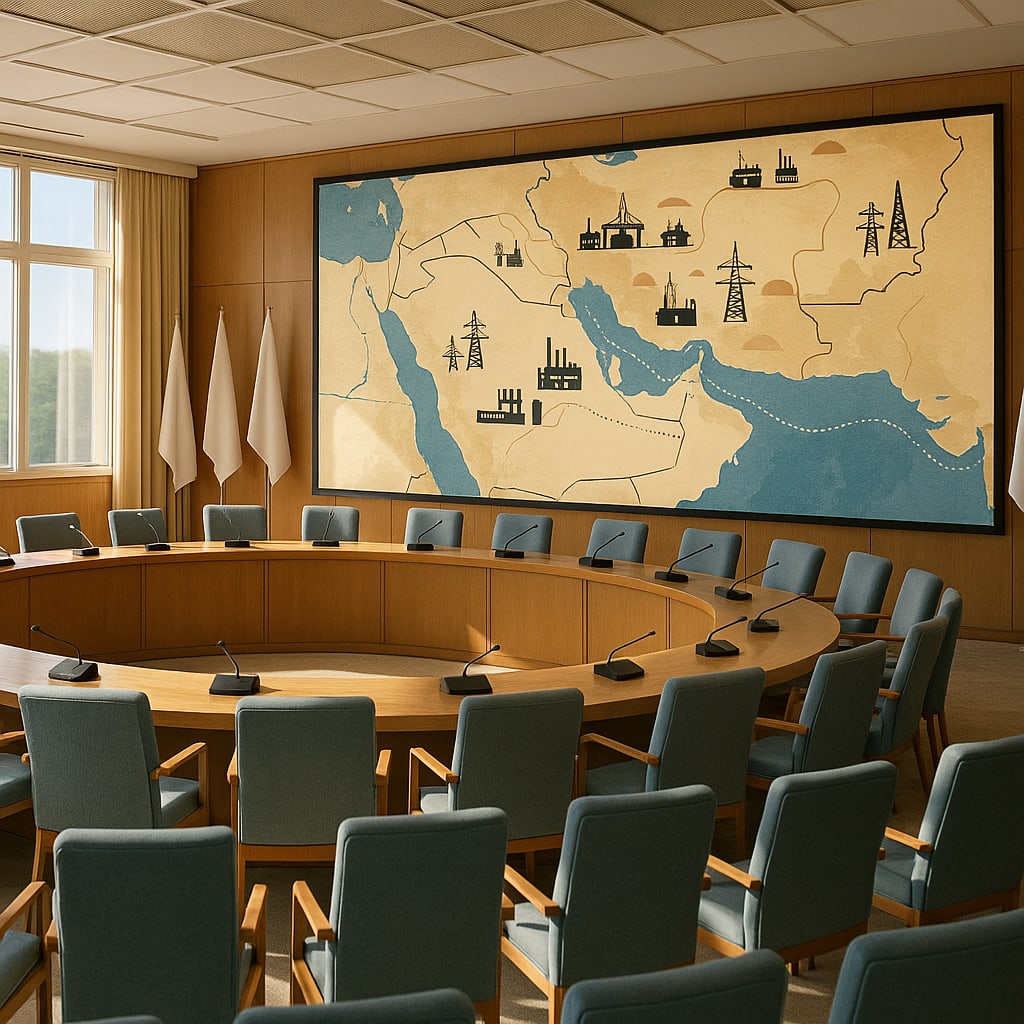
US and Israel weigh strikes on Iranian energy infrastructure; Iran threatens reciprocal hits on critical facilities
Narrative Snapshot
Across U.S., Israeli and European outlets, the center of gravity is the CBS report that Washington and Israel are coordinating possible strikes on Iranian energy infrastructure, with action described as feasible over a weekend window. The Times of Israel, Le Monde and NHK relay that framing, while Italy’s La Repubblica adds that Admiral Cooper briefed President Trump on a 10–14 day air campaign option, and The Hindu and CGTN situate the decision calculus at a Camp David cabinet session.
Where coverage diverges most sharply is over presidential authorization and intended scope. The Wall Street Journal’s line—amplified by Corriere della Sera and the Japan Times—holds that Trump has ordered attacks to force Tehran to “surrender,” while CBS/Axios reporting, echoed by the Times of Israel and RT, stresses that final orders were not yet issued. TASS and Politika extend the target set discussion to power plants, refineries and even nuclear-linked sites, and suggest multi-day operations are contemplated.
Iranian and regional media concentrate on retaliation thresholds and escalation risks. Tehran Times foregrounds Trump’s threat to hit Iran “very hard,” even as CNN is cited for suggesting he also seeks an “exit ramp.” Middle East Eye, Al Jazeera and Haaretz all report Tehran’s warnings that any new U.S.-led action will trigger strikes on critical infrastructure in Israel and U.S.-linked energy assets across the region. Al-Quds News adds that planners weighed concluding strikes before markets open, and cites Iranian threats encompassing Saudi and Qatari energy facilities.
A narrower current of coverage highlights diplomatic and market-stability contingencies. France24 reports an Oman- and Gulf-backed proposal to manage Hormuz and stabilize shipping fees. CGTN recounts a prior U.S. pause in bombing and Iran’s conditional halt to retaliation if the pause held, while Telesur first underscores U.S. citizen evacuation advisories and then reports on August 2 that Trump suspended planned strikes pending talks. Together these accounts frame a live choice between a coercive air campaign and a negotiated de-escalation around the Strait of Hormuz.
What Happened
Multiple outlets report U.S.-Israeli planning for strikes on Iranian energy infrastructure, framed by CBS as a joint campaign coordinated over a weekend window. The Times of Israel, NHK and Le Monde echo the possible Israeli role, and La Repubblica reports the Wall Street Journal’s claim that Admiral Cooper outlined a 10–14 day option. Trump, speaking at Camp David, said the U.S. would hit Iran “very hard,” according to The Hindu and CGTN. Accounts split on authorization: the Wall Street Journal, via Corriere della Sera and the Japan Times, says Trump ordered attacks aimed at compelling Tehran to surrender; CBS-based reports and RT emphasize that no final order had been issued. Iran, via Middle East Eye, Al Jazeera and Haaretz, warned it would target critical infrastructure in Israel and U.S.-linked regional energy assets if struck. TASS and Politika report operations could last several days and may contemplate broader target sets.
Why It Matters
Targeting energy infrastructure elevates the contest from military-to-military exchanges toward systemic economic disruption, with attendant risks to global energy markets and maritime commerce. Al-Quds News reports planners considered timing operations to avoid market-opening shocks, underscoring perceived price sensitivity. The reported U.S. naval blockade of Iran and interdictions at sea, detailed by CGTN, already stress freedom-of-navigation practices in Hormuz; France24’s account of an Oman- and Gulf-backed management proposal shows regional stakeholders seeking institutionalized risk reduction. If Israel formally participates in renewed strikes, as suggested by CBS and relayed by the Times of Israel and Le Monde, it tightens U.S.-Israeli operational alignment while widening the aperture for Iranian retaliation against U.S. partners’ energy facilities, which Iranian outlets and Haaretz note explicitly. For multilateral bodies and energy regulators, the prospect of infrastructure warfare raises legal, humanitarian and market-stability challenges that exceed the bounds of prior tit-for-tat strikes.
Diverging Narratives
Key uncertainties run through intent, authorization, and the target set. The Wall Street Journal’s portrayal of an order to coerce Iranian “surrender,” cited by Corriere della Sera and the Japan Times, contrasts with CBS/Axios-based accounts and RT’s emphasis on the absence of a final go-ahead. TASS adds that any next round could last days and reports Trump disparaged a prior U.S.-Iran memorandum of understanding, suggesting diminished faith in diplomatic instruments, while Tehran Times cites CNN’s characterization of Trump seeking an “exit ramp,” indicating a parallel quest for leverage to negotiate.
On scope, several outlets converge on energy infrastructure—power plants and refineries—while Politika reports that nuclear-related sites are also under discussion, though the “final scope and potential targets” remain unsettled. Israel’s prospective role is variably framed as coordination (CBS, Times of Israel) or participation “for the first time since the initial phase” (Le Monde). Meanwhile, CGTN recounts a recent U.S. bombing pause and Iran’s conditional halt to retaliation; Telesur later reports Trump suspended planned strikes pending talks, injecting ambiguity about sequencing. Both sides claim defensive rationales—CENTCOM’s interception of Iranian missiles per CGTN, and Iranian vows to answer “American recklessness” per Middle East Eye and Al Jazeera—complicating attributions of escalation.
What Happens Next
Two decision points dominate. First, presidential authorization: if Trump issues a final go-order, reporting from CBS, the Times of Israel and TASS suggests a multi-day campaign focused on energy infrastructure with possible Israeli participation; absent authorization, Telesur’s claim of a suspension pending talks and CGTN’s earlier account of a bombing pause imply space for diplomacy. Indicators include White House readouts from Camp David meetings, corroborated reports on target selection, and visible force movements.
Second, the Hormuz track: France24’s reporting on Oman’s proposal offers a de-escalatory channel. Uptake by Tehran or Gulf states, or public references by Washington, would signal traction; rejection or continued blockade enforcement actions, detailed by CGTN, would point the other way. A third contingent pivot is Iranian retaliation doctrine: statements carried by Haaretz, Middle East Eye and Al-Quds—threatening strikes on Israeli and U.S.-linked regional energy nodes—mean any attack on Iranian infrastructure could quickly engage Gulf energy assets, with market-opening price behavior and emergency advisories, such as those noted by Telesur, serving as immediate barometers.