
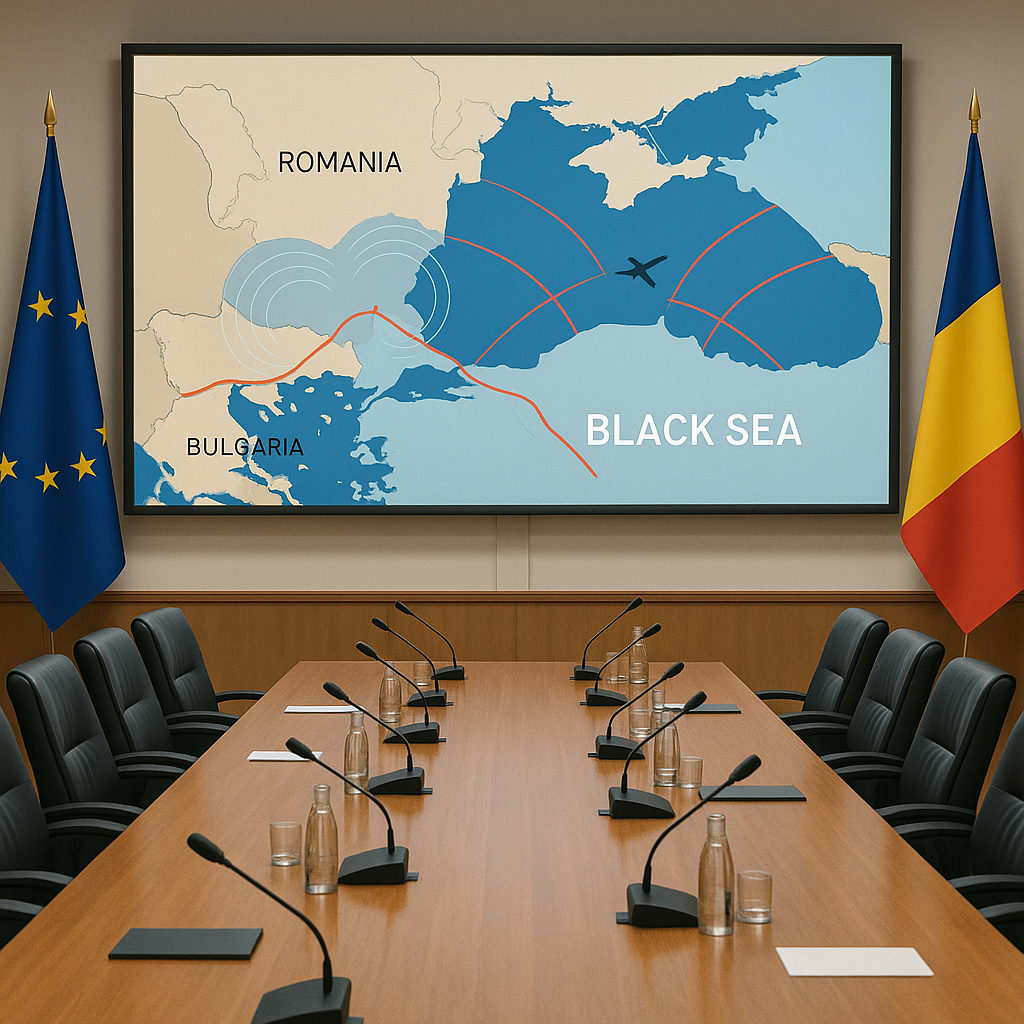
Drone explodes near Bulgaria’s Trans-Balkan pipeline; Sofia links model to Ukraine as Kyiv denies intent and opens inquiry
Narrative Snapshot
Across outlets, core facts align on location and risk: the drone crossed from Romania into northeastern Bulgaria and exploded roughly one kilometer from a compressor station on the Trans-Balkan gas pipeline, with no casualties or damage reported. European reporting foregrounds official caution on attribution. Le Monde and Deutsche Welle emphasize that the device remains unidentified and that Bulgaria’s Defense Ministry both linked the model to types widely used by Ukrainian forces and underscored there is no indication of a deliberate attack at this stage.
Divergence centers on labeling and emphasis. Italian and Russian state-aligned coverage are more categorical: La Repubblica describes it as a Ukrainian drone and frames Kyiv’s position as an “error,” while RT explicitly calls it Ukrainian and stresses the pipeline’s role in regional energy transit. By contrast, AP copy carried by the Toronto Star, ANSA, and France24 focus on the drone’s entry from Romania and Bulgaria’s diplomatic response, while Ukraine-based outlets highlight Kyiv’s immediate pledge to investigate and cooperate with Sofia.
A second through line is the regionalization of drone risk. Japan Times points to the growing frequency of drone incidents across NATO countries backing Kyiv, France24 situates the episode within an intensifying Black Sea drone contest, and The Hindu notes separate drone attacks on civilian vessels in the Black Sea a day earlier. Fox News’ report on a disruptive drone incident at Germany’s Leipzig/Halle airport days before underscores how unmanned systems are now complicating both energy security and logistics nodes tied to Ukraine support.
What Happened
Bulgarian authorities said a drone entered national airspace from Romania and detonated near the former Kardam border checkpoint, approximately one kilometer from a compressor station on the Trans-Balkan gas pipeline in the country’s northeast. No casualties or damage were reported. Prime Minister Rumen Radev announced the proximity to the pipeline infrastructure, and the Foreign Ministry summoned Ukraine’s ambassador for a meeting on Monday. Bulgaria’s Defense Ministry stated the drone was of a type widely used by Ukrainian forces, while also noting there was no evidence of a deliberate strike. Ukraine’s Foreign Ministry denied any intent to target Bulgaria, said the military had not attacked the country, and pledged full cooperation in a joint inquiry. Some reporting in Bulgaria cited the likelihood of a “Maya” decoy model. The incident came amid heightened drone activity around the Black Sea region.
Why It Matters
The explosion occurred near the Trans-Balkan pipeline, a corridor linking Turkish and Ukrainian gas routes and embedded in Southeast Europe’s energy architecture. Any perceived threat to cross-border energy infrastructure raises concerns for EU energy security and regional contingency planning. NATO allies Romania and Bulgaria now face a shared airspace-management test at a time when drones are straying across frontiers of countries supporting Ukraine. European outlets stress institutional caution and process—summoning, investigation, and technical attribution—reflecting alliance priorities to avoid miscalculation while protecting critical infrastructure. France24 and Japan Times frame the event within a broader uptick of drone incidents across NATO territory, and Fox News’ coverage of the Leipzig/Halle disruption shows logistical hubs tied to Ukraine aid are also being probed by unmanned threats. For policymakers, this heightens the salience of cross-border detection, attribution standards, and rapid deconfliction mechanisms tied to energy assets and transport nodes.
Diverging Narratives
Attribution language varies. Bulgaria’s Defense Ministry linked the model to a type widely used by Ukrainian forces but added there is no indication of a deliberate act, a nuance carried by Le Monde’s live coverage. Ukraine’s Foreign Ministry denied intent and pledged an investigation, per Ukrinform and France24. Several outlets, including Deutsche Welle and the Kyiv Independent, retained the label “unknown” or “unidentified” for the drone, and AP copy via the Toronto Star and ANSA emphasized the origin from Romanian airspace without assigning responsibility.
Other coverage is firmer in characterization. La Repubblica labeled the device “Ukrainian” and framed Kyiv’s explanation as an “error,” while RT definitively called it a Ukrainian drone and highlighted the pipeline’s role in a broader regional energy corridor. Clarin relayed a Bulgarian Defense Ministry assessment that it likely was a “Maya” decoy, a detail not echoed across most other reports. Meanwhile, France24 and The Hindu placed the incident in the context of escalating drone activity around the Black Sea, underscoring how contested airspace and overlapping operational theaters complicate clear attribution and risk management.
What Happens Next
Two decision points follow from official statements. First, the bilateral inquiry: Bulgaria’s summons of Ukraine’s ambassador and Kyiv’s pledge of full cooperation suggest a joint fact-finding process on provenance and intent. Analysts should watch whether Sofia maintains its current stance—linking the drone type to Ukrainian forces while rejecting deliberate targeting—or shifts toward firmer attribution after technical analysis. Second, allied airspace and infrastructure protection: multiple outlets cite the drone’s entry from Romania and growing regional incidents. Signals to track include any Romania-Bulgaria announcements on coordinated border surveillance, NATO support for counter‑UAS integration along the lower Danube/Black Sea rim, and new protective measures around the Trans-Balkan pipeline. Broader trend indicators include whether incidents like the Leipzig/Halle disruption and Black Sea vessel attacks prompt updated guidance from EU or NATO bodies on unmanned threats to logistics and energy corridors.