
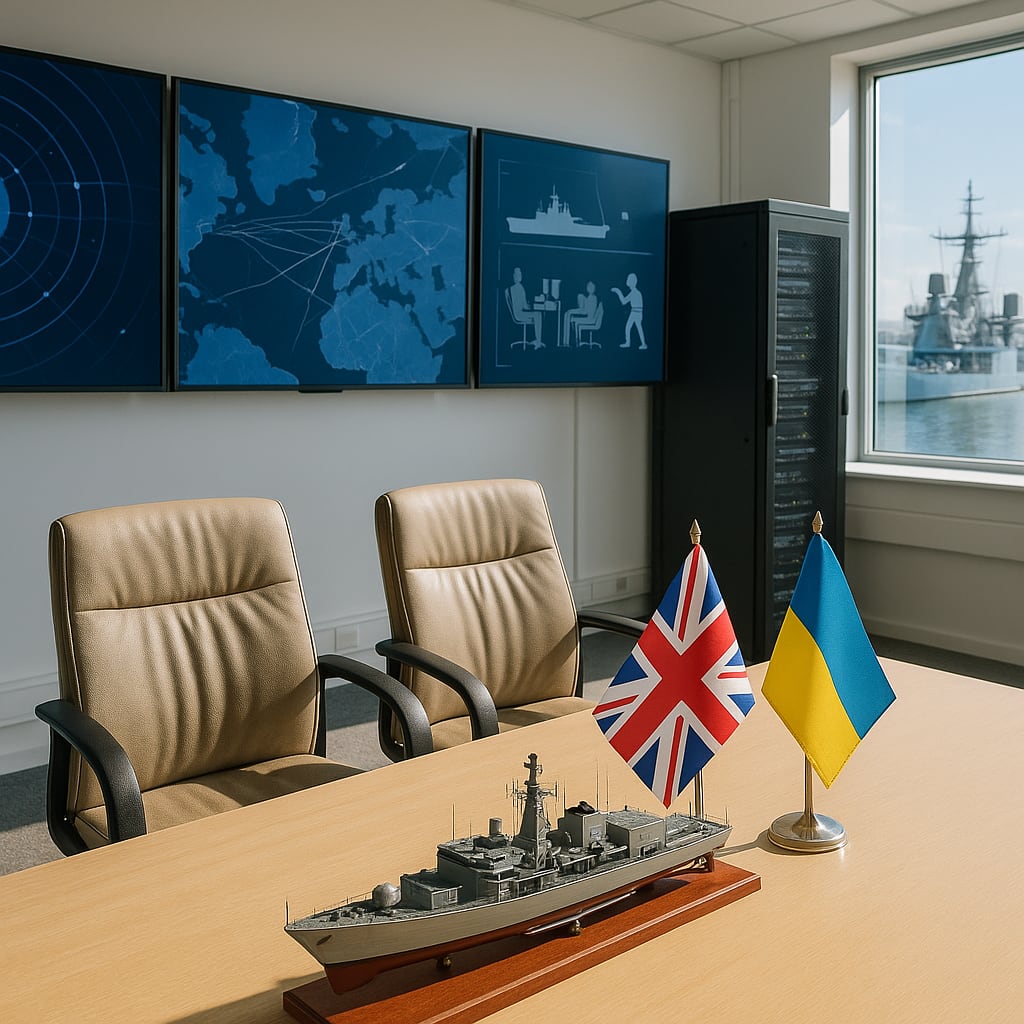
Zelensky meets UK’s new Prime Minister Andy Burnham in Portsmouth as London reiterates support for Ukraine
Narrative Snapshot
Across British and European reporting, the meeting’s symbolism and continuity were foregrounded. The Associated Press via the Toronto Star, Deutsche Welle, and the South China Morning Post all emphasized Downing Street’s pledge of “unwavering” backing and the choice of a naval base setting, while the Guardian highlighted Burnham’s insistence that Zelensky’s being his first international visitor was “no accident,” underscoring a message of 100% continuity even as the new prime minister seeks to prioritize domestic issues.
Ukrainian and Asia-based outlets foregrounded operational content. The Kyiv Independent quoted Zelensky’s stated priorities—air defense, maritime security, and joint defense production—while the SCMP pointed to UK-led training programs and their battlefield impact. Ukrinform added texture to the maritime angle by reporting the leaders’ engagement with Ukrainian and British sailors involved in the multinational Sea Breeze exercises in Portsmouth.
An Italian perspective introduced a potentially significant defense-industrial development. Corriere della Sera reported that Burnham offered Ukraine the capability to build the “Stone Cloak,” an electronic system intended to keep drones from Russian interception—framed as a change of pace. This claim did not appear in the other assembled sources and therefore remains specific to Corriere’s account.
Global reactions remain polarized. Al Jazeera situated the meeting within UK political churn, noting Burnham is the fifth British prime minister to handle the Ukraine dossier since 2022, while Telesur English, relaying remarks by Russia’s foreign minister in a separate Manila meeting, underscored Moscow’s stated opposition to continued Western arms supplies to Ukraine.
What Happened
Ukrainian President Volodymyr Zelensky traveled to the United Kingdom for talks with Prime Minister Andy Burnham at the Royal Navy base in Portsmouth, becoming the new UK leader’s first foreign guest. Downing Street said the pair would be briefed on UK-led training programs supporting Ukraine’s forces. Burnham publicly affirmed that British support would continue, pledging to honor existing commitments, a message echoed in accounts describing “unwavering” backing. Zelensky outlined priorities of air defense, maritime security, and joint defense production. The visit included an interaction with Ukrainian and British sailors who had taken part in the multinational Sea Breeze exercises. Corriere della Sera reported that Burnham offered Ukraine the chance to domestically produce a “Stone Cloak” drone-electronic system—an element not reflected in other outlets in this set.
Why It Matters
The encounter signals policy continuity under a new UK government, with Al Jazeera noting that Zelensky has now engaged five British prime ministers since 2022—an indicator that support has outlasted rapid leadership turnover. The SCMP’s focus on UK-led training, together with Ukrinform’s reporting on the Sea Breeze exercises, points to sustained institutional cooperation spanning training pipelines and maritime interoperability. Kyiv Independent’s emphasis on air defense, maritime security, and joint production suggests a shift toward deeper defense-industrial integration if pursued, potentially lock-in mechanisms that extend beyond short-term aid cycles.
Corriere’s account of a possible “Stone Cloak” transfer, if borne out, would mark an expansion from assistance toward sensitive technology sharing, with implications for export controls and co-production norms. Telesur’s coverage of Russia’s stated opposition to continued arms supplies underscores the contested diplomatic environment surrounding such moves, with potential ramifications for how partners calibrate support and manage escalation concerns.
Diverging Narratives
The strongest throughline in UK and European coverage is symbolic continuity: “unwavering” and “100%” support, the choice of Portsmouth’s naval setting, and Burnham’s framing of Zelensky as the first foreign visitor. Yet outlets diverge on substance and emphasis. The Kyiv Independent centers concrete capability priorities and joint production, while the SCMP treats training pipelines as both ongoing and consequential to battlefield outcomes. The Guardian adds a domestic-policy lens, portraying the meeting as a deliberate signal from a prime minister otherwise intent on focusing at home.
Only Corriere della Sera describes a prospective transfer of the “Stone Cloak” drone-electronics technology to Ukrainian production—a notable detail absent from the other sources reviewed here. That asymmetry leaves open questions about the scope of any new UK-Ukraine defense-industrial steps beyond training and existing commitments. Telesur’s recounting of Russia’s foreign minister objecting to continued arms supplies sets a countervailing frame: for Moscow, additional Western support—whether training, systems, or technology—is unacceptable. The result is a split between accounts prioritizing reassurance and operational cooperation and those highlighting the risks or pushback surrounding expanded assistance.
What Happens Next
Two decision tracks emerge from the sources. First, whether UK-Ukraine cooperation advances from reaffirmed support and training toward new defense-industrial steps. Analysts should watch for formal UK readouts or Ministry of Defence statements detailing joint production or technology-sharing—particularly any confirmation or denial of the “Stone Cloak” report carried by Corriere della Sera—and for announcements aligned with Zelensky’s stated priorities in air defense and maritime security.
Second, the durability and scope of UK commitments under a government signaling both continuity abroad and focus at home. Indicators include sustained or expanded UK-led training programs, maritime cooperation tied to exercises like Sea Breeze, and public commitments consistent with Burnham’s pledge to honor existing obligations. Externally, Telesur’s account of Russian objections highlights another indicator set: diplomatic statements or démarches reacting to any new UK measures, which will shape the operating environment for further UK-Ukraine decisions.