
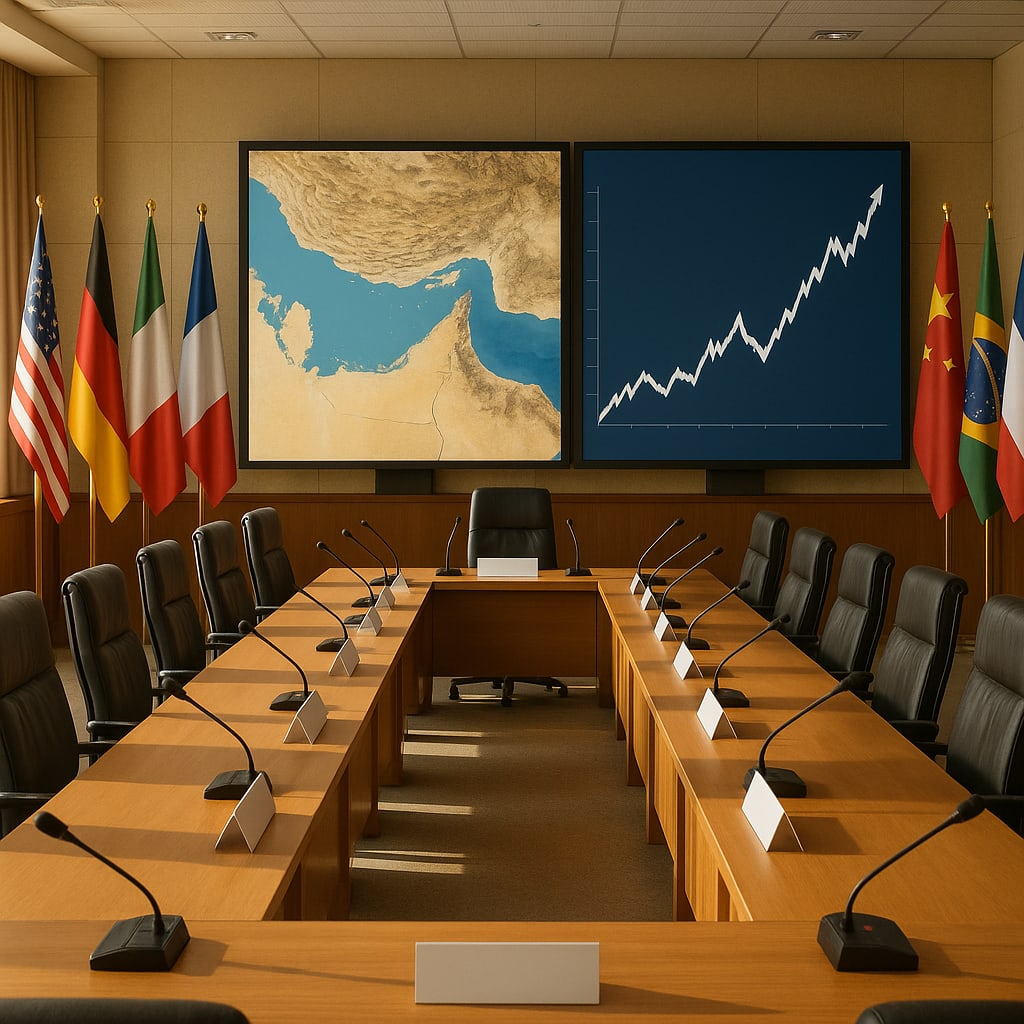
U.S. strikes Iran for a second night after Trump declares ceasefire ‘over,’ as Tehran retaliates against Gulf targets and energy markets swing
Narrative Snapshot
Across outlets, there is consensus that the United States conducted a second consecutive night of strikes on Iranian targets following attacks on commercial vessels in the Strait of Hormuz, and that Iran retaliated with strikes on U.S.-linked or hosting states in the Gulf, notably Kuwait and Bahrain (BBC; Japan Times; CGTN; Deutsche Welle; The Times of Israel; South China Morning Post). Where coverage diverges is on the status and durability of the interim truce: Al Jazeera reports neither side has formally terminated the agreement underpinning the ceasefire, even amid escalation, while Haaretz argues that core U.S.-Iran interests remain intact and could still pull both parties back to talks (Al Jazeera; Haaretz).
The rhetoric and framing vary sharply. Fox News and several European outlets foreground President Trump’s blistering language in Ankara that the ceasefire is “over” and that he does not want to “deal” with Tehran, while the BBC and Bangkok Post note he simultaneously left space for negotiators and, per Middle East Eye, later said he expected the flare-up to end “very quickly” (Fox News; South China Morning Post; BBC; Bangkok Post; Middle East Eye). Regional outlets track spillover: Israel’s security establishment is portrayed as bracing for renewed war, Pakistan publicly urges restraint, and Iranian media amplify condemnations of U.S. strikes from allied governments such as Yemen’s (The Times of Israel; IRNA). Russian state media emphasize the prospect of a longer campaign and regional allies’ attempts to preserve the ceasefire (TASS).
Economic reporting is tightly aligned: Brent prices jumped more than 5% into the high-$70s and equities slipped across multiple markets after Trump’s remarks and the renewed strikes, underscoring how swiftly Hormuz risk reprices across asset classes (Middle East Eye; NBC News; CBC; ANSA; Le Monde business coverage). Casualty reporting is inconsistent, with counts ranging from at least nine to at least 14, and an Iranian Health Ministry figure of 17 deaths and over 100 injured cited by Al Jazeera via Middle East Eye (Daily Nation; The Guardian; Middle East Eye).
What Happened
U.S. Central Command said it struck Iranian targets after three merchant ships were hit in the Strait of Hormuz, with explosions reported across southern Iran, including Bandar Abbas, Sirik, Bushehr, Chabahar, Qeshm and Abu Musa (CBC; RT; CGTN; BBC). The New York Times and Le Monde reported the operation coincided with Washington revoking an oil-sales waiver and reimposing sanctions, and that U.S. officials cited 80–90 targets hit in the initial waves (New York Times; Le Monde; BBC; Japan Times). Speaking at a NATO summit in Ankara, President Trump declared the ceasefire “over,” yet said talks could continue and later predicted the flare-up would end quickly (BBC; Bangkok Post; South China Morning Post; Middle East Eye). Iran responded with strikes on U.S.-linked sites in Gulf states, including Kuwait and Bahrain, as Israel prepared for potential war resumption and Pakistan called for restraint (Deutsche Welle; The Times of Israel). Reported fatalities in Iran vary by source from nine to 17 (Daily Nation; The Guardian; Middle East Eye).
Why It Matters
The escalation tests a still-extant interim understanding intended to keep Hormuz open and create space for a permanent truce, highlighting the fragility of ad hoc arrangements absent dispute-resolution mechanisms (Le Monde; The Guardian). It links coercive strikes to renewed sanctions—revoking the oil waiver—reaffirming Washington’s sanctions-plus-force toolkit and Tehran’s pattern of retaliating asymmetrically via regional strikes (New York Times; Al Jazeera). For alliance management, the conflict is bleeding into the security of host states like Kuwait and Bahrain and into Israel’s threat calculus, while regional and extra-regional actors attempt to arrest escalation, indicating the premium partners place on preventing a rules breakdown around maritime security (Deutsche Welle; The Times of Israel; TASS). Energy markets immediately repriced Hormuz risk, with Brent jumping above $78–$79 and equities sliding, reinforcing how tactical military moves in the Gulf transmit into global macro conditions and policy space for governments already managing inflation and growth trade-offs (Middle East Eye; NBC News; CBC; ANSA).
Diverging Narratives
Disagreement centers on whether the ceasefire is politically dead or procedurally intact. Trump’s on-record “it’s over” coexists with statements that talks can continue and the flare-up may end quickly, while Al Jazeera underscores that neither side has formally abrogated the interim agreement; Haaretz suggests strategic incentives could still push both back to negotiations (BBC; Bangkok Post; Middle East Eye; Al Jazeera; Haaretz). On causality and legitimacy, U.S. and allied reporting frames the strikes as retribution for Iran’s attacks on commercial shipping, a claim anchoring CENTCOM’s public rationale, while Iranian and sympathetic outlets stress civilian harm and condemn what they describe as U.S. aggression, including reports of damage to infrastructure such as fishing piers near Bushehr (CBC; RT; Al Jazeera). Casualty figures are not harmonized: reports cite at least nine killed, at least 14, or 17 dead and over 100 injured, reflecting evolving tallies and differing sourcing within Iran (Daily Nation; The Guardian; Middle East Eye; Politika). On scope and duration, some coverage flags a potential campaign of days to a month depending on Iran’s response, while others emphasize diplomatic efforts by regional allies to preserve the ceasefire, and signals from Israel and “mysterious” follow-on strikes that could widen the battlespace even if formally unattributed (TASS; The Hindu; The Times of Israel; Telesur English).
What Happens Next
Three decision points emerge. First, whether Washington and Tehran operationalize de-escalation without formally renouncing the interim deal: indicators include a halt to cross-border strikes, reactivation of the memorandum’s channels reported in June, and leadership messaging aligning with Trump’s comment that the flare-up could end quickly (Al Jazeera; Middle East Eye). Second, whether tit-for-tat persists in a contained cycle: TASS cites assessments that a new round could last days to a month; signs would be continued blasts across southern Iran, additional IRGC actions against Gulf hosts, and Israel maintaining a heightened posture without overt entry (CGTN; The Times of Israel; TASS). Third, whether the truce framework unravels: watch for explicit termination of the memorandum, further U.S. sanctions steps beyond the revoked waiver, Iranian framing that “mutual compliance” has failed, and targeting edging near sensitive sites such as Bushehr-area infrastructure (New York Times; Middle East Eye; Al Jazeera). Regional outreach—from Pakistan and U.S. partners seeking restraint—will be a gauge of diplomatic traction (The Times of Israel; TASS).