
NATO meets in Ankara as Turkey’s leverage grows, civil liberties come under strain, and the F-35 question reopens
Narrative Snapshot
- Convergence: Multiple outlets frame Turkey as newly indispensable for NATO given its large military and expanding defense industry (New York Times; Corriere della Sera; Fox News), even as alliance cohesion is tested by U.S.-Europe tensions and the war on Iran (Japan Times; Al Jazeera).
- Divergence: Rights-focused reporting emphasizes Ankara’s pre-summit crackdown and an intensified security lockdown (The Guardian; Le Monde; New York Times; Japan Times), while others foreground strategic recalibration toward closer U.S.-Turkey defense ties (Fox News; Corriere della Sera).
- Agenda scope: Coverage broadly anticipates primacy for Ukraine support and European defense spending/industrial capacity (Clarín; Al Jazeera; SCMP), with Indo-Pacific cooperation downgraded despite earlier warnings about China (SCMP).
- Contested systems: Reporting that President Trump is poised to restore Turkey’s F-35 access (New York Times) collides with security objections, including Israeli Prime Minister Netanyahu’s call to block any move (Fox News), underscoring unresolved technology-protection and intra-alliance trust issues.
What Happened
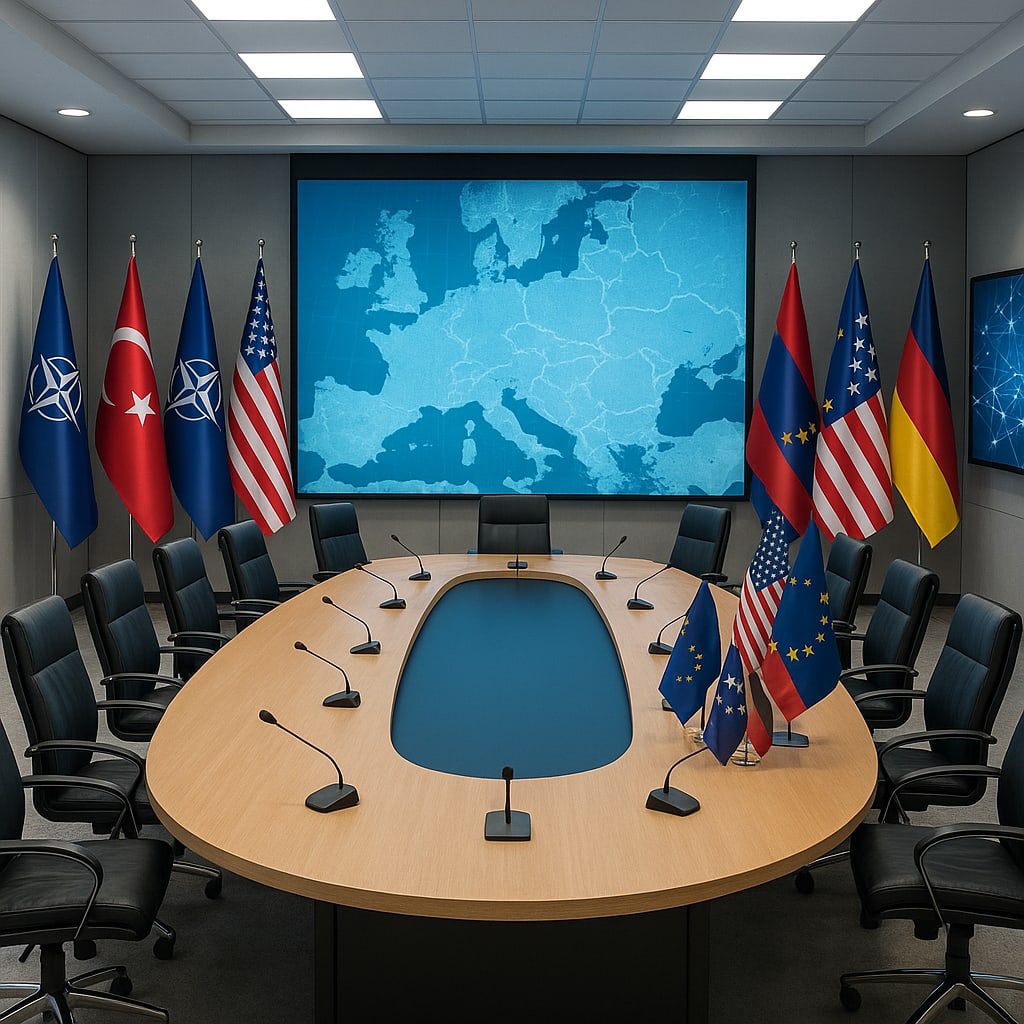
NATO’s 32 members are convening in Ankara on July 7–8 with Ukraine support, Europe’s defense readiness, and fallout from the U.S.-Israel war on Iran shaping the agenda (Japan Times; Clarín; Al Jazeera). President Trump is attending, set to meet President Zelenskyy and engage closely with President Erdoğan; he has recently cooled on NATO even as allies reassess Turkey’s strategic weight and defense industry (Japan Times; New York Times). Reporting indicates Trump is expected to tell Ankara he is ready to restore access to F-35 jets, reversing a ban imposed after Turkey’s 2019 S-400 acquisition (New York Times). Ahead of the summit, Turkish authorities imposed broad restrictions: arrests exceeding 200, bans on demonstrations through July 10, website blocks, and high-profile detentions, including a comedian; hearings for Istanbul mayor Ekrem Imamoglu proceeded under an accelerated calendar (The Guardian; New York Times; Le Monde; Japan Times). Indo-Pacific issues are likely to recede (SCMP).
Why It Matters
The Ankara summit crystallizes a rebalancing inside NATO: strategic reliance on Turkey’s military-industrial capacity is rising as U.S.-Europe frictions persist and Ukraine’s battlefield resilience remains a central test (New York Times; Corriere della Sera; Al Jazeera). Any move to re-open F-35 access for Turkey would reverberate across alliance technology-security norms and prior sanctions logic linked to the S-400 purchase, testing whether political expediency overrides earlier risk calculus (New York Times). European pushes for higher defense spending and a stronger industrial base signal a structural effort to reduce vulnerabilities exposed by the Ukraine war (Clarín; Al Jazeera). At the same time, Ankara’s broad pre-summit crackdown places human-rights trade-offs in sharp relief for an alliance that claims democratic credentials, with implications for conditionality in security cooperation and for NATO’s credibility in norm-based diplomacy (The Guardian; Le Monde; New York Times; Japan Times). Indo-Pacific deprioritization indicates bandwidth constraints (SCMP).
Diverging Narratives
- Strategic partner or liability: Several outlets highlight Turkey’s military scale and defense sector as assets at a moment when President Trump’s commitment to NATO is uncertain (New York Times; Corriere della Sera; Fox News). Rights-focused coverage presents a counterpoint, documenting mass arrests, protest bans, and prosecutions as the summit opens, raising questions about aligning more tightly with Ankara amid democratic backsliding (The Guardian; Le Monde; New York Times; Japan Times).
- F-35 recalibration: The New York Times reports Trump is expected to signal readiness to restore Turkey’s F-35 access, reversing a ban premised on S-400-related security risks. Fox News features Israeli Prime Minister Netanyahu urging Washington not to proceed, citing Erdoğan’s hostility and potential regional power imbalances. The unresolved core tension is between alliance military integration and concerns over technology compromise and intra-alliance trust.
- Agenda bandwidth: SCMP anticipates Indo-Pacific cooperation will be sidelined by Ukraine, Iran, and spending debates, even as prior NATO messaging warned about China. Clarín and Al Jazeera similarly stress defense investment, industrial capacity, and Ukraine’s needs as focal points.
- Regional spillovers: Japan Times situates allied wariness in the context of the U.S.-Israel war on Iran. Middle East Eye’s news analysis centers Ankara as pivotal in summit dynamics, while an MEE opinion piece argues Israel is escalating against Turkey—claims that, while not echoed elsewhere here, illustrate how Middle East fault lines inform perceptions of NATO choices.
What Happens Next
- F-35 pathway for Turkey: Watch for any U.S. announcement or conditionality tied to the S-400 issue (e.g., storage, monitoring, or disengagement) and allied reactions. Movement toward restoration, as reported by the New York Times, would validate Ankara’s strategic leverage; pushback—foreshadowed by Netanyahu’s warning (Fox News)—would keep technology-security concerns paramount.
- Defense posture and industry: Track summit language and follow-on pledges on European defense spending and industrial ramp-up (Clarín; Al Jazeera). Explicit commitments would signal institutional capacity-building; vague communiqués would reflect lingering resource and coordination gaps.
- Ukraine support: Monitor deliverables for “military resilience,” including sustainment and munitions flows (Al Jazeera; Clarín). Concrete packages and production timelines would indicate cohesion despite political strains.
- Human rights and rule of law in Turkey: Signals include whether protest bans lapse on schedule, outcomes and scheduling in the Imamoglu proceedings, and any continued arrests (The Guardian; Le Monde; New York Times; Japan Times). Sustained restrictions would complicate deeper defense cooperation optics.
- Indo-Pacific framing: Note if summit communiqués soften or sidestep China-related language and partner engagement, consistent with SCMP’s reporting on a back-burner Indo-Pacific.