
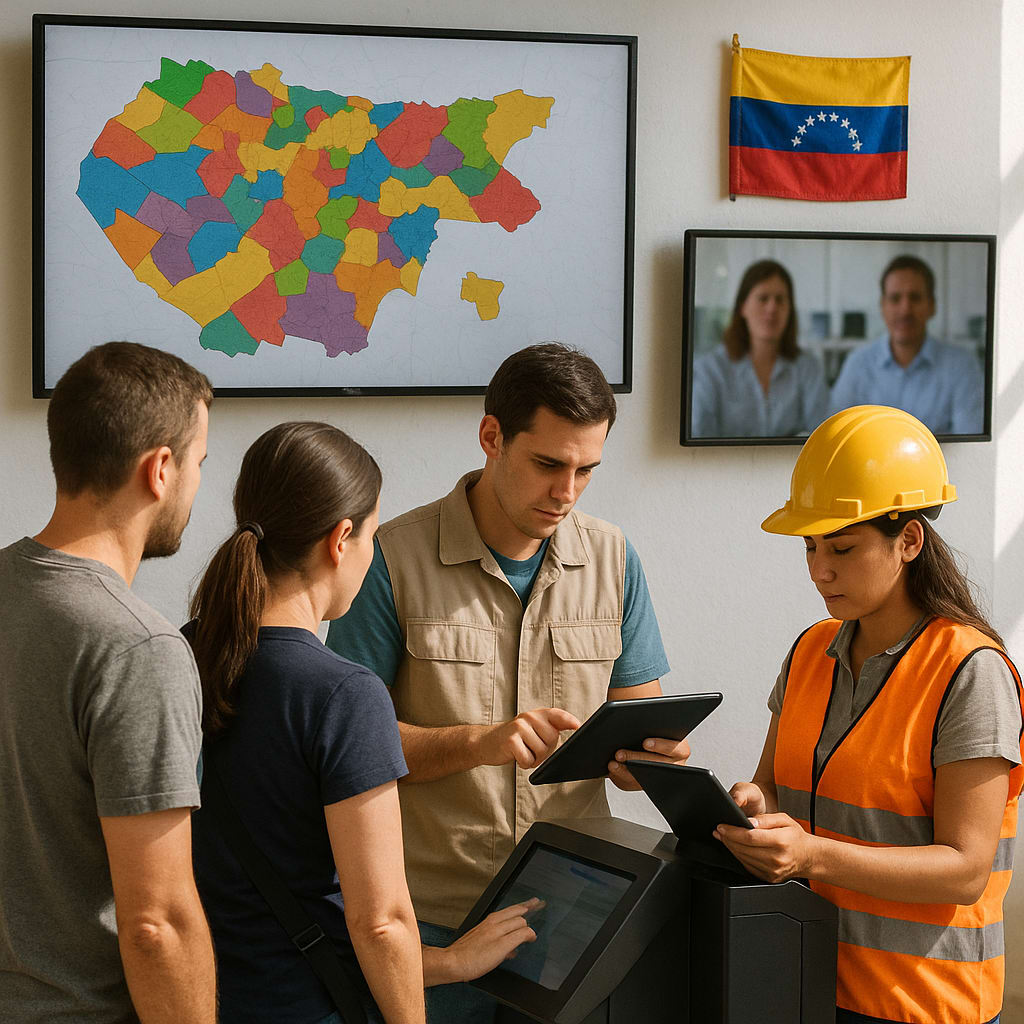
One month after Venezuela’s earthquakes, deaths surpass 5,300 as Caracas pivots to housing registry and multilateral planning; Israel ends on‑site assistance
Narrative Snapshot
Across outlets, there is broad alignment on the disaster’s scale, with official deaths above 5,300 and enormous displacement, but estimates of the missing diverge sharply. Russian state agency TASS cites 5,398 dead alongside detailed destruction metrics, while global broadcasters center uncertainty: NBC reports more than 29,000 missing, and the BBC notes estimates “as high as 50,000.” Al Jazeera foregrounds reconstruction costs via a World Bank estimate of $19.6 billion in damage, nearly half to residential stock. Latin American reporting from Folha de S.Paulo underscores the human toll and the devastation in La Guaira through first‑person accounts, amplifying the scale seen on the ground.
Coverage of state response splits between policy steps and performance questions. Venezuela’s government media narrative emphasizes new mechanisms and multilateral outreach: Telesur highlights a Unified Housing Registry in temporary camps and a high‑level meeting with the Inter‑American Development Bank to forge a cooperation roadmap. Clarin references a reconstruction plan more broadly. By contrast, NBC flags that questions persist about the government’s emergency response one month on.
International assistance is read through different lenses. The Times of Israel presents the Israeli team’s departure from Caracas—after a meeting in which Acting President Delcy Rodríguez thanked the delegation—as part of a thaw in strained ties, with continued remote support promised. Folha carries testimony from an Israeli army rescuer depicting a “colossal disaster” in La Guaira. Middle East Eye contests the framing, characterizing Israel’s role as propaganda and “humanitarian whitewashing,” indicating a sharp interpretive divide over crisis diplomacy and image management.
An information contest also runs through the coverage. Clarin relays reports that two adolescents may have been found alive in La Guaira, while Telesur formally denounces such claims as fake news, even as it stresses that search and rescue is ongoing. The BBC and NBC feature families still seeking the missing, reinforcing the public pressure that sustains rescue efforts and shapes expectations about when and how the response transitions to recovery.
What Happened
One month after twin earthquakes struck Venezuela, officials place fatalities above 5,300, with TASS reporting 5,398 deaths, 190 buildings destroyed, and 856 severely damaged. International broadcasters stress the unresolved scale of the missing, with NBC citing more than 29,000 and the BBC reporting estimates up to 50,000. Al Jazeera, citing the World Bank, reports $19.6 billion in damage, 47 percent affecting residential buildings. The Venezuelan government announced a Unified Housing Registry in temporary camps to identify affected households and prioritize permanent housing, and Acting President Delcy Rodríguez met an Inter‑American Development Bank delegation to craft a multilateral cooperation roadmap, according to Telesur. The Times of Israel reports the Israeli rescue mission ended its on‑site work after a meeting in which Rodríguez thanked the delegation; Israel said it would continue assisting remotely. Information frictions surfaced as Telesur rejected reports of new survivors in La Guaira that Clarin had circulated.
Why It Matters
The combination of a high death toll, thousands missing, and housing‑heavy damage puts reconstruction finance and state capacity at the center of Venezuela’s near‑term policy agenda. The World Bank’s damage estimate provides a baseline for donor coordination, while Caracas’s engagement with the Inter‑American Development Bank signals intent to align recovery planning with multilateral mechanisms, potentially shaping conditionality, sequencing, and procurement standards. The Unified Housing Registry, if implemented credibly, could become a key instrument for targeting assistance, verifying need, and managing resettlement in a fiscally constrained environment.
Diplomatically, Israel’s acknowledged role and on‑site exit—framed by the Times of Israel as occurring amid a thaw with Caracas and by Middle East Eye as reputational “whitewashing”—illustrate how disaster relief intersects with contested narratives and bilateral signaling. For international organizations and governments, the contested information space, including conflicting reports about survivors and wide variance in missing counts, elevates the importance of transparent casualty accounting and communications to sustain public trust and coordinate aid.
Diverging Narratives
Two clusters of divergence stand out. First, on international engagement, the Times of Israel and Folha emphasize operational contribution and high‑level acknowledgment of Israel’s assistance, including Rodríguez’s thanks and an Israeli rescuer’s account from La Guaira. Middle East Eye counters that Israel leveraged the response for propaganda in Caracas, casting humanitarian outreach as image management. This split reflects contrasting judgments about motive and optics rather than disputing the fact of assistance.
Second, on situational awareness and tempo of operations, outlets differ on signals of survivability and the stage of the response. Clarin reports that two adolescents were found alive in La Guaira; Telesur explicitly labels such claims as fake news even as it underscores that search and rescue continues. Simultaneously, casualty accounting is unsettled: TASS fixes reported deaths at 5,398, NBC cites more than 29,000 missing, and the BBC raises estimates up to 50,000. NBC also notes that questions remain about the government’s emergency response, whereas Telesur highlights policy moves—the housing registry and IDB talks—suggesting a shift toward structured recovery planning. These divergences affect public expectations about rescue prospects and the timing of a transition to reconstruction.
What Happens Next
Key decisions will turn on how Caracas operationalizes the housing registry and translates the IDB engagement into concrete programs. Indicators to watch include publication of registry criteria and data coverage, agreements or financing instruments emerging from the IDB roadmap, and whether the World Bank’s $19.6 billion estimate is adopted in official planning baselines. The government’s handling of casualty and missing‑person lists is another inflection point; convergence between figures cited by broadcasters and official tallies would signal improved information management.
On international assistance, Israel’s stated plan to continue support remotely creates a test of sustained technical coordination versus politically charged narratives; observable signals include joint technical announcements or, conversely, public disputes such as those highlighted by Middle East Eye. Finally, the operational posture in La Guaira will matter: Telesur’s insistence that search and rescue continues, alongside families’ ongoing searches reported by the BBC and NBC, will shape when authorities formally pivot to recovery. Clear, evidence‑based updates on survivability and site clearance will be determinative.