
Tankers hit near Hormuz as US strikes Iran for ninth night and Tehran signals transit restrictions
Narrative Snapshot
Maritime reporting is cautious about attribution while state actors are not. The UK Maritime Trade Operations center relayed “multiple reports” that a tanker was struck by an unknown projectile eight nautical miles northeast of Limah, Oman, without assigning responsibility, a stance echoed by wire coverage (Middle East Eye, TASS). Iranian outlets, by contrast, say the Islamic Revolutionary Guard Corps stopped “offending” tankers immobilized by explosions and indicated the waterway would remain closed under certain conditions (IRNA; Middle East Eye). The Guardian characterizes the episode as an Iranian attack that forced a crew to abandon ship, underscoring how framing diverges between operational advisories and political narratives.
Coverage of the air campaign is consistent on tempo but split on rationale. Western and regional outlets document uninterrupted US strike nights, citing CENTCOM’s aim to degrade capabilities used to target commercial shipping in Hormuz (Al Jazeera, Haaretz, Deutsche Welle). Chinese and Latin American outlets emphasize costs, civilian harm, and legality, highlighting an Iranian claim that US projectiles hit the Darkhovin nuclear plant construction site and tallying casualties from strikes inside Iran (CGTN; Telesur). Iranian and allied media also carry explicit warnings that equipment bound “for use against Iran” will not be allowed to transit Hormuz (IRNA).
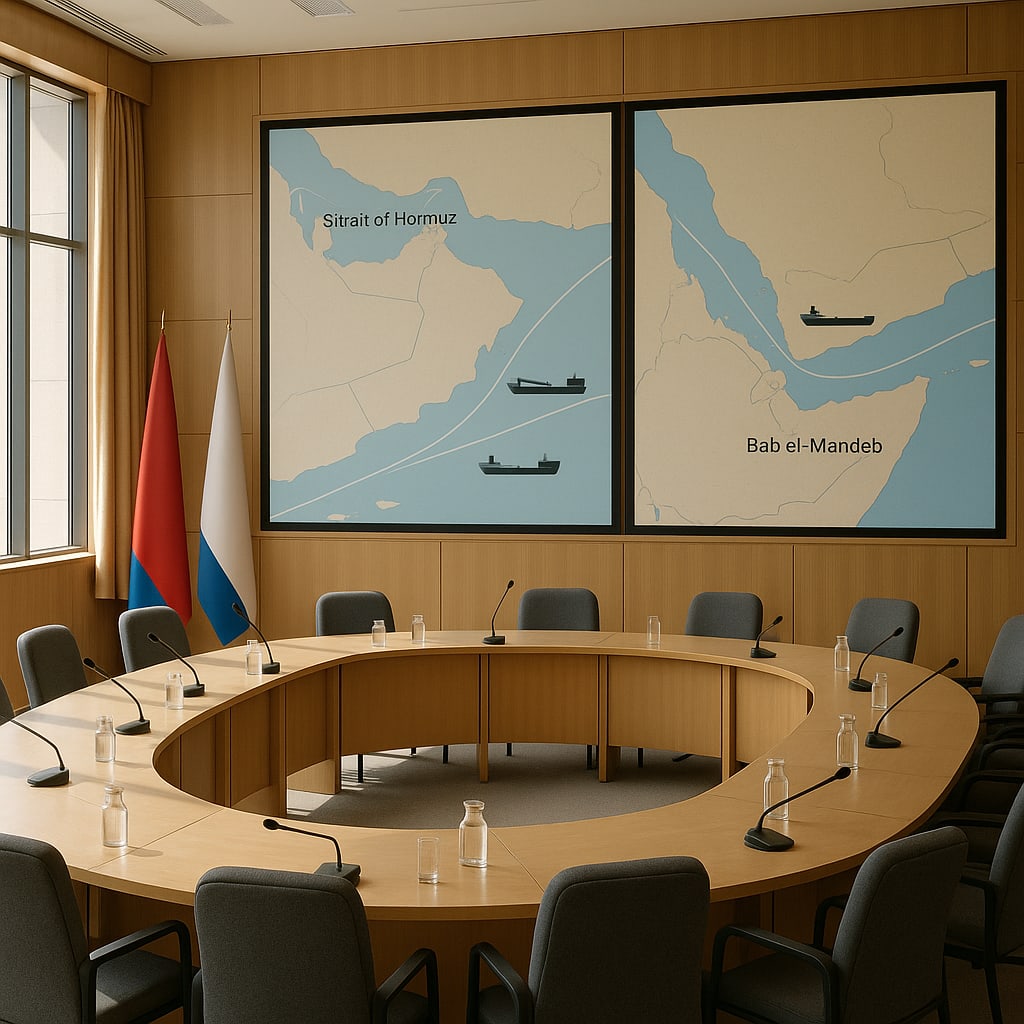
Reporting converges on regional spillover. Bahrain said it was intercepting Iranian attacks; Haaretz and Deutsche Welle note Iran’s missiles toward Jordan and strikes on Gulf-linked sites (Middle East Eye; Haaretz; Deutsche Welle). At sea, the contest is widening beyond Hormuz: Fox News, citing Reuters sources, reports Iran urged Yemen’s Houthis to prepare to shut Bab el-Mandeb, and the Guardian says the Houthis announced a blockade affecting Saudi Red Sea routes (Fox News; The Guardian). Several outlets describe operational constraints on traffic through Hormuz, with one daily calling it “virtually closed” amid the escalation (Bangkok Post).
What Happened
The United States conducted consecutive nightly strikes on Iran, with Al Jazeera, Deutsche Welle, and Haaretz documenting the eighth and ninth rounds. CENTCOM said the campaign targets Iranian capabilities used to threaten commercial mariners in the Strait of Hormuz (Haaretz; CGTN). Iran responded with strikes across the region, including missiles toward Jordan and attacks that triggered air defenses in Bahrain (Haaretz; Deutsche Welle; Middle East Eye). Maritime warnings reported a tanker hit by an unknown projectile near Limah, Oman, while Iran’s IRGC said two “offending” tankers caught fire after explosions and were immobilized as they attempted to transit Hormuz (UKMTO via Middle East Eye; IRNA; Middle East Eye). Iran’s army warned that equipment intended “for use against Iran” would be denied passage through Hormuz (IRNA). Iran also said US projectiles struck the Darkhovin nuclear plant construction site, calling it a violation of sovereignty (CGTN). The United States has reimposed a naval blockade on Iranian ports (Le Monde; Bangkok Post).
Why It Matters
The incidents test competing claims over freedom of navigation and coastal-state control at a critical chokepoint. US officials justify sustained strikes as necessary to protect commercial shipping in Hormuz, an argument anchored in recent incidents at sea (Haaretz; CGTN; Middle East Eye). Iran is signaling a more formalized approach to regulating the strait, introducing a Hormuz management bill and warning it will block transit of equipment destined to be used against it, positions that challenge established passage expectations (Telesur; IRNA). Simultaneous pressure at Bab el-Mandeb—through reported Iranian direction to the Houthis and an announced Houthi blockade—extends risk to a second global artery (Fox News; The Guardian).
Institutionally, the resumption of a US port blockade and even proposals to collect transit fees elevate questions of precedent for unilateral economic control over international waterways (Le Monde; Bangkok Post). With Iran reporting mediator proposals for a ceasefire and talks, diplomatic off-ramps exist but must contend with an active air campaign, regional spillover, and maritime insecurity (CGTN).
Diverging Narratives
Attribution and legality are foremost points of contention. UKMTO communications describe an “unknown projectile” striking a tanker, while Iranian statements frame the damaged ships as “offending” vessels interdicted near Hormuz; The Guardian reports that Iran attacked a tanker, compelling abandonment (Middle East Eye; IRNA; The Guardian). For Washington, the strikes are calibrated to degrade capabilities used to target commercial mariners, aligning the campaign with maritime security aims; Tehran depicts the strikes as unlawful aggression, citing an alleged attack on the Darkhovin nuclear construction site as a breach of sovereignty and international law (Haaretz; CGTN).
Control of Hormuz is narrated through clashing authorities. Iran’s army asserts it can bar transit of materiel intended against it and the IRGC has warned of closure tied to US actions, whereas US and allied sources stress protection of navigation and have reimposed a blockade on Iranian ports, with one outlet noting a US proposal to charge ships for passage (IRNA; Middle East Eye; Le Monde; Bangkok Post). The scope of escalation also splits: some coverage points to a “virtually closed” Hormuz and expanding attacks on Bahrain and Jordan, while maritime bulletins retain a narrower, incident-by-incident tone (Bangkok Post; Middle East Eye; Haaretz; UKMTO via Middle East Eye).
Red Sea dynamics add another contested layer. Fox News, referencing Reuters, reports Iranian direction to the Houthis to prepare to shut Bab el-Mandeb, and The Guardian relays a Houthi announcement of a blockade. Whether and how such declarations translate into enforceable, sustained interdiction remains an open question in the reporting (Fox News; The Guardian).
What Happens Next
Three decision points emerge. First, Iran’s enforcement posture in Hormuz: its army’s transit warning and the IRGC’s statements about immobilized tankers suggest selective interdiction could harden into broader restrictions. Indicators include additional IRGC announcements, patterns in UKMTO advisories, and any formal notification accompanying Tehran’s Hormuz management bill (IRNA; Telesur; Middle East Eye). Second, US strike tempo versus diplomacy: CENTCOM says operations will continue to degrade maritime threat capabilities, while Tehran acknowledges mediator proposals. Watch for changes in nightly strike frequency, public responses to mediation, and shifts in targeting rationales (Haaretz; CGTN).
Third, the conflict’s second front at Bab el-Mandeb: reports of Houthi preparations and a declared blockade affecting Saudi routes point to potential disruption beyond Hormuz. Shipping advisories, reported missile or drone activity near the strait, and Saudi port access will signal whether escalation materializes there (Fox News; The Guardian). Regional spillover—such as Bahrain’s interceptions and missiles toward Jordan—will shape coalition responses and the space for de-escalation (Middle East Eye; Haaretz; Deutsche Welle).