
[SECTION 1]
Elena: [low, immediate] A sentence moved the price of oil more than a night of explosions did.
Lukas: [short pause, surprised] Which sentence?
Elena: [matter-of-fact] “I think it’s over.” Trump, about the Iran ceasefire. Within hours, WTI ticked into the mid‑$70s. NHK tied the jump directly to that remark. Then the strikes hit, the U.S. revoked a short-term oil waiver, and markets kept oscillating.
Lukas: [skeptical] So words first, missiles second. [short pause] But is this really about language, or is it about barrels being pulled off the market?
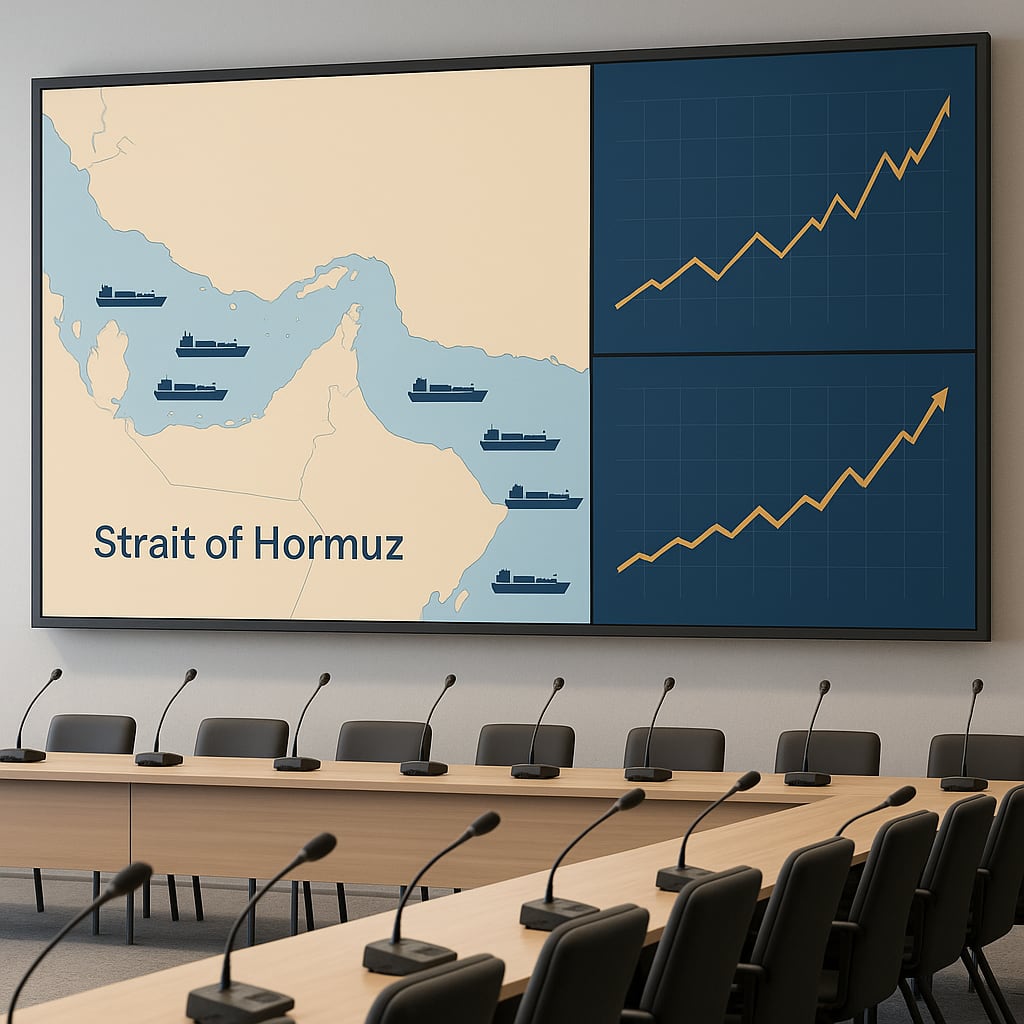
Elena: Both, and the order matters. [thoughtful] The suspension of that two‑month waiver is paperwork that scares ships. Traders don’t just count barrels, they count insurability. If OFAC pulls a license, vessels and banks freeze. That’s supply disappearing on paper before it disappears at sea.
Lukas: [quietly] And meanwhile, there are crews on those tankers. The U.S. statement called them “innocent civilians.” That phrasing showed up everywhere, even in outlets skeptical of Washington.
Elena: [carefully] It’s a legal and moral frame that justifies military protection of a waterway. But notice the split. The financial pages in New York leaned into “volatility” and “inflation risk.” Le Monde emphasized a protocol signed less than three weeks ago, suddenly in tatters. Different audiences, different levers.
Lukas: [exhales] And Qatar publicly says Iran’s legally responsible for three hits in Hormuz, including a damaged LNG carrier. That’s not just blame, that’s laying groundwork for insurance claims and maybe naval escorts.
Elena: [serious] Exactly. And Tehran’s state media counters with sovereignty language: no interference in managing the strait. It’s a sovereignty-vs-safety clash, but the price that flashes on your phone translates it into risk.
Lukas: [cuts in] The price is the scoreboard?
Elena: [short pause, wry] More like the PA system. It broadcasts how believable the threats are. On the spike: Brent near $78, even flirting with $80 in some tickers. On the comedown: Asian stocks stabilizing and crude easing as traders bet against a full closure.
Lukas: [curious] Why bet against it? I mean, missiles, revocations, threats to take over Kharg Island—that’s… maximalist.
Elena: [dryly] Maximalist on TV, minimalist in positioning. [gentler] U.S. officials told wire services they’re still negotiating in good faith. So you have the President declaring the ceasefire “over,” while envoys whisper “not dead yet.” Markets price the whisper more than the shout.
Lukas: [half-laugh] That’s infuriating. [softly] For anyone buying gas, this feels like theater with a checkout line attached.
Elena: [softly] It is theater with consequences. And it’s deliberate. The U.S. wants to raise Iran’s cost of escalation without starting a wider war. Tehran wants to prove it can lift the global energy bill without actually closing the tap. Each side needs the price to speak for them.
Lukas: [serious] So here’s the tension: are we watching a war, or a pricing exercise in the shape of a war?
Elena: [long pause] We’re watching leaders try to win by moving a number before they move a fleet.
Lukas: [quietly] And if the number moves, who actually pays?
Elena: [measured] Voters at the pump. Asian utilities sourcing LNG. Shippers paying higher premiums to transit a narrow lane off Oman. The people least in the room when the sentence gets written.
Lukas: [lower] Okay. [short pause] So when Trump says “it’s over,” and OFAC yanks a waiver, that’s not just posture. That’s a switch flipped in every risk model on earth.
Elena: [steady] And then, the models start telling a story back to the leaders. Which story they hear—panic or shrug—shapes what happens next.
[SECTION 2]
Lukas: [curious] I keep thinking about how different outlets seemed to coach the audience toward a mood. The business desk in New York says: choppy trading, anxiety. A Hong Kong brief the next day: tech stocks up, oil slips. Same week, opposite vibes.
Elena: [amused] Mood is policy. [serious] Regional framing maps to exposure. Gulf coverage centered legal culpability and maritime law. Japanese outlets laser-focused on WTI ticks because Japan’s import dependency runs through Hormuz. In Washington-facing media, the emphasis was enforcement: “powerful strikes” to protect commercial shipping.
Lukas: And then there’s the Russian ecosystem. They spotlight the waiver revocation as economic warfare, not security. That invites you to read any price move as a U.S.-engineered squeeze, not a response to Iranian behavior.
Elena: [carefully] While an Arab outlet zeroed in on Kharg Island—an export chokepoint for Iran—as a concrete target of rhetoric. If you’re a trader, the minute Kharg is named, you model terminal downtime, loading delays, and you add a premium even if no one fires at it.
Lukas: [interrupts] But the next morning, some traders didn’t. Prices eased. So either they’re calling a bluff, or they’re betting that even hawks in Washington don’t actually want $90 oil in an election year.
Elena: [thoughtful] That’s the quiet incentive cutting across everything. A durable oil spike is inflation. It sinks travel stocks, pressures the Fed, and shows up on every U.S. receipt. So the choreography becomes: escalate, signal limits, keep the premium narrow. Enough pain for Tehran, not too much for Cleveland.
Lukas: [softly] And for Tehran?
Elena: They need to restore deterrence after being hit, prove they can raise costs, and still avoid a blockade that invites overwhelming retaliation. So you get statements like “we won’t allow interference in managing the strait” alongside calibrated attacks attributed to “unknown projectiles.” Ambiguity is the instrument.
Lukas: [sigh] Meanwhile, sailors are patching holes, and insurance underwriters are rewriting fine print. [short pause] It’s hard not to feel like the human stakes get flattened into a basis point.
Elena: [quietly] The human stakes are the part markets misprice until they can’t. Remember, one Qatari LNG carrier taking damage isn’t just a statistic. It reroutes cargoes, it spikes spot prices in Asia on a cold week, it hits households thousands of miles away.
Lukas: [skeptical] So is the price telling us anything true? Or is it just reflecting who shouted last?
Elena: [measured] It’s telling you the consensus on probability today. Not truth, not justice—just odds. And odds can be manipulated. A President says five words; a vice president hints at military responses to a closure; a European headline breathes “winds of war.” Every nudge is aimed at the same audience: people who move money and ships.
Lukas: [curious] And the contradiction: the U.S. sells this as protecting free navigation. But revoking a waiver reduces Iran’s legal way to sell oil safely. You’re defending the lane while narrowing who gets to use it.
Elena: [dryly] “Freedom of navigation” with conditions. That’s power. If you can decide which cargoes are insurable, you don’t need to fire many shots to change behavior.
Lukas: [quietly] Until someone decides to test whether it’s bluff. Close a lane for a day. Hit a terminal. Make the number jump and force a response.
Elena: [long pause] And then the market stops being a message and becomes a siren. Everyone hears it, but no one’s sure who set it off.
Lukas: [softly] Do you think leaders have learned how much a sentence can move the world?
Elena: [after a beat] I think they’ve learned it works—until it doesn’t. And the day the price no longer jumps the way they want, the temptation will be to make reality match the script.
Lukas: [low] That’s the part that sticks with me. When your leverage is a number, proving you mean it starts to require… more than a sentence.
Elena: [quietly] And more than anyone wants to pay.