
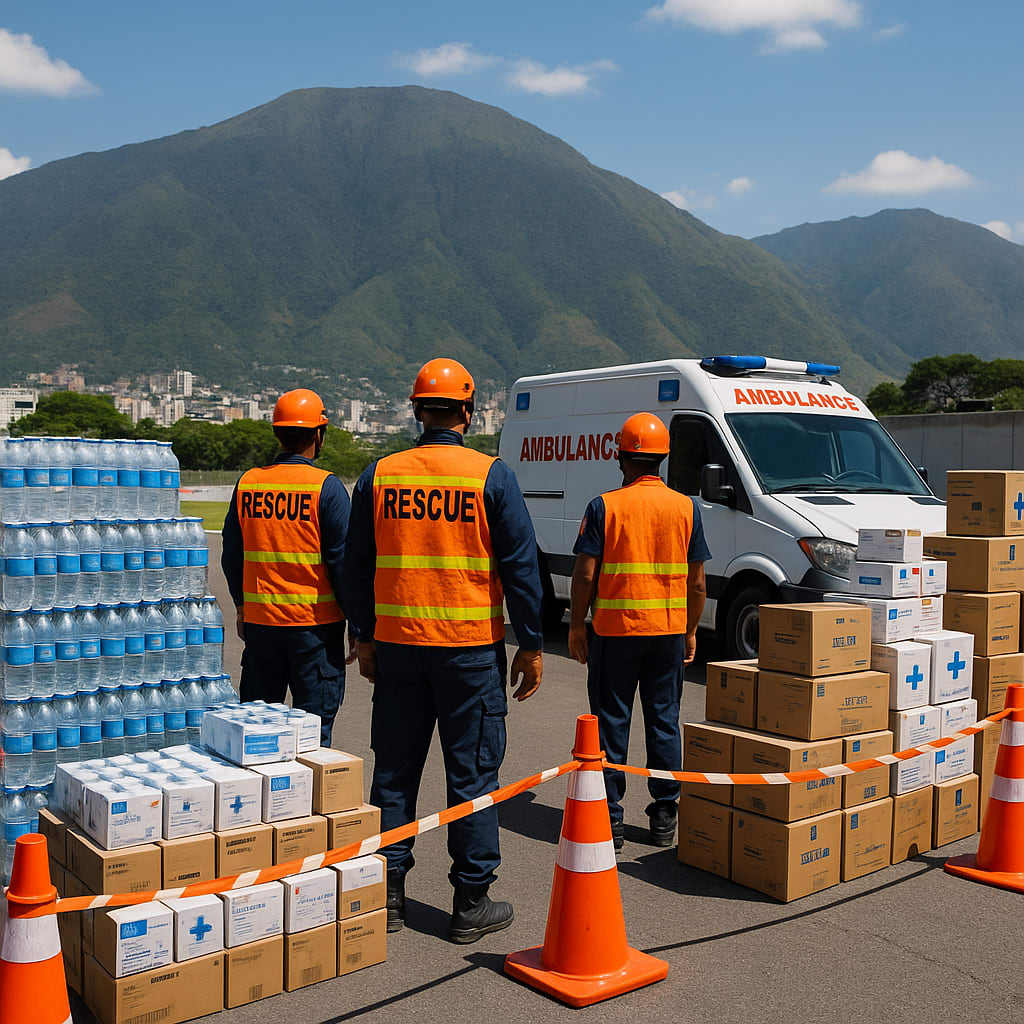
Twin 7.2 and 7.5 earthquakes strike Venezuela; state of emergency declared, at least 32 dead
Narrative Snapshot
- Magnitudes and sequencing converge across outlets: a 7.2 quake followed roughly 30–40 seconds later by a 7.5, with significant aftershocks; early dispatches that cited a single 7.1 event were later superseded by the twin-quake consensus (Japan Times; BBC; Le Monde; SCMP; Guardian; The Hindu LIVE).
- Impact framing diverges: official tallies cite at least 32 dead and over 700 injured, while other coverage leaned on USGS modeling to warn of “high casualties” and, in one case, “thousands feared dead” (TASS; Fox News; Deutsche Welle; Sky News; Times of Israel).
- Governance response is consistently reported: a national emergency, closures of Caracas airport and metro, and suspension of classes and non-essential activities (TASS; Al Jazeera Gallery; Clarín).
- The international dimension is immediate: the United States publicly offered assistance and foreign rescue teams were said to be inbound within hours (Folha de S.Paulo; Fox News; TASS).
What Happened
Two powerful earthquakes struck north-central Venezuela on Wednesday, June 24, with epicenters roughly 160 km west of Caracas at a depth of about 13 km, according to the USGS (SCMP; Guardian). Multiple outlets report a 7.2 quake followed less than a minute later by a 7.5, with at least 20 aftershocks (Japan Times; BBC; The Hindu LIVE; Le Monde). Buildings collapsed in Caracas, rescue operations began immediately, and scenes of panic were widely documented (Sky News; Folha de S.Paulo on-the-ground; Deutsche Welle). Interim President Delcy Rodríguez announced at least 32 dead and more than 700 injured, declared a state of emergency, suspended classes and non-essential activities, and reported many aftershocks (TASS; Fox News; Clarín; Corriere della Sera). Authorities closed Caracas’ international airport and suspended the metro; power outages were reported (TASS; Al Jazeera Gallery). Tsunami warnings were issued for nearby islands early on (CBC; Folha de S.Paulo; La Repubblica).
Why It Matters
The earthquakes test Venezuela’s disaster-response capacity amid large-scale urban damage and disruption of critical infrastructure, including the closure of the main international airport and metro (TASS; Al Jazeera Gallery). USGS impact modeling initially warned of high casualties and widespread damage, underscoring the potential scale of emergency needs; subsequent modeling narrowed economic loss estimates from 2–20% of GDP to 1–5%, but still implies a significant macroeconomic shock (Deutsche Welle; TASS). International engagement began quickly: Washington publicly offered aid, and officials said foreign rescue teams were en route, creating near-term coordination challenges for access, logistics, and operational control in a national emergency (Folha de S.Paulo; Fox News; TASS). Historically, major Venezuelan earthquakes have intersected with political inflection points, a context that sharpens attention to governance performance, public trust, and the management of relief and reconstruction (The Hindu, historical analysis; New York Times on historic scale).
Diverging Narratives
- Casualty expectations vary. Official figures list at least 32 dead and over 700 injured (TASS; Fox News; The Hindu LIVE), while several outlets emphasized model-based warnings of “high casualties” (Deutsche Welle; Sky News). One headline projected “thousands feared dead,” highlighting the gap between early risk projections and confirmed counts (Times of Israel).
- Seismological reporting evolved. Early alerts cited a single magnitude 7.1 event; later updates converged on twin quakes of 7.2 and 7.5 roughly 39 seconds apart (SCMP; Guardian; Japan Times; Le Monde). This shift reflects standard updates as instrumental data are refined.
- Economic impact estimates tightened. USGS-modeled loss ranges reported via TASS moved from 2–20% of GDP to 1–5%, illustrating the volatility of rapid post-event models pending ground assessments (TASS).
- Risk focus shifted. Initial coverage included tsunami warnings for nearby islands; subsequent reporting centered on inland urban damage, collapsed buildings in Caracas, and service disruptions (CBC; Folha de S.Paulo; La Repubblica; Deutsche Welle; Al Jazeera Gallery).
What Happens Next
- International aid integration: The United States has offered assistance, and officials said foreign rescue teams were expected within hours (Folha de S.Paulo; Fox News; TASS). Watch for formal acceptance protocols, entry points given airport damage, and whether coordination cells are established under the emergency decree.
- Restoration of critical nodes: Decisions on reopening Caracas’ international airport and resuming metro service will shape aid throughput and urban mobility (TASS; Al Jazeera Gallery). Indicators include engineering assessments and staged partial reopenings.
- Public safety posture: Authorities reported many aftershocks, including at least 20 shortly after the main events (The Hindu LIVE; Corriere della Sera). Track official advisories on structural inspections, red-tagging of buildings, and area evacuations.
- Damage and loss accounting: USGS projections have already shifted (TASS). Expect iterative casualty and loss updates as searches continue and access improves; these figures will inform the scale of humanitarian operations and resource requests (Fox News; Deutsche Welle).