
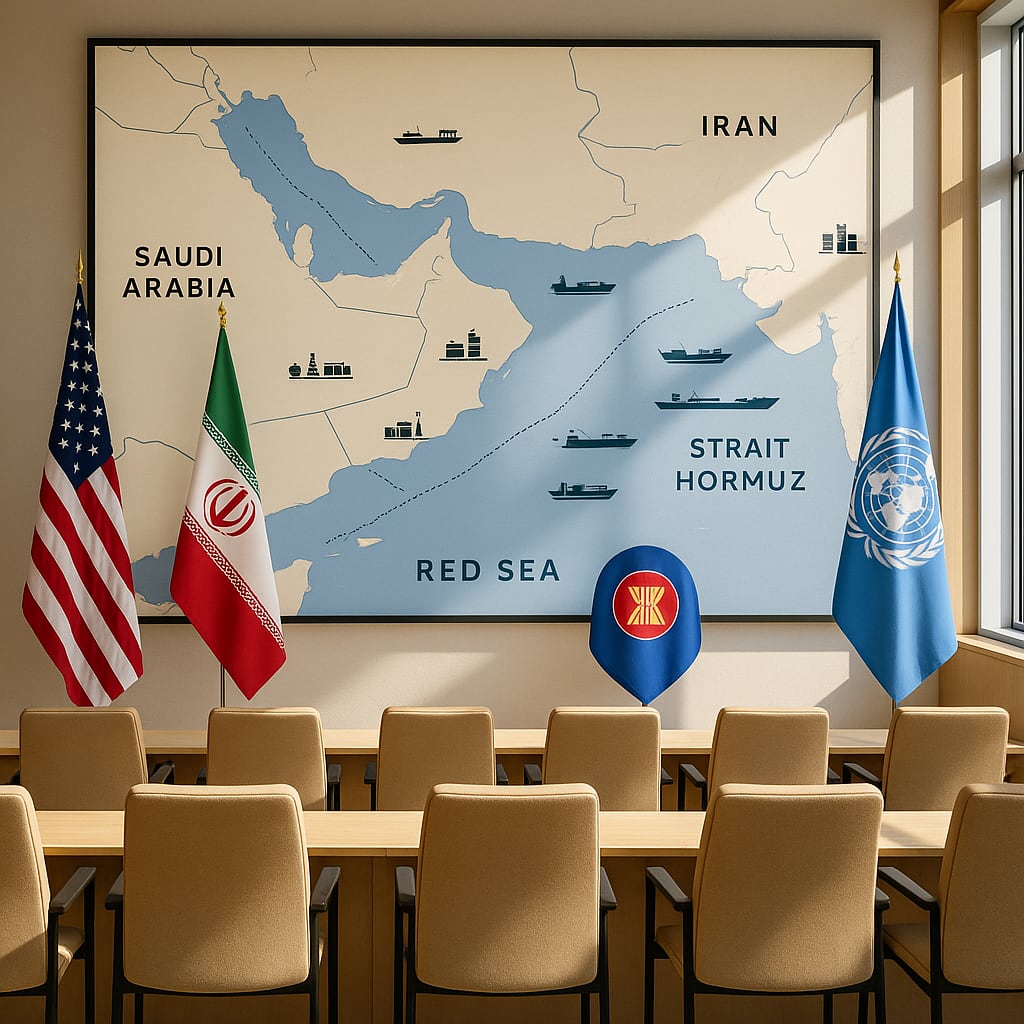
U.S. signals openness to talks amid continued strikes on Iran as regional fallout widens and mediation bids intensify
Narrative Snapshot
Across outlets, Washington’s message pairs military pressure with conditional diplomacy. Marco Rubio’s line that the U.S. is “willing to negotiate” if Tehran is “serious” appears consistently in U.S., Middle Eastern, Chinese state, and Israeli coverage, and is situated against the backdrop of consecutive nights of U.S. strikes (Fox News; Al Jazeera, 22 Jul; CGTN; Haaretz, 22 Jul). Several sources highlight Rubio’s legal framing that Iran has no right under existing mechanisms to control traffic in the Strait of Hormuz and that such control would set a “dangerous precedent” (Al Jazeera, 22 Jul; Politika, 22 Jul).
Where U.S. outlets stress deterrence and maritime security, regional and European reporting foregrounds escalation risks and civilian and military costs. Guardian live coverage details the 11th and 12th nights of U.S. strikes, U.S. disabling of an oil tanker, Iranian attacks on U.S. partners, and Houthi assertions of a Red Sea blockade, alongside threats to strike Iran’s deeply buried “Pickaxe Mountain” nuclear site (16–22 Jul). Haaretz underscores Iran’s warning that any U.S. strike on nuclear sites would vastly expand the conflict (22 Jul).
A second through-line is energy security and chokepoint leverage. Southeast Asian reporting and Al Jazeera emphasize ASEAN’s “serious concern” over oil shortages from the war and Hormuz disruptions, placing Manila’s ministerials as a key venue where Rubio reiterated U.S. positions (Al Jazeera, 21–22 Jul; Toronto Star/AP). Brazilian coverage links Washington’s declared blockade posture and proposed 20% transit fee to worsening global fuel markets (Folha de S.Paulo, 16 Jul). Haaretz also highlights Iran’s threat to desalination infrastructure to gain leverage (19 Jul).
Finally, multiple outlets track fragile diplomatic off-ramps. Al Jazeera notes mediators warning the window for a truce is narrowing (21 Jul). Politika reports Moscow and Abu Dhabi probing a de-escalatory channel (18 Jul). Guardian reporting says an interim understanding from last month has frayed and that efforts in Pakistan to salvage a ceasefire are being overshadowed by ongoing strikes (16, 22 Jul).
What Happened
As U.S. forces carried out their 11th and 12th consecutive nights of strikes on Iranian military targets, Secretary of State Marco Rubio said in Manila that Washington remains “always committed to diplomacy” but doubts Tehran’s seriousness, adding there would be “consequences” if commitments are violated (Fox News; CGTN; Al Jazeera, 22 Jul; Haaretz, 22 Jul). Rubio argued Iranian attempts to control Hormuz lack legal basis and set a dangerous precedent (Al Jazeera, 22 Jul; Politika, 22 Jul). Guardian coverage reports U.S. disabling of a tanker attempting to breach a blockade and repeated strikes reaching Bushehr and northern Iran, while Iran launched missiles and drones at sites in Bahrain, Kuwait, and Jordan, and struck a tanker in the strait (16–21 Jul). Yemen’s Houthis announced a Red Sea blockade and later claimed attacks on tankers (Guardian, 21–22 Jul). ASEAN ministers voiced alarm at energy disruptions (Al Jazeera, 21 Jul; Toronto Star/AP). Mediation efforts by Russia and the UAE, and separate talks in Pakistan, have struggled amid ongoing attacks (Politika, 18 Jul; Guardian, 22 Jul).
Why It Matters
The confrontation is testing norms on freedom of navigation and the use of economic coercion via chokepoints. Rubio’s assertion that Iran lacks authority to control Hormuz trade sharpens a legal contest over maritime passage, even as U.S. action to disable a tanker reflects enforcement measures that affect neutral shipping (Politika, 22 Jul; Guardian, 16 Jul). With ASEAN warning of oil shortages and Red Sea risks compounding Hormuz disruptions, supply security concerns are broadening from the Gulf to Asia’s core economies (Al Jazeera, 21 Jul; Guardian, 22 Jul). The standoff also interacts with sensitive nuclear issues: threats to strike Iran’s underground facility and Tehran’s warning of vast escalation reinforce the stakes for nonproliferation and regional deterrence frameworks (Guardian, 22 Jul; Haaretz, 22 Jul). Sanctions remain a central constraint and bargaining chip in any talks, as explained in current overviews of the Iran sanctions architecture (Middle East Eye, 21 Jul). For multilateral bodies and mediators, the reported collapse of last month’s interim deal highlights limits of crisis management when coercion and counterstrikes dominate (Guardian, 16, 20, 22 Jul; Al Jazeera, 21 Jul).
Diverging Narratives
Washington frames its approach as calibrated pressure plus open-ended diplomacy, stressing protection of interests and allies and opposing any Iranian bid to dictate Hormuz traffic (Fox News; CGTN; Al Jazeera, 22 Jul; Politika, 22 Jul). Reporting sympathetic to this view highlights U.S. claims of degrading Iran’s maritime strike capacity and presents tanker interdictions as blockade enforcement (Guardian, 22 Jul; 16 Jul). By contrast, Iranian messaging emphasized in regional coverage warns that a U.S. strike on nuclear infrastructure would vastly widen the war, and Iranian outlets have publicized attacks on U.S.-aligned targets and tankers as retaliatory leverage (Haaretz, 22 Jul; Guardian, 21 Jul). Energy-centric reporting portrays both sides as using chokepoints for coercion—Folha on U.S. blockade talk and proposed transit fees, and Haaretz on Iran’s threats to desalination plants—linking tactics to worsening fuel markets and essential services vulnerability (Folha, 16 Jul; Haaretz, 19 Jul; Guardian, 22 Jul). Human and political costs are weighted differently: Guardian and Telesur tally civilian casualties inside Iran and note nearly 100 injured U.S. service members, while Telesur also spotlights Trump’s insistence that electoral considerations will not shape decisions; U.S. outlets chiefly center on deterrence and allied defense (Guardian, 16–21 Jul; Telesur, 20–21 Jul; Fox News).
What Happens Next
Two linked decision points will determine near-term trajectories. First, whether a negotiation channel can reopen: Rubio’s conditional offer, Moscow–Abu Dhabi outreach, and Pakistan-based efforts suggest avenues, but Al Jazeera’s warning about a narrowing window and Guardian reports of a collapsed interim deal set a high bar. Concrete signals would include a declared truce framework, third-party convenings, or reciprocal de-escalatory steps (Al Jazeera, 21–22 Jul; Politika, 18 Jul; Guardian, 22 Jul). Second, whether military moves reach nuclear and critical infrastructure: Trump’s threat against “Pickaxe Mountain” and Iran’s warnings of vast expansion, alongside reported strikes near Bushehr and threats to desalination, make target selection pivotal. Indicators include U.S. public targeting guidance, Iranian retaliation patterns against Gulf states, and maritime incidents in Hormuz and the Red Sea, as the U.S. asserts it is degrading Iran’s shipping threat and the Houthis claim enforcement of a blockade (Guardian, 16, 21–22 Jul; Haaretz, 22, 19 Jul).