
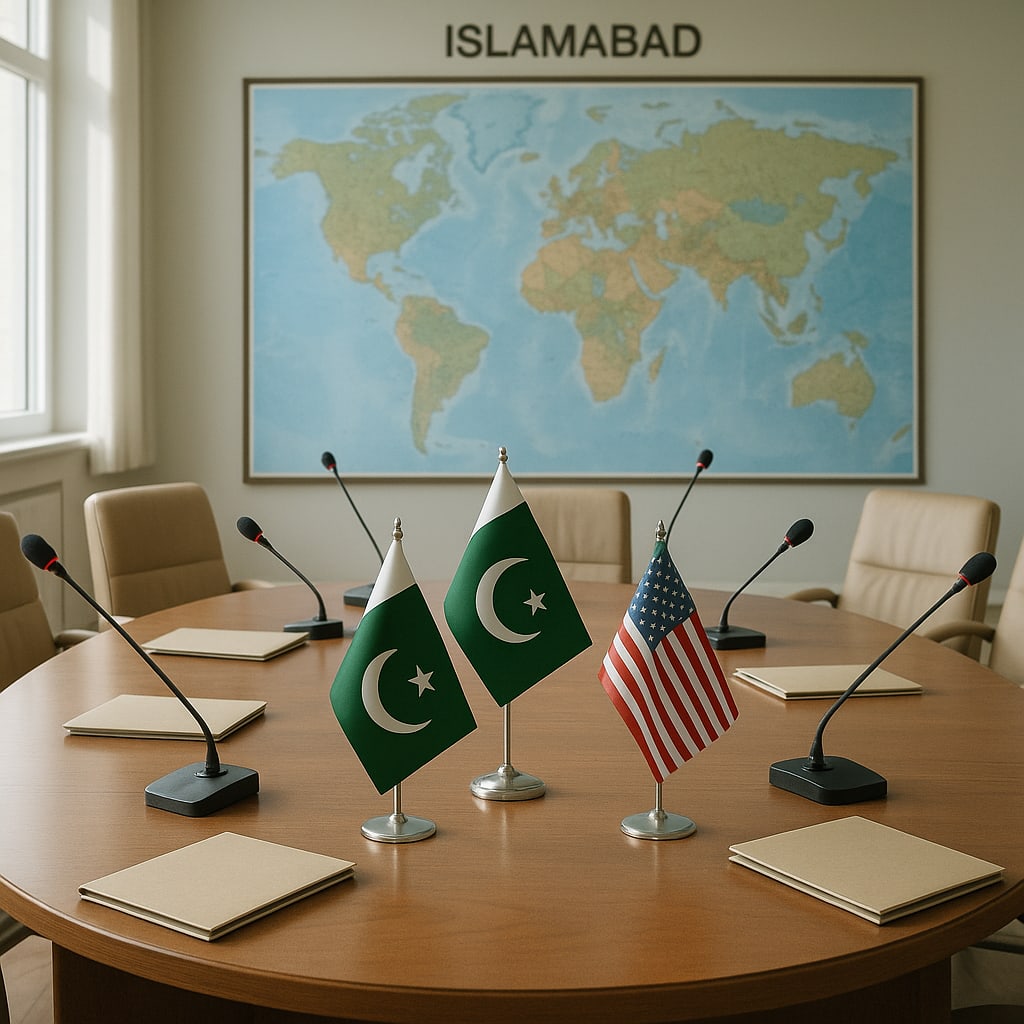
Pakistan to host US–Iran talks amid alignment claims in Washington–Jerusalem and warnings of possible disruption
Narrative Snapshot
- Multiple outlets place renewed US–Iran diplomacy on the calendar and agenda, but differ on the political surround: Middle East Eye (via Al Arabiya) reports Pakistan will host a round on 11 July focused on sanctions, frozen assets, and the nuclear file; The Hindu notes the latest indirect talks ended without public headway.
- Israeli leadership and its critics frame US–Israel dynamics in opposing ways: TASS and Fox News amplify Benjamin Netanyahu’s insistence there is “no disagreement” with Washington on Iran, while Al Jazeera examines whether a strained phase signals deeper uncertainty in the “special relationship.”
- Two sources spotlight spoiler risks tied to Israel from different vantage points: Turkey’s foreign minister publicly warns Israel could try to undermine US–Iran talks (TASS), and Folha de S.Paulo reports US officials earlier feared Israel might target Iranian negotiators during delicate exchanges.
- Regional stakes reach beyond the nuclear track: MEE cites calls to implement a US–Iran memorandum of understanding and to end violence in Lebanon and Gaza, while Folha links negotiations to restoring maritime transport through Hormuz.
What Happened
Middle East Eye, citing Al Arabiya, reports Pakistan is expected to host a new US–Iran round on 11 July focused on sanctions, frozen assets, and Tehran’s nuclear program; the Iranian delegation was not yet finalized and would be set after funeral ceremonies for former Supreme Leader Ali Khamenei. MEE also notes President Donald Trump indicated negotiations would resume after the funeral period, amid regional calls to implement a US–Iran memorandum of understanding and halt violence in Lebanon and Gaza. The Hindu reports Trump said there will either be a deal with Iran or the US will “finish the job,” after indirect talks ended last week without public progress. Against this backdrop, Netanyahu told TASS and Fox News there is no US–Israel rift on Iran, while Turkey’s Hakan Fidan warned Israel could try to undermine the talks (TASS). Folha de S.Paulo reports US officials previously feared Israeli plots to kill Iranian negotiators.
Why It Matters
The reported Pakistan-hosted meeting consolidates a negotiation track that touches core pillars of the Iran dossier—sanctions relief, access to frozen assets, and nuclear constraints (MEE via Al Arabiya)—while The Hindu records a US posture that pairs diplomacy with explicit coercive signaling (“finish the job”). Managing this dual-track approach alongside allied concerns is a test of US alliance stewardship: TASS and Fox News emphasize Israeli claims of alignment, as Al Jazeera interrogates whether current friction portends deeper recalibration. The spoiler risk identified by Turkey (TASS) and by US officials in Folha’s reporting raises a nontrivial threat to process integrity and participant security, especially if talks advance toward provisional arrangements tied to maritime flows through Hormuz (Folha). Regionally, MEE’s reference to calls for implementing a US–Iran memorandum of understanding and reducing violence in Lebanon and Gaza links the talks to wider de-escalation efforts and humanitarian imperatives.
Diverging Narratives
TASS and Fox News foreground Netanyahu’s assurance that Washington and Jerusalem are aligned on Iran’s nuclear ambitions, with Netanyahu adding on Fox, “deal or no deal, as long as I’m prime minister, Iran will not have a nuclear weapon.” Al Jazeera, by contrast, interrogates whether fraught ties signal that the United States may be prepared to “drop” Israel, reflecting a more skeptical read of policy alignment. On the diplomatic track itself, Middle East Eye presents a concrete next step—talks in Pakistan with an agenda centered on sanctions, assets, and the nuclear program—while The Hindu underscores the absence of visible progress in the most recent indirect round. Security risks to the process are framed differently: Turkey’s foreign minister publicly warns that Israel could try to undermine the talks (TASS), and Folha de S.Paulo cites US current and former officials’ fears earlier this year that Israel might target Iranian negotiators. MEE adds procedural uncertainty: Iran’s delegation was to be finalized after Khamenei’s funeral, and regional actors are urging implementation of a US–Iran memorandum of understanding, but the contours and enforceability of that MoU are not detailed in these reports.
What Happens Next
- Participation and format: Whether the 11 July Pakistan-hosted talks materialize as reported (MEE via Al Arabiya) and who composes Iran’s delegation post-funeral will signal Tehran’s approach and capacity to engage. Watch for formal confirmations and named envoys.
- US posture: Trump’s binary framing—“either be a deal… or [the US will] finish the job” (The Hindu)—sets decision points on scope (Fox’s “broader nuclear agreement”) versus escalation if talks stall. Monitor official statements on negotiating objectives and any linkage to sanctions enforcement steps.
- Israeli role: Netanyahu’s alignment messaging (TASS, Fox) sits alongside external warnings of disruption risk (TASS on Hakan Fidan; Folha on earlier US fears). Track Israeli official comments on the talks, and any credible reporting on actions that could affect negotiator security.
- Regional de-escalation and implementation: MEE notes calls to implement a US–Iran MoU and end violence in Lebanon and Gaza; observable indicators would include ceasefire measures or announced MoU steps. If a provisional accord aims to restore transport through Hormuz (Folha), shipping advisories and commercial traffic patterns will be key signals.