
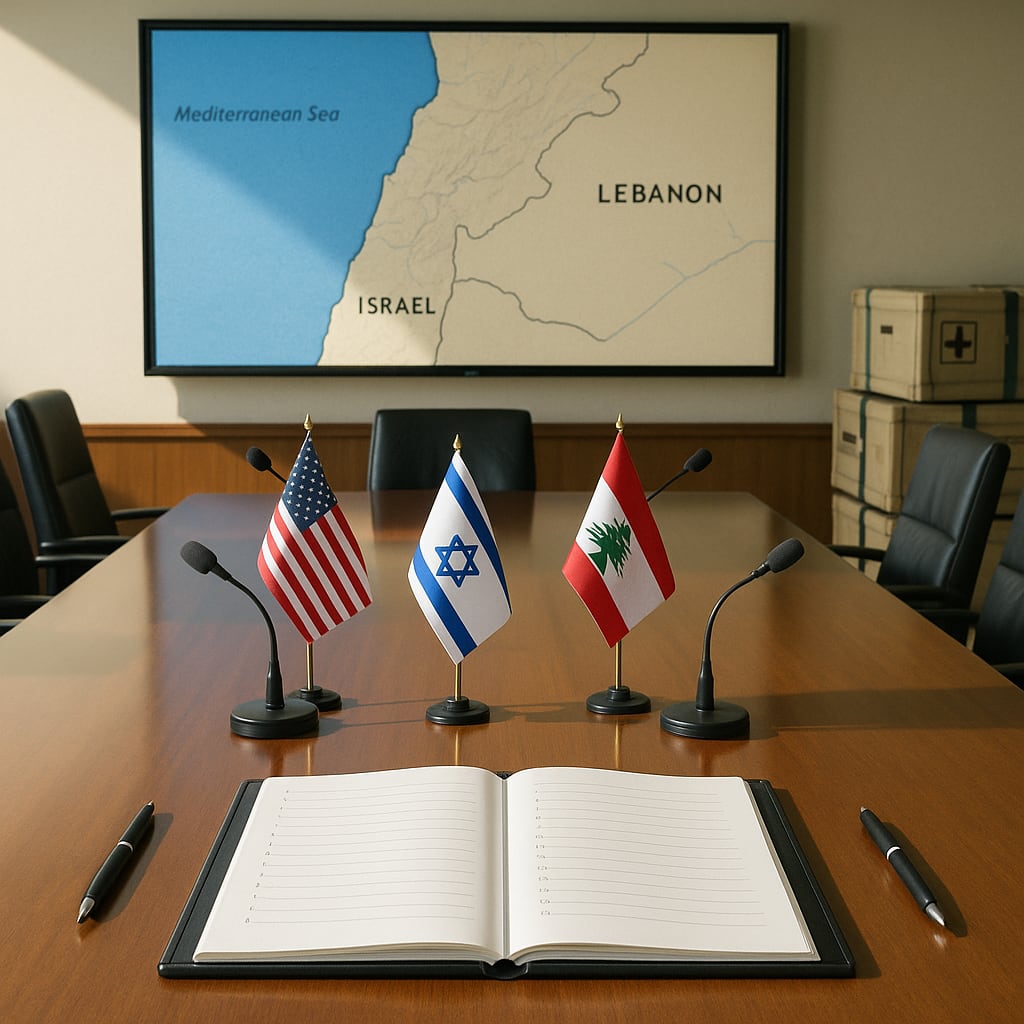
US-brokered Israel–Lebanon framework signed in Washington faces immediate resistance and tests on the ground
Narrative Snapshot
- Overlap: All outlets agree the Washington framework was signed on 26 June with U.S. facilitation and positioned by supporters as an opening for de-escalation and state consolidation in Lebanon (Middle East Eye, The Hindu, La Repubblica). The UN aid chief called it a “moment of hope” amid a severe humanitarian crisis (Middle East Eye).
- Core divergence: Lebanese government messaging emphasizes sovereignty restoration (Middle East Eye), while Hezbollah, Amal’s Nabih Berri, and Iran-aligned outlets frame it as capitulation and reject implementation in its current form (Al Jazeera English; Middle East Eye; Le Monde; Tehran Times; IRNA).
- Israeli debate: Netanyahu touts a “historic” outcome and asserts continued control of a southern security zone until Hezbollah disarms (Middle East Eye), whereas far-right minister Itamar Ben-Gvir attacks the deal as a mistake (Middle East Eye).
- Stakes and process: Italian reporting highlights a 14-point text referencing sovereignty and Israel’s right to exist (Corriere della Sera). Simultaneously, protests, continued Israeli strikes, and Berri’s procedural veto threaten the agreement’s translation into policy (New York Times; ANSA; Al Jazeera English; Le Monde; Middle East Eye).
What Happened
Israel, Lebanon and the United States signed a framework in Washington on 26 June after five rounds of talks (The Hindu; La Repubblica). Lebanese President Joseph Aoun cast it as a first step toward restoring sovereignty and enabling returns to liberated areas (Middle East Eye, 26 June). U.S. President Donald Trump phoned Aoun to back the ceasefire terms, with Aoun pledging Lebanon would assume its responsibilities (Middle East Eye, 27 June; The Hindu). Italian outlets describe a 14‑point text on sovereignty and Israel’s right to exist (Corriere della Sera). Implementation ran into immediate headwinds: Hezbollah declared the deal “null and void” (Al Jazeera English, 27 June), Speaker Nabih Berri said it “will not pass” as drafted (Le Monde; Middle East Eye, 28 June), protests erupted in Beirut (New York Times; ANSA), Israeli strikes continued in the south (Al Jazeera English, 28 June; The Hindu), and Israel’s Ben-Gvir criticized the arrangement while Netanyahu lauded it as a blow to Iran (Middle East Eye).
Why It Matters
The framework links de-escalation to non-state disarmament, testing whether a ceasefire can be conditioned on weakening Hezbollah’s coercive power (Al Jazeera English, 27 June; Middle East Eye, 28 June). For Lebanon, proponents frame the deal as reasserting state authority; opponents argue it entrenches occupation and undermines sovereignty, exposing the state’s limited capacity to implement contested security compacts (Middle East Eye, 26 and 28 June; Al Jazeera English, 28 June; Le Monde). Israeli messaging that a “security zone” will persist until Hezbollah disarms elevates the risk of an open-ended military footprint that complicates any phased withdrawal (Middle East Eye, 28 June). Internationally, U.S. backing (Middle East Eye, 27 June; The Hindu) and UK engagement with the Lebanese Army on border security (Middle East Eye, 27 June) signal a push to bolster state institutions, while reporting on U.S. pressure on Syria to counter Hezbollah introduces a regional vector with escalation risks (Middle East Eye, 27 June). The UN’s “six asks” foreground urgent humanitarian delivery amid fluid security conditions (Middle East Eye, 27 June).
Diverging Narratives
- Sovereignty vs. capitulation: Aoun calls the text a first step toward full sovereignty (Middle East Eye, 26 June). Hezbollah brands it a “surrender of sovereignty” and “null and void” (Al Jazeera English, 27–28 June). Berri labels the agreement “diktats” and vows it will not be adopted “in its current form” (Le Monde; Middle East Eye, 28 June). The New York Times reports supporters view the deal as curbing Iranian influence, while opponents call it capitulation.
- The deal’s content and conditions: Italian coverage highlights 14 points including sovereignty restoration and Israel’s right to exist (Corriere della Sera). Netanyahu frames the understandings as recognizing Israel’s right to maintain a security zone until Hezbollah and other armed groups disarm (Middle East Eye, 28 June). Al Jazeera underscores that the ceasefire is tied to Hezbollah’s disarmament and questions the pathway to peace under that linkage (Al Jazeera English, 27 June).
- Ground reality vs. diplomatic framing: UN and U.S. messaging stress opportunity, but multiple outlets document ongoing Israeli strikes in the south and protests in Beirut that the army moved to contain (Al Jazeera English; The Hindu; ANSA; Middle East Eye, 27–28 June). Inside Israel, Ben-Gvir attacks the deal as a “big mistake,” signaling right‑wing resistance to constraints amid continued operations (Middle East Eye, 27 June).
- Regional positioning: Iran’s Velayati casts Hezbollah as Lebanon’s true sovereign protector (IRNA), while reporting indicates Damascus attempting to reassure Beirut as Washington presses Syria to take on Hezbollah—an external variable with unclear traction (Middle East Eye, 27 June).
What Happens Next
- Lebanese institutional gatekeeping: Berri’s stance that the framework “will not pass” as drafted (Middle East Eye, 28 June; Le Monde) makes parliamentary handling decisive. Indicators: any amended text, cross‑bloc endorsements, or procedural delays; shifts in Amal/Hezbollah positions.
- Security posture in the south: Netanyahu’s assertion of a continued security zone until disarmament (Middle East Eye, 28 June) versus reported “pilot zone” withdrawals (La Repubblica). Watch for verifiable IDF pullbacks, continued raids (Al Jazeera English; The Hindu), and LAF/UN‑coordinated border measures.
- Hezbollah’s response: The movement’s blanket rejection (Al Jazeera English, 27 June) could translate into sustained mobilization or calibrated restraint. Indicators: frontline activity in southern Lebanon, messaging on disarmament, and protest orchestration (NYT; ANSA).
- External leverage: U.S. support via Trump’s call (Middle East Eye, 27 June; The Hindu), UK–LAF cooperation (Middle East Eye, 27 June), and any Syrian role (Middle East Eye, 27 June). Track official readouts, assistance packages, and Damascus–Beirut coordination.
- Humanitarian track: The UN aid chief’s “six asks” (Middle East Eye, 27 June) make access, funding, and civilian returns key tests. Indicators: aid convoys reaching the south, reconstruction starts, and displacement trends.