
US convenes multi-nation ministerial to coordinate against what it calls “far-left terror”
Narrative Snapshot
Across outlets, there is consensus that Washington led a large ministerial—variously described as involving more than 60, roughly 65, or 66 countries—to press for intensified cooperation against far-left political violence, with intelligence sharing and law enforcement coordination at the core (Fox News; Al Jazeera English; Folha de S.Paulo; South China Morning Post; the Guardian). Several international outlets repeat the administration’s claim that such violence has been neglected or overlooked (Folha; SCMP), while Fox News frames it as a “global blind spot.”
The sharpest divergence lies in how the initiative is situated politically. The Guardian characterizes the event’s rhetoric as targeting “leftism” and “only leftwing activism,” linking it to President Trump’s broader practice of labeling opponents as “communists.” NHK relays US media criticism that the initiative targets domestic political opponents. SCMP foregrounds Democratic concerns that the effort politicizes counterterrorism and could redirect resources from other extremist threats. By contrast, Politika presents the US move in more neutral terms, reporting a US-led refocus of counterterrorism on the “far left,” while Al Jazeera contextualizes the meeting as addressing “renewed threats,” signaling the breadth of international participation but maintaining distance through quotation marks around key terms.
At stake, according to supportive and neutral accounts, is whether partners adopt Washington’s framing of far-left violence as a transnational threat requiring new cooperative mechanisms. Critical coverage concentrates on the boundary between counterterrorism and political discourse, raising questions about how “leftwing activism” is distinguished from designated violent extremism within any new cooperation the meeting seeks to advance.
What Happened
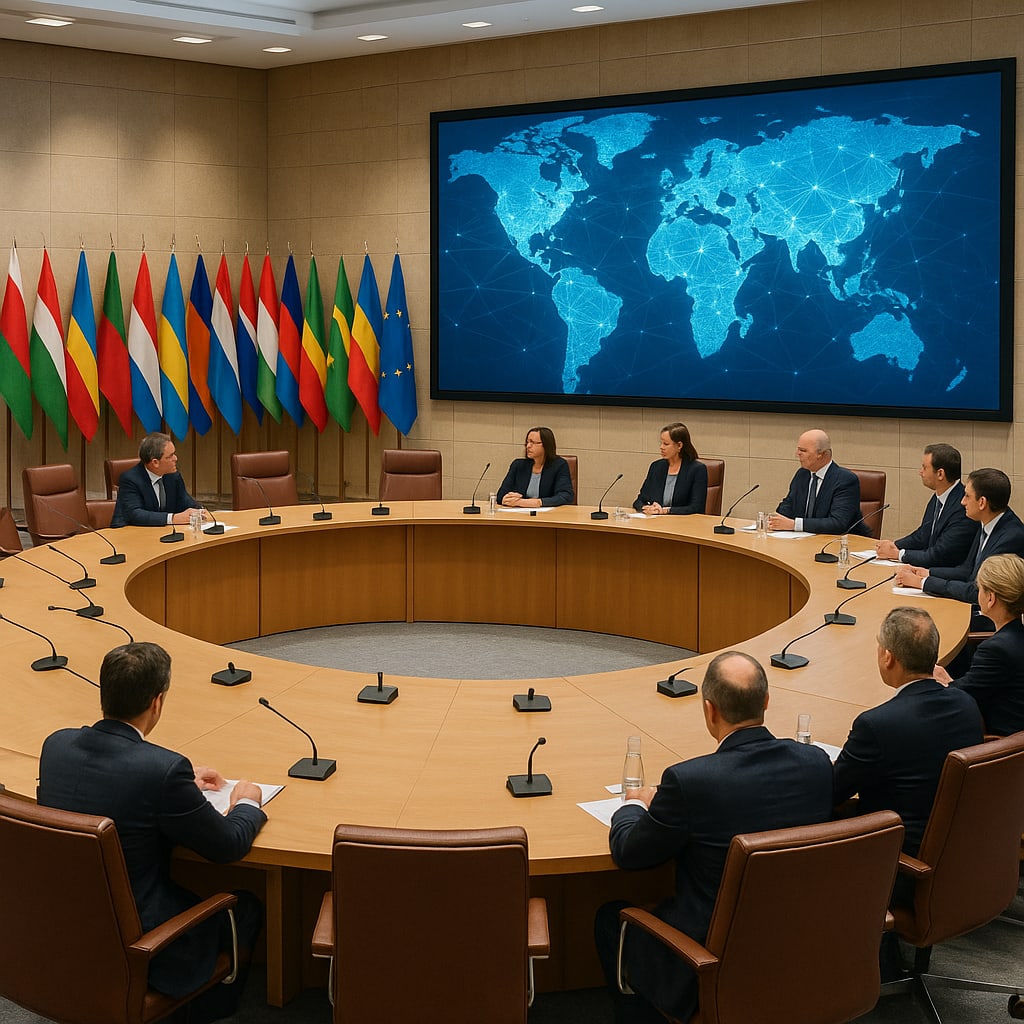
US Secretary of State Marco Rubio convened a ministerial in Washington with officials from more than 60 countries—reported as roughly 65 or 66—to coordinate against what the Trump administration terms “far-left terror” (Fox News; Al Jazeera English; Folha de S.Paulo; SCMP; the Guardian). Rubio and other senior officials said the goal was to expand intelligence sharing, enhance law enforcement cooperation, and build an international coalition following an eight-month diplomatic effort to persuade foreign governments that far-left extremist networks pose a growing cross-border threat (Fox News). The conference was billed as a ministerial on the “resurgence of political violence,” but the Guardian reports its focus was solely on leftwing violence and notes the attendance of senior figures Stephen Miller and Treasury Secretary Scott Bessent. SCMP reports Democratic concerns that the administration is politicizing counterterrorism and diverting resources from other threats, while NHK relays negative US media views that the effort targets administration opponents. Serbia’s Politika reports the US initiative to redirect counterterrorism toward the far left.
Why It Matters
The meeting signals an attempted reorientation of international counterterrorism priorities and cooperation around a US-led assessment that far-left violence has been underaddressed (Fox News; Folha; SCMP). If participating governments align with Washington’s framing, existing information-sharing relationships and cross-border law enforcement cooperation could be recalibrated to prioritize new target sets (Fox News). That raises definitional and normative issues highlighted in critical coverage: the Guardian’s account underscores the conference’s exclusive focus on leftwing activism, while NHK and SCMP surface concerns about politicization and the risk of diverting attention from other extremist threats. For decision-makers, this affects threat-prioritization within bilateral and multilateral channels, criteria for intelligence exchange, and the political sustainability of any new cooperation if domestic constituencies view it as conflating dissent with violence. The breadth of participation reported across outlets suggests potential for policy diffusion, but the contested framing foreshadows uneven uptake.
Diverging Narratives
Proponents, as reflected by Fox News and echoed in Folha and SCMP, frame far-left extremist networks as an overlooked transnational threat justifying a coordinated international response. The administration’s stated objectives—expanding intelligence sharing and law enforcement cooperation—are presented as closing a gap in current counterterrorism practice (Fox News). Al Jazeera’s description of addressing “renewed threats” signals the scope of participation while keeping the threat label at arm’s length through quotation.
Skeptical coverage focuses on politicization and scope. The Guardian describes the event’s rhetoric as a diatribe against leftism, notes the presence of senior political advisers, and emphasizes that only leftwing violence was addressed, situating the meeting within President Trump’s broader rhetoric about political opponents. SCMP reports Democratic concerns that the initiative could divert resources from other extremist threats, and NHK relays US media criticism that the effort targets the administration’s domestic opponents. Politika provides a straightforward account of Rubio’s initiative to refocus counterterrorism on the far left, illustrating how some international reporting mirrors the US government’s terminology without the domestic political framing found in US and UK outlets.
What Happens Next
Key decisions now hinge on whether participating states operationalize the US push. One path would see public communiqués or announced mechanisms to expand intelligence sharing and law enforcement coordination specifically on far-left violence, consistent with the meeting’s stated aims (Fox News). Analysts should watch for joint statements adopting the “far-left terror” framing or for bilateral follow-ups indicating concrete tasking.
Another path centers on domestic political constraints. SCMP’s reporting of Democratic concerns and NHK’s relay of critical US media coverage suggest potential pushback that could affect US resourcing and emphasis. Indicators include whether US officials signal reallocation of counterterrorism resources from other threat categories and how partner governments characterize the threat in their own statements.
A third hinge point is definitional clarity. The Guardian’s account of a focus on “leftwing activism” spotlights the need for precise distinctions. Monitoring whether partners articulate criteria separating activism from designated violent extremism will reveal the durability and scope of any cooperation emerging from the ministerial.