
US strikes Iran after tanker attacks; Tehran targets US bases in Gulf as Trump declares ceasefire ‘over’
Narrative Snapshot
- Convergence: Most outlets report a rapid action–reaction cycle — US strikes inside Iran after attacks on commercial shipping, followed by Iranian missile and drone strikes on US positions in Bahrain and Kuwait (BBC; New York Times; Folha; Japan Times; IRNA).
- Emphases: US and European coverage foreground ceasefire violations and President Trump’s rhetoric in Ankara (BBC; Le Monde; Fox News; SCMP; The Hindu), while Iranian and regional sources center on retaliation, sovereignty over the Strait of Hormuz, and deterrent signaling (IRNA; Al Jazeera; Folha). European press also highlights alliance-management frictions at NATO (Corriere della Sera).
- Verification gaps: Casualty figures and strike effects are primarily from Iranian state media; independent corroboration is limited, and Deutsche Welle flags viral misattribution regarding an alleged “secret base” attack (DW; Middle East Eye citing IRNA).
- Stakes: Energy security and Gulf state exposure rise as shipping and sanctions policy intersect (The Guardian; DW; NYT). Multilateral venues (NATO, UN) are pulled in, but with uneven alignment and contested legal narratives (Middle East Eye; Fox News).
What Happened
After three merchant vessels were struck near the Strait of Hormuz (UKMTO reporting via The Hindu; Sky News; Guardian; NYT; CBC), US Central Command launched strikes inside Iran, with Le Monde reporting more than 80 targets hit and BBC noting strikes on naval assets. Hours earlier, Washington revoked a license enabling limited Iranian oil sales (NYT; Japan Times; Middle East Eye). Tehran vowed reprisals (ANSA) and the next day announced missile and drone attacks on US-linked sites in Bahrain and Kuwait, including Sheikh Isa Air Base, framed as a response to US strikes on “military and civilian areas” in southern Iran (IRNA; Folha; Japan Times). Iran’s state media said eight personnel were killed in Bandar Abbas and Bushehr (MEE citing IRNA). At a NATO summit in Ankara, President Trump declared the ceasefire “over,” used incendiary language toward Iranian leaders, and signaled further strikes (BBC; Fox News; SCMP; Clarin; The Hindu; MEE live). Iran circulated launch footage (ANSA). DW debunked a viral video purporting to show an Iranian strike on a “secret” US Gulf base.
Why It Matters
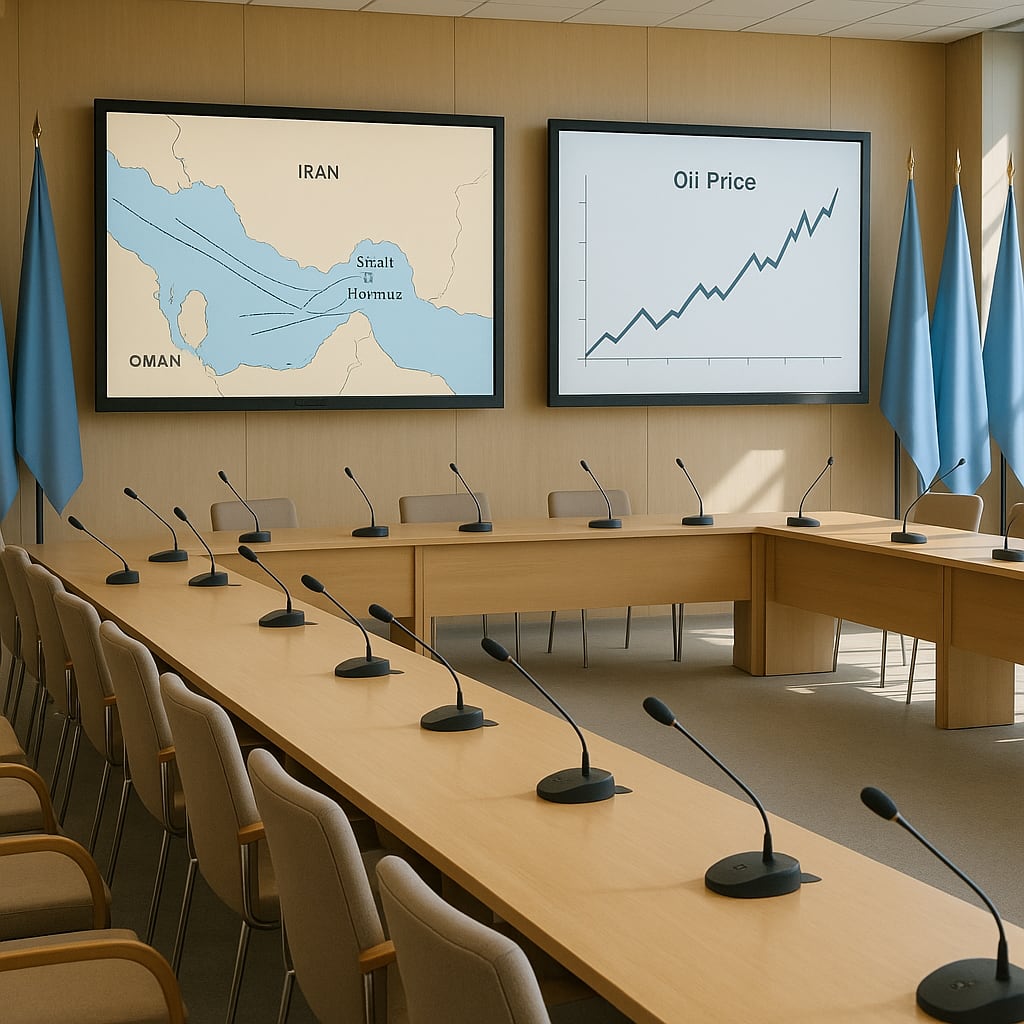
- Maritime security and energy: The Strait of Hormuz remains pivotal to global flows; renewed attacks and threats to close or control the waterway elevate shipping risk, insurance costs, and price volatility (Al Jazeera analysis; Folha; Guardian on oil prices).
- Sanctions–force linkage: The immediate coupling of kinetic action with re-tightened oil sanctions intensifies economic coercion and reduces diplomatic off-ramps, pressuring global buyers and complicating enforcement coalitions (NYT; Japan Times; MEE).
- Alliance management: NATO is drawn into the crisis, but unity is strained — support from the secretary-general for US strikes reportedly irritated some allies, and Trump’s decision-making appeared unilateral vis-à-vis Europeans (Corriere della Sera; BBC). Parallel outreach to Gulf partners underscores reliance on ad hoc maritime arrangements (MEE).
- Institutional capacity: UN engagement continues but is adversarial (Fox News on UNSC session). Competing legal narratives on freedom of navigation and ceasefire compliance test norms around commercial shipping protection and proportionality (SCMP; Guardian; IRNA).
- Negotiation architecture: Analyses note few palatable options and fragile talks despite escalatory rhetoric (BBC analysis; NYT analysis).
Diverging Narratives
- Cause and legality: US and allied reporting frames Iran’s actions against shipping as a “clear violation” of the ceasefire, justifying US strikes (SCMP; Guardian; CBC). Iranian outlets cast US attacks as hitting “military and civilian areas,” legitimizing retaliation under self-defense and asserting control over coastal approaches (IRNA; Al Jazeera).
- Scope and impact: Le Monde cites over 80 US targets struck; Iran reports eight military fatalities (MEE citing IRNA). Independent confirmation of damage and casualties is limited, and DW’s debunk of a viral “secret base” video highlights an information-contested battlespace (DW).
- Control of chokepoints: Iranian officials insist Tehran will not relinquish leverage over Hormuz and warn of closure if attacked again (Al Jazeera; Folha). US signaling ranges from further strikes to a threat to “take over” Kharg Island, a critical export hub (Al Jazeera).
- Diplomacy and authority: Trump both dismisses and nominally permits continued talks, while media differ on the feasibility of negotiations — BBC and NYT stress talks as the least-worst option amid poor alternatives; Fox News questions whether Iranian negotiators possess authority, citing IRGC influence after leadership changes (BBC analysis; NYT analysis; Fox News).
- Alliance politics: European coverage underscores NATO friction and limited prior consultation (Corriere della Sera), while US outlets spotlight presidential resolve and Iranian “cheating” (Fox News). Regionally, Gulf vulnerability and even intra-Gulf economic frictions could complicate coalition-building (DW; MEE on Saudi–UAE payments).
What Happens Next
- US escalation threshold: Trump signaled additional strikes and floated seizing Kharg Island (MEE live; Al Jazeera). Watch CENTCOM tasking, target sets (naval, missile, oil infrastructure), and NATO communiqués for allied cover or restraint (BBC; Corriere della Sera).
- Iranian retaliation ladder: Tehran has demonstrated cross-Gulf strike capacity and threatened Hormuz closure if attacked again (IRNA; Folha). Indicators include IRGC/Army statements, launch footage, and target selection beyond Bahrain/Kuwait.
- Maritime security regime: NATO and Gulf ministers considered a multinational mission to safeguard shipping (MEE). Key signals: Gulf participation levels, rules of engagement, and Iran’s response to foreign patrols near its coast.
- Sanctions and market response: The revoked oil waiver tightens enforcement (NYT; Japan Times). Monitor OFAC actions, buyer behavior, LNG and tanker routing, and price/insurance moves (Guardian; CBC).
- Diplomatic channels: UN Security Council dynamics and back-channel efforts remain possible despite rhetoric (Fox News; BBC analysis; NYT analysis). Track mediator activity, public redlines, and any references to reinstating or revising April’s ceasefire terms (Guardian).