
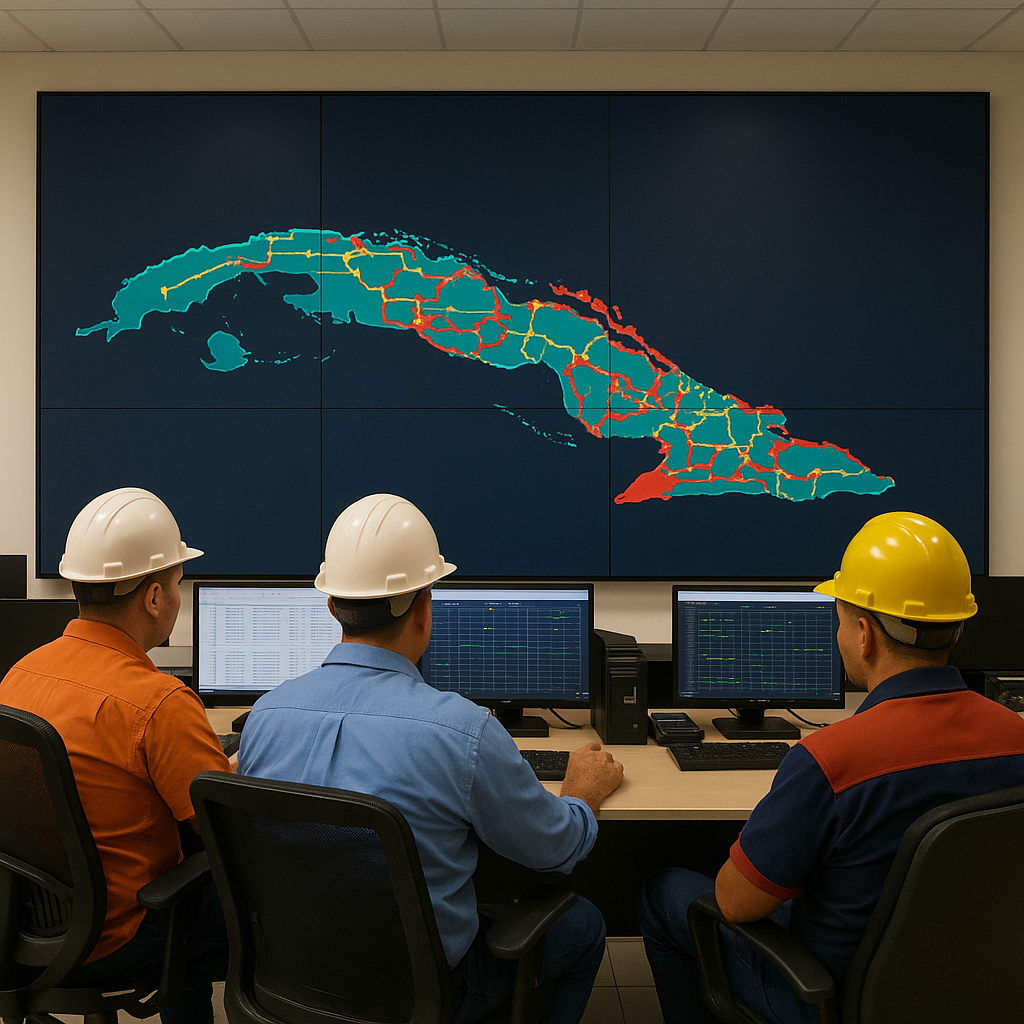
Cuba’s grid suffers second consecutive nationwide collapse, including Havana
Narrative Snapshot
Across outlets there is broad agreement on the scope and severity: Cuba’s state utility reported a “total disconnection” of the national electricity system, with a fresh nationwide blackout including Havana following multiple recent grid collapses. Several reports situate this episode within a pattern of repeated failures this year and last, with counts ranging from three nationwide blackouts in July to six system-wide collapses since January and eleven since late 2024.
Causal framing varies by emphasis. Coverage by Le Monde, Deutsche Welle, France 24, Folha de S.Paulo, Al Jazeera, South China Morning Post, and Telesur highlights a US-imposed oil or energy embargo and fuel shortages that have halted or complicated regular deliveries for power stations and backup generators, while SCMP and Al Jazeera also underscore Cuba’s ageing, maintenance-challenged grid. Bangkok Post conveys the utility’s notice without extended attribution, and Politika foregrounds the social impacts, noting problems with water and communications and estimating about ten million people affected.
Accounts of response and public experience diverge in detail. Telesur centers restoration work and official protocols, including reporting on a partial outage the previous day in western provinces and the subsequent resumption of service. Clarin similarly notes activation of procedures to restore the system. SCMP adds on-the-ground texture from Havana, describing residents’ audible reaction as lights went out.
What Happened
Cuba’s state utility Unión Eléctrica reported a “total disconnection” of the National Electric System late Sunday, triggering a nationwide blackout that included Havana. The outage followed a weekend of disruptions, including a partial failure across western provinces on Saturday that authorities said had been restored by early Sunday. Multiple outlets characterized Sunday’s collapse as the second straight day of major grid failure, with restoration crews mobilized and protocols activated to bring units back online. Reports tie the crisis to a combination of ageing infrastructure and US measures described as an oil or energy embargo that has halted or complicated regular fuel deliveries for power generation and backup systems. Recent frequency figures vary: media accounts cite three nationwide blackouts in July, six generalized collapses since January, and eleven since late 2024. Some outlets also report knock-on effects for water and communications.
Why It Matters
The recurrence of system-wide failures indicates structural stress in Cuba’s power sector and its supply chain. Multiple outlets attribute constraints on fuel availability to a US-imposed energy or oil embargo that has curtailed regular deliveries, interacting with an ageing generation and transmission network. Repeated total disconnections challenge the state’s capacity to maintain essential services and emergency response, with reported impacts on water and communications compounding public health and safety concerns. For policymakers, these dynamics illustrate how sanctions regimes intersect with critical infrastructure resilience and humanitarian conditions, and they create operational uncertainty for any external fuel suppliers or intermediaries navigating the embargo environment. The pattern of collapses documented by regional and international media suggests that absent changes in fuel access or accelerated maintenance, grid instability will remain a near-term risk vector shaping Cuba’s domestic management and its diplomatic efforts to secure energy inputs.
Diverging Narratives
Outlets converge on the fact of a nationwide grid collapse but differ in causal weighting and terminology. Le Monde, Deutsche Welle, France 24, Folha, Al Jazeera, SCMP, and Telesur invoke an oil or energy embargo and resulting fuel shortages as central constraints; SCMP and Al Jazeera simultaneously stress ageing infrastructure. Others, like Bangkok Post, largely relay the utility’s announcement without extended attribution, while Politika focuses on social impact metrics and service disruptions. The lexicon varies—“oil blockade,” “energy embargo,” “fuel shortages,” and “blocus pétrolier”—but the common thread is restricted fuel availability alongside equipment deterioration.
There are disparities in quantification and recency framing. Clarin places the episode within six generalized collapses since January and eleven since late 2024, while Deutsche Welle notes three nationwide blackouts in July. Telesur’s weekend sequence narrative—partial western outage restored, then national collapse with crews working—emphasizes operational response over systemic diagnostics. SCMP adds resident reactions in Havana, a human lens largely absent elsewhere. These contrasts shape whether readers see a sanctions-constrained supply shock compounded by ageing assets, or primarily an infrastructure management failure disrupted by acute shortages.
What Happens Next
The immediate decision point is operational: how quickly Unión Eléctrica can re-synchronize generation and transmission after a “total disconnection” and stabilize service. Telesur and Clarin report restoration crews and protocols are active; rapid, sustained load restoration would indicate sufficient spinning reserve and unit availability, while prolonged or repeated collapses would signal persistent capacity or fuel deficits. A second hinge is fuel access. Multiple reports link outages to an energy embargo that has halted or complicated regular deliveries; any verified increase or rerouting of fuel supplies, or official signals of eased constraints, would materially affect outage frequency. A third indicator is recurrence. Deutsche Welle’s and Clarin’s counts of recent collapses frame a trend line analysts can track against official UNE updates. Finally, knock-on service reliability—water and communications disruptions noted by Politika—will show whether stabilization reaches critical services or if cascading failures continue despite grid restarts.