
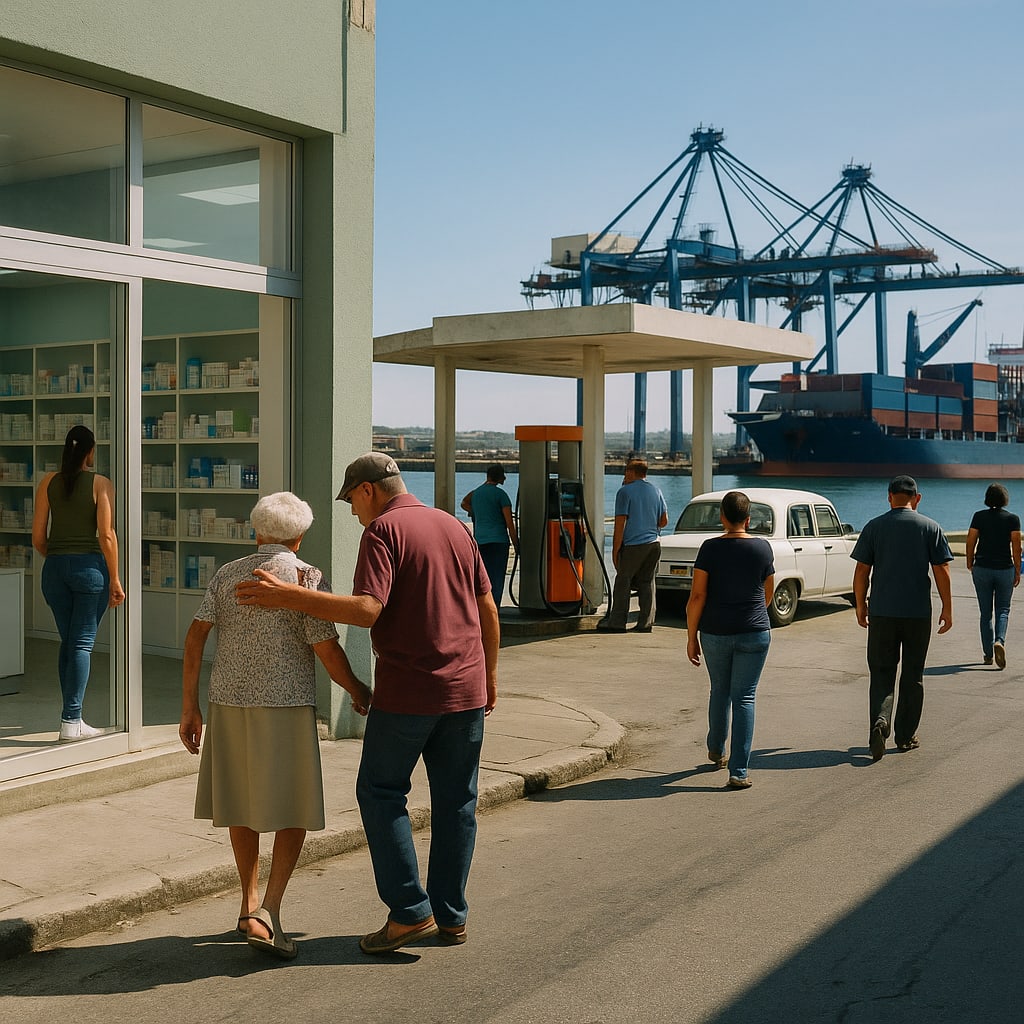
Cuba opens pharmacies, gas stations and other sectors to private firms after 176-measure reform, amid energy crisis and sanctions
Narrative Snapshot
European and Latin American outlets foreground the breadth of Havana’s policy turn. Le Monde reports that on June 18 Cuba’s Parliament approved 176 measures to open nearly all sectors to private actors, explicitly including agriculture and banks, while Clarin highlights newly opened areas such as fuel stations, ports, geriatric care and pharmacies. The Toronto Star (AP) centers on the immediate easing of restrictions on private vendors and imports as a tool to address basic shortages, framing the move as crisis response rather than ideological shift.
Coverage diverges on causal framing and the scale of the shock. The New York Times depicts a country straining under an energy crisis and repeated blackouts. Folha de S.Paulo and the Bangkok Post attribute acute shortages to what they term a U.S. “energy blockade,” a line reinforced by CGTN’s account of President Miguel Díaz-Canel condemning “maximum economic suffocation,” and by Telesur English’s report of fresh U.S. sanctions on July 23 targeting medical services and energy. The South China Morning Post quantifies the wider economic fallout, citing Prime Minister Manuel Marrero’s disclosure that nearly three-quarters of hotels have closed and seven international chains have exited, freezing a key source of foreign currency and employment.
What is most at stake across the reporting is whether administrative liberalization in core distribution nodes—pharmacies, fuel retail, and ports—can stabilize supplies in the face of persistent energy constraints and sanctions pressure. Outlets agree on the severity of scarcity and the urgency of reforms; they differ on attribution and on whether the development signals a system-level economic reorientation or a targeted emergency adjustment.
What Happened
Cuba moved to expand private activity in critical sectors as shortages deepened. Following a June 18 parliamentary vote approving 176 measures to open nearly all sectors to private actors—including agriculture and banks, according to Le Monde—the government on July 29 announced private participation in pharmacies and gas stations, and, per Clarin, in ports and geriatric care as well. The Toronto Star (AP) reports Havana also eased long-standing restrictions on private vendors and imports. The shift unfolded amid repeated blackouts and an island-wide energy crisis described by the New York Times and by Folha de S.Paulo, which noted a third major outage in ten days. Telesur English reported that on July 23 the U.S. government imposed new sanctions targeting Cuban medical services and energy, while CGTN covered President Miguel Díaz-Canel’s July 26 denunciation of U.S. “economic suffocation.” On July 29, the South China Morning Post cited Prime Minister Manuel Marrero saying nearly three-quarters of hotels have closed and seven international chains have left.
Why It Matters
The reforms reconfigure the state–market boundary in sectors central to basic welfare and distribution, with implications for procurement, pricing, and access. Le Monde’s account that agriculture and banks are included in the 176-measure package, alongside Clarin’s listing of fuel stations, ports, pharmacies and elder care, suggests a potential shift in how Cuba allocates scarce inputs and organizes last‑mile delivery. The Toronto Star’s note on eased import rules indicates channels for private entities to bring in goods, which could alter logistics and customs patterns and affect humanitarian access.
Externally, Telesur English’s report of new U.S. sanctions on medical services and energy, together with CGTN’s coverage of Havana’s framing of an “energy embargo” and “financial siege,” underscores a sanctions–reform feedback loop that multilateral actors will need to navigate. The South China Morning Post’s figures on tourism paralysis highlight a shrinking foreign‑exchange base, constraining policy space just as private participation expands into sensitive domains.
Diverging Narratives
Attribution of cause differs across sources. Folha de S.Paulo and the Bangkok Post explicitly tie acute shortages to a U.S. “energy blockade,” while CGTN and Telesur English emphasize “maximum economic suffocation” and report new U.S. sanctions on July 23 targeting medical services and energy. The South China Morning Post quotes Prime Minister Manuel Marrero linking a near‑paralysis of tourism to U.S. sanctions and fuel shortages. By contrast, the New York Times focuses on the lived reality of the energy crisis without assigning blame, and Clarin and Le Monde concentrate on the scope and content of the liberalization package.
There is also variance in how sweeping the change is portrayed. Le Monde and Clarin present a near economy‑wide opening—naming agriculture, banks, ports, geriatric care, pharmacies, and fuel retail—whereas the Toronto Star highlights loosening controls on private vendors and imports as an emergency measure. The SCMP contributes scale by quantifying hotel closures and foreign operator exits, while the NYT’s depiction of rolling blackouts anchors the severity of domestic disruption. Together, the accounts identify the same policy moves but emphasize different mechanisms—sanctions pressure, energy constraints, or structural reform—through which outcomes may unfold.
What Happens Next
Two implementation fronts will shape outcomes. First, the mechanics of opening—licensing, concessions, and operating rules for pharmacies, fuel stations, ports, and any banking and agricultural activities identified by Le Monde and Clarin—will determine whether private actors can reliably source, import, and distribute goods. The Toronto Star’s reference to eased import restrictions makes customs procedures and import volumes a key indicator.
Second, external constraints could tighten or loosen. Telesur English’s report of July 23 U.S. sanctions on medical services and energy, and CGTN’s coverage of Cuban leadership framing an energy embargo and financial siege, make additional sanctions actions and energy supply conditions critical variables; the frequency of blackouts noted by the New York Times and Folha is a practical gauge. In parallel, the South China Morning Post’s figures on hotel closures and chain exits suggest that announcements of re‑openings or further departures will signal the trajectory of foreign‑exchange earnings that underpin any sustained reform effort.