
Inspections dispute exposes fault lines in US–Iran talks as IAEA signals visits “will happen”
Narrative Snapshot
- Across outlets, there is convergence that talks in Switzerland opened under a 60‑day framework with Qatari and Pakistani facilitation, produced a “roadmap,” and prompted targeted US sanctions relief while regional consultations intensify (Al Jazeera; Deutsche Welle; Middle East Eye).
- The sharpest divergence is over inspections: Washington asserts Iran agreed to “highest level” or “robust” IAEA access, while Tehran says there are no plans to admit inspectors to bombed or damaged sites; the IAEA chief says visits will occur but modalities are not finalized (South China Morning Post; IRNA; Times of Israel; Deutsche Welle; Folha de S.Paulo; Middle East Eye).
- Coverage splits on framing: some emphasize overstatement risks in US messaging (New York Times), others accuse media of amplifying Tehran’s line (Fox News). European and Latin American pieces underscore that stringent, expansive access is essential for any deal and note constraints on how Iran will use unfrozen assets (La Repubblica; Clarín).
- What is at stake is the verification baseline anchoring the broader de‑escalation package—especially on the Lebanon front—and whether public brinkmanship hardens negotiating positions before technical terms are set (Al Jazeera; Times of Israel; Middle East Eye).
What Happened
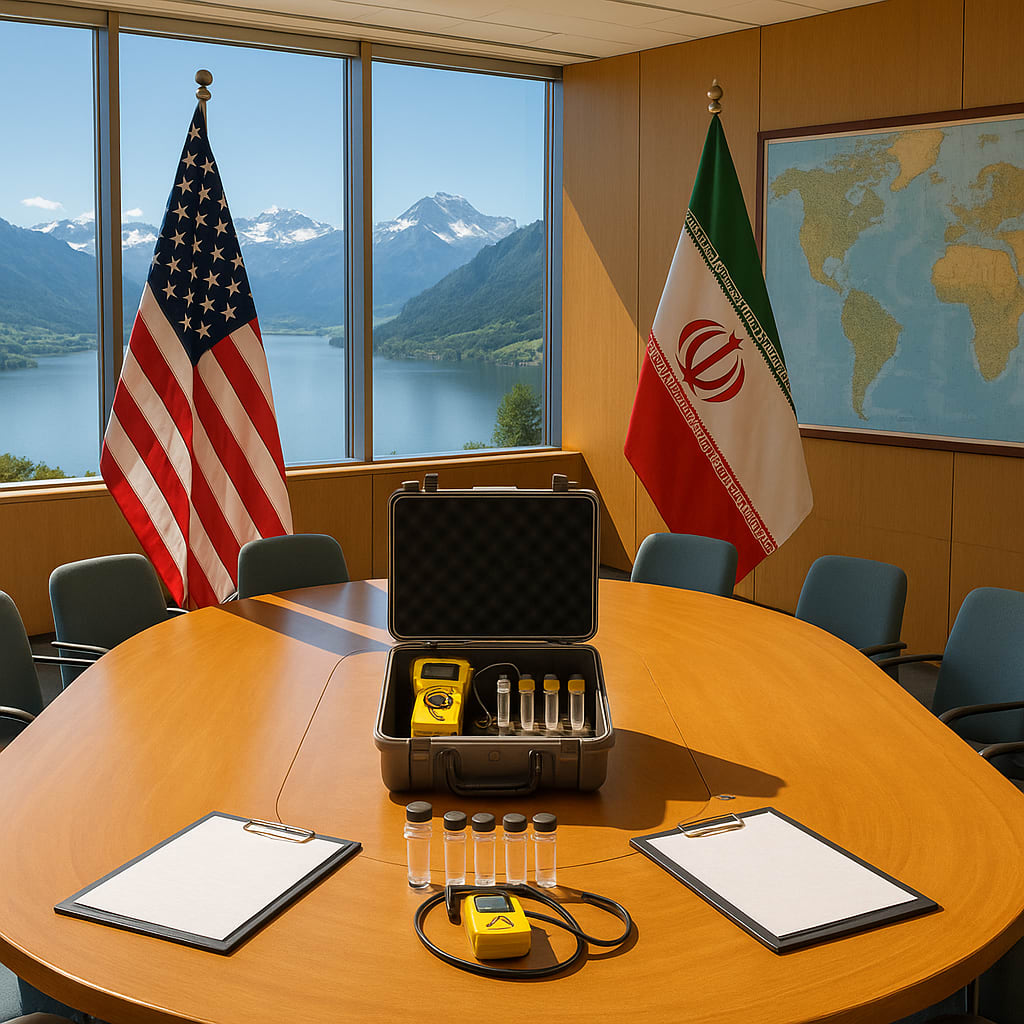
Talks opened at Switzerland’s Bürgenstock with mediator backing from Qatar and Pakistan under a memorandum that set a 60‑day window for further negotiations, including ceasefire issues and sanctions relief steps (Al Jazeera; Middle East Eye; Switzerland’s statement via MEE). US officials touted Iranian consent to “highest level” or “robust” IAEA inspections, and President Trump said inspectors would deploy “at the appropriate time,” while also warning contacts could be canceled absent agreement (South China Morning Post; Middle East Eye; TASS). Tehran rejected that characterization, stating there were no plans to allow IAEA access to facilities damaged in last year’s US‑Israeli attacks and that no meeting with IAEA chief Rafael Grossi had occurred (IRNA; Middle East Eye; Times of Israel). Grossi signaled inspections “will” occur—“sooner or later”—but scope and timing remain to be finalized; he cited a presidents‑signed memorandum referencing IAEA supervision (Deutsche Welle; Folha de S.Paulo; TASS; The Hindu). The US suspended some sanctions after “good progress,” while Secretary of State Marco Rubio slated Gulf consultations (Middle East Eye).
Why It Matters
Verification terms are the linchpin of any nuclear‑related understanding and, per multiple outlets, part of an interim architecture linked to ending the war and stabilizing the Lebanon front (The Hindu; Al Jazeera; Times of Israel). How—and whether—the IAEA gains access will signal whether the 60‑day framework can translate into enforceable constraints, or whether disputes over scope (notably bombed sites) become spoilers. The IAEA’s capacity to anchor supervision referenced in the memorandum (per Grossi) intersects with credibility of great‑power commitments and mediator leverage (TASS; Middle East Eye). Markets are already reacting to talk progress, suggesting energy‑security stakes (Deutsche Welle). For policymakers, communication discipline matters: public claims that outpace written understandings risk hardening positions (New York Times) and, as Iran alleges, can disrupt formats mid‑negotiation (Middle East Eye). Regional compacts and GCC buy‑in—now being courted by Washington—are a second order determinant of sustainability (Middle East Eye).
Diverging Narratives
- US/White House: Trump and senior officials say Iran has agreed to “highest level” or “robust” inspections and that IAEA deployments are a matter of timing; failure to accept inspectors could trigger new US decisions or canceled contacts (South China Morning Post; Fox News; Middle East Eye; TASS). Trump also suggested there is “no hurry” on sequencing (Corriere della Sera).
- Iran: The foreign ministry denies any plan to admit IAEA teams to bombed or damaged facilities, says no meeting with Grossi occurred, and asserts Tehran alone will decide how to use unfrozen assets; state media adds that the nuclear program was not discussed in the initial Swiss session (IRNA; Times of Israel; Middle East Eye). Iranian officials also telegraphed they will not use released funds to buy US grain (Clarín).
- IAEA: Grossi states inspections “are going to happen” following the interim accord but emphasizes that specifics—scope and modalities—remain under negotiation; he cites a memorandum explicitly assigning IAEA supervision of relevant nuclear activities (Deutsche Welle; Middle East Eye; Folha de S.Paulo; TASS).
- Process and optics: Mediators report progress and a “roadmap,” with partial US sanctions suspension and oil‑price easing (Al Jazeera; Middle East Eye; Deutsche Welle). Yet Iran says the talks format changed after a “threatening statement” by Trump; separate reporting notes tension over protocol and public positioning (Middle East Eye; RT). Analytical pieces diverge on messaging: the New York Times warns that claiming preferences as deals could undercut talks, while Fox News faults media for echoing Iranian state narratives (New York Times; Fox News).
What Happens Next
- Inspections scope and site list: Watch for an IAEA–Iran technical arrangement detailing access, including whether bombed/damaged sites are covered. Inclusion would align with US claims and Grossi’s supervision reference; exclusion would track Iran’s stated red line and sustain ambiguity (IRNA; TASS; Deutsche Welle).
- Sequencing and leverage: Further targeted sanctions relief or reimposition will hinge on visible inspection steps. The US has signaled “new decisions” if inspectors are refused; continued relief would likely reflect progress on access modalities (Middle East Eye; TASS).
- Negotiation format and mediator role: Signals from Qatar, Pakistan, and Switzerland on session structure—and any shifts linked to public statements—will indicate whether talks remain on a constructive technical track or revert to brinkmanship (Middle East Eye).
- Regional alignment: Outcomes from Rubio’s GCC consultations will show whether Gulf states are prepared to underwrite the framework politically and on maritime security, affecting durability of any nuclear‑verification and ceasefire package (Middle East Eye).
- Market response: Oil price movements following concrete inspection announcements or setbacks remain a real‑time indicator of perceived deal traction (Deutsche Welle).