
Oman tables Gulf-backed Hormuz management plan; Iran counters with greater control as U.S. rejects fees
Narrative Snapshot
Across outlets, there is broad agreement that Oman put a Gulf-backed proposal to Tehran to stabilize shipping through the Strait of Hormuz, featuring joint management and voluntary user fees, and that Iran has responded with a counter-proposal granting itself greater operational control. Reuters-based reports carried by the South China Morning Post, France24, Japan Times, and NHK align on the core elements of Muscat’s plan and Iran’s initial rejection of equalized lane management. Haaretz adds a key nuance: several Gulf states would support an arrangement in which Iran collects voluntary fees, even as Washington insists on the pre-war status quo of free passage and warns that mandatory fees would be illegal.
Iranian and regional outlets emphasize Tehran’s bid to reshape control on its terms. Middle East Eye reports that Iran floated a temporary routing that would channel one direction and part of the opposite flow through Iranian waters, and separately cites a senior Iranian official ruling out Oman's joint-management proposal. Tehran Times underscores Tehran’s red lines, rejecting a southern corridor and anchoring any future regime in Iran’s security requirements and the Islamabad Memorandum of Understanding. Al Jazeera’s synthesis stresses that Iran’s version would yield it “significantly more control” than Oman’s.
U.S. and allied reporting situate the maritime talks within ongoing hostilities. Times of Israel documents continued U.S. strikes on Iran before and after Trump’s short-lived pause, while CGTN highlights Trump’s threat of “very strong military action” if talks fail. A Fox News account of a failed Senate effort to rein in presidential war powers underscores the permissive domestic backdrop for continued operations. Politika’s framing of an Iranian ultimatum that the strait would remain closed if Oman does not accept Tehran’s terms points to hardening positions that complicate Omani mediation.
What Happened
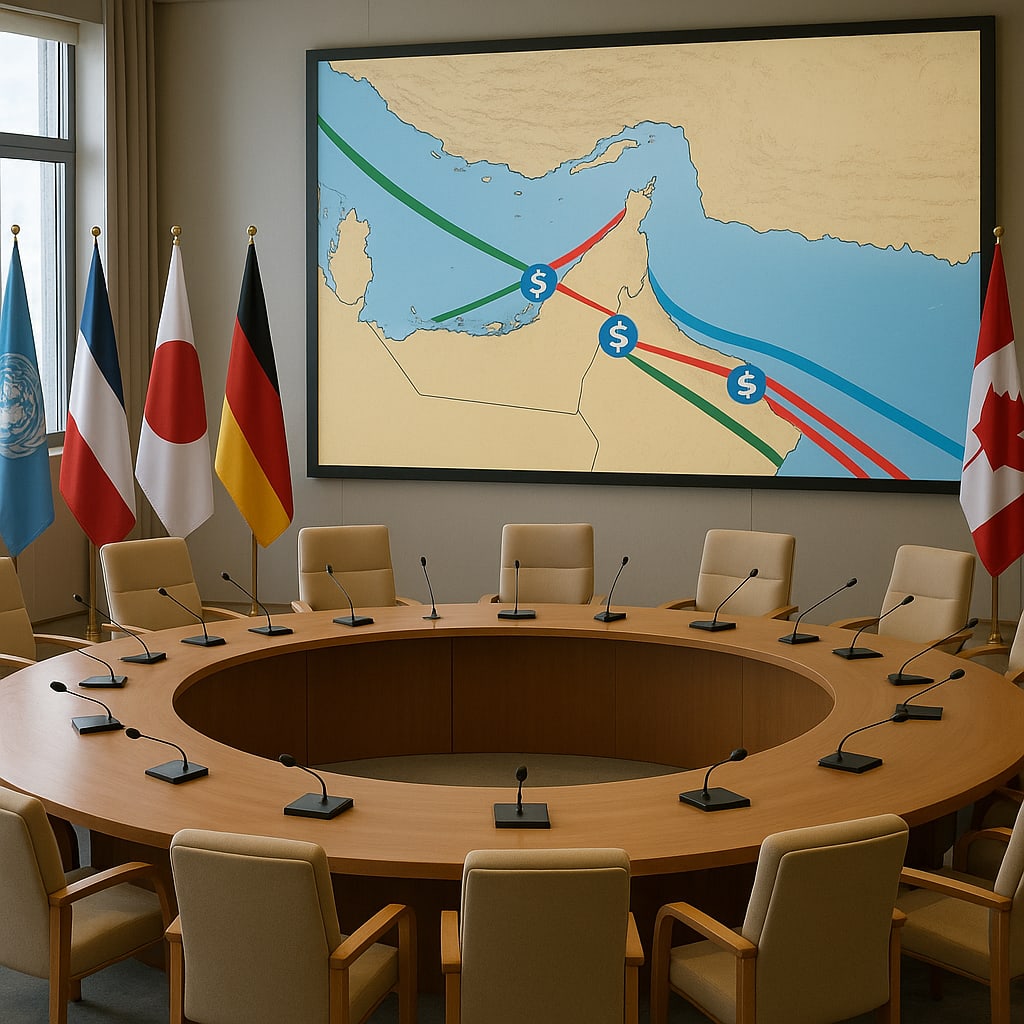
Oman presented Iran with a Gulf-backed proposal to jointly manage the Strait of Hormuz and institute voluntary fees for ship transits, according to Reuters-based accounts in the South China Morning Post and France24. Haaretz reports that Gulf states would accept Iran collecting such voluntary fees, while Washington seeks a return to free passage and argues mandatory charges would be illegal. Iran rejected equal division of traffic lanes and broader regional joint management, NHK and Middle East Eye report, and instead proposed a temporary scheme routing one direction and part of the opposite flow through Iranian waters. A senior Iranian official told Reuters the Omani plan has “no chance,” alleging U.S. and Saudi pressure on Muscat. Tehran Times quotes Deputy FM Kazem Gharibabadi rejecting a southern corridor and conditioning any framework on Iran’s security needs and the Islamabad MoU. U.S. officials reiterated opposition to any tolls (Middle East Eye, Japan Times) amid a volatile backdrop of paused and renewed U.S. strikes (CGTN; Times of Israel).
Why It Matters
The dispute tests competing visions of governance over a global chokepoint at a moment of war-disrupted trade. Washington’s insistence on restoring pre-war free navigation clashes with a Gulf-backed attempt to normalize voluntary charges and with Tehran’s push to codify greater operational control, including traffic routings through its waters (Haaretz; Middle East Eye; Japan Times). Acceptance of even “voluntary” fees collected by Iran would mark a notable departure from the prior practice of no payments, a point the United States links to legality (Haaretz) and that could establish a precedent for crisis-era monetization of strategic waterways. Tehran’s invocation of the Islamabad MoU and rejection of a southern corridor (Tehran Times) signal an effort to root any settlement in Iran-defined security baselines. For regional states leveraging Oman’s mediation (SCMP; France24), the episode will inform future mechanisms for de-escalation when U.S.-Iran confrontation—evident in continuing strikes and threats (Times of Israel; CGTN)—collides with commercial continuity.
Diverging Narratives
Core disagreements turn on control, legality, and sequencing. Iran frames the issue as a security imperative requiring traffic patterns that run through its waters and adherence to the Islamabad MoU, dismissing broader regional joint management and a southern corridor (Middle East Eye; Tehran Times). Oman’s plan, backed by Gulf states, centers on joint management and voluntary fees, with Haaretz noting Gulf openness to Iran collecting those fees. The United States rejects any fees during talks, calls Iran’s asks “unreasonable,” and asserts the strait is an international waterway that should remain free of Iranian control (Middle East Eye; Japan Times). Politika’s depiction of an Iranian ultimatum that the strait will remain closed absent Omani acceptance highlights the brinkmanship undermining Muscat’s brokerage.
There is also divergence in legal framing. Washington links mandatory charges to illegality and seeks a return to the pre-war norm of no payments (Haaretz), while Gulf backing for voluntary fees suggests a willingness to formalize a compromise mechanism to restart shipping (SCMP; France24). Iranian officials, for their part, cast Omani ideas as products of U.S. and Saudi pressure and insist their counter is temporary yet more controlling (Middle East Eye), leaving unresolved whether any middle-ground regime can satisfy both U.S. legal concerns and Iran’s security requirements.
What Happens Next
Three decision points will determine trajectory. First, whether Tehran entertains any variant of joint management: a senior Iranian official has ruled it out (Middle East Eye), and Gharibabadi has rejected a southern corridor (Tehran Times). Watch for any recalibration in Iranian statements on routing or references to the Islamabad MoU. Second, fee semantics versus practice: Gulf support for voluntary fees, including potential Iranian collection (Haaretz), collides with a U.S. position of no tolls at all (Middle East Eye; Japan Times). Signals to track include Omani draft language on “voluntary” mechanisms and any U.S. carve-outs during ceasefire talks. Third, the war-diplomacy balance: Trump paused strikes to allow talks but threatened strong action if they fail (CGTN), and U.S. strikes have continued intermittently (Times of Israel). Indicators will be operational changes in shipping lanes, announced temporary routing schemes through Iranian waters (Middle East Eye), and whether regional capitals publicly anchor the process to Oman’s proposal.