
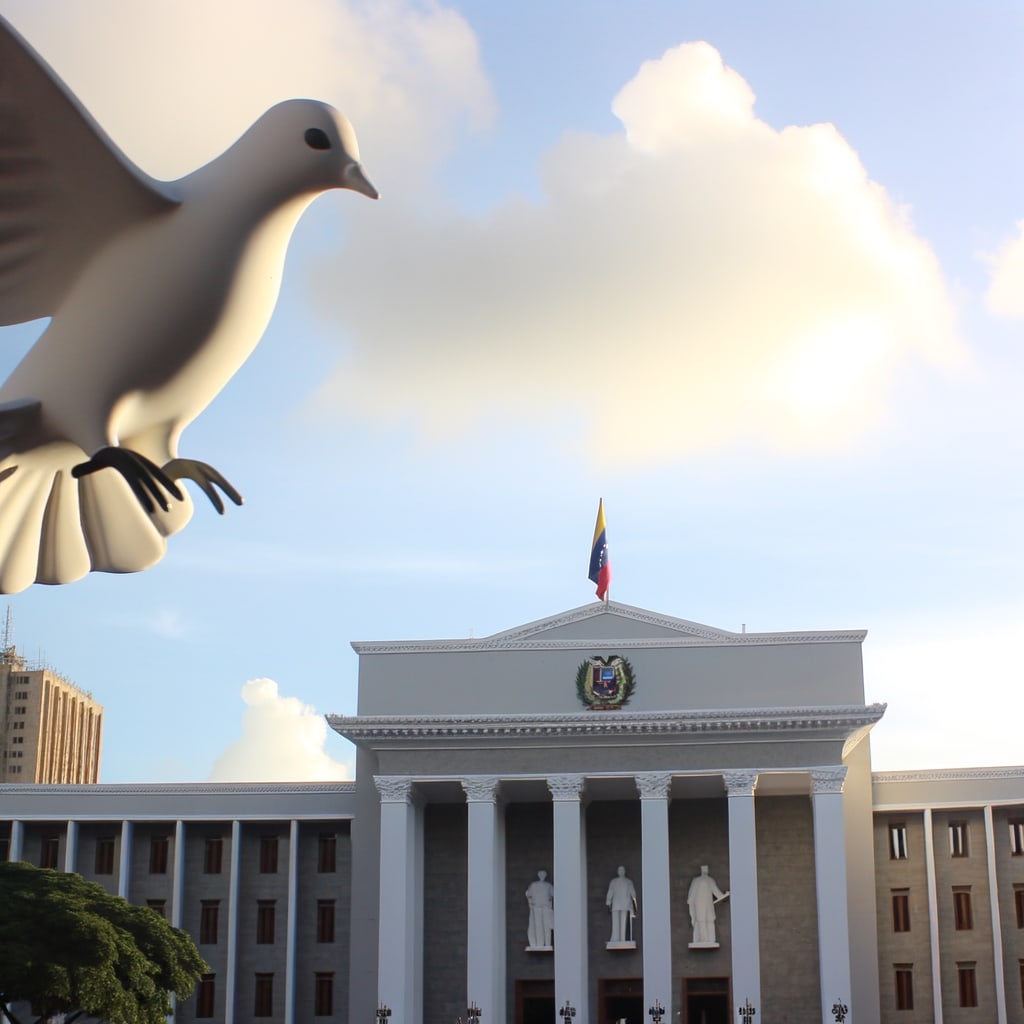
Venezuela's National Assembly Approves Historic Amnesty Bill in First Vote
In a significant move towards political reconciliation, Venezuela's National Assembly approved a bill granting amnesty for those accused of 'treason to the homeland', 'terrorism', and 'incitement to hate', typically charges levied against political prisoners. The proposed law, dubbed as the 'Law of Amnesty for Democratic Coexistence', was initiated by the interim president Delcy Rodríguez, and it could lead to the release of hundreds of political prisoners, including opposition leaders, journalists, and human rights activists.
Background/Context
The amnesty bill was proposed following the capture of former Venezuelan leader Nicolás Maduro by the U.S military. Interim President Delcy Rodríguez has been steering the nation towards reconciliation since assuming power. The amnesty bill is seen as a key step in this process.
Key Developments
The bill, which has been approved in its first vote, excludes gross human rights violations under the regimes of both Maduro and his predecessor, Hugo Chavez. However, it lifts the political disqualifications, potentially allowing several opposition members, including Nobel Peace laureate Maria Corina Machado, to run for office.
The proposed law also cancels Interpol alerts related to the charges covered by it. The text of the bill recognizes the importance of not imposing revenge, retaliation, or hatred, but rather opening a path towards reconciliation. The National Assembly, controlled by the ruling party, will discuss the bill again on Tuesday with a view to its final approval.
Reactions and Implications
Rodriguez, in a pre-taped televised event, told a group of justices, magistrates, ministers, military brass, and other government leaders that the Law of Amnesty for Democratic Coexistence
serves to heal the wounds left by political confrontation fueled by violence and extremism. She added, May it serve to redirect justice in our country, and may it serve to redirect coexistence among Venezuelans.
The amnesty bill has been hailed as a historic milestone in the post-Maduro transition. It is expected to have significant implications for the political landscape of Venezuela, paving the way for a more inclusive political environment.
Current Status
The bill marks a significant turning point in Venezuela's political history, and its final approval could lead to the mass release of political prisoners. However, it remains to be seen how effectively it will be implemented and whether it will truly contribute towards healing the nation's political and social wounds. The world watches as Venezuela embarks on this path towards democratic coexistence and reconciliation.