
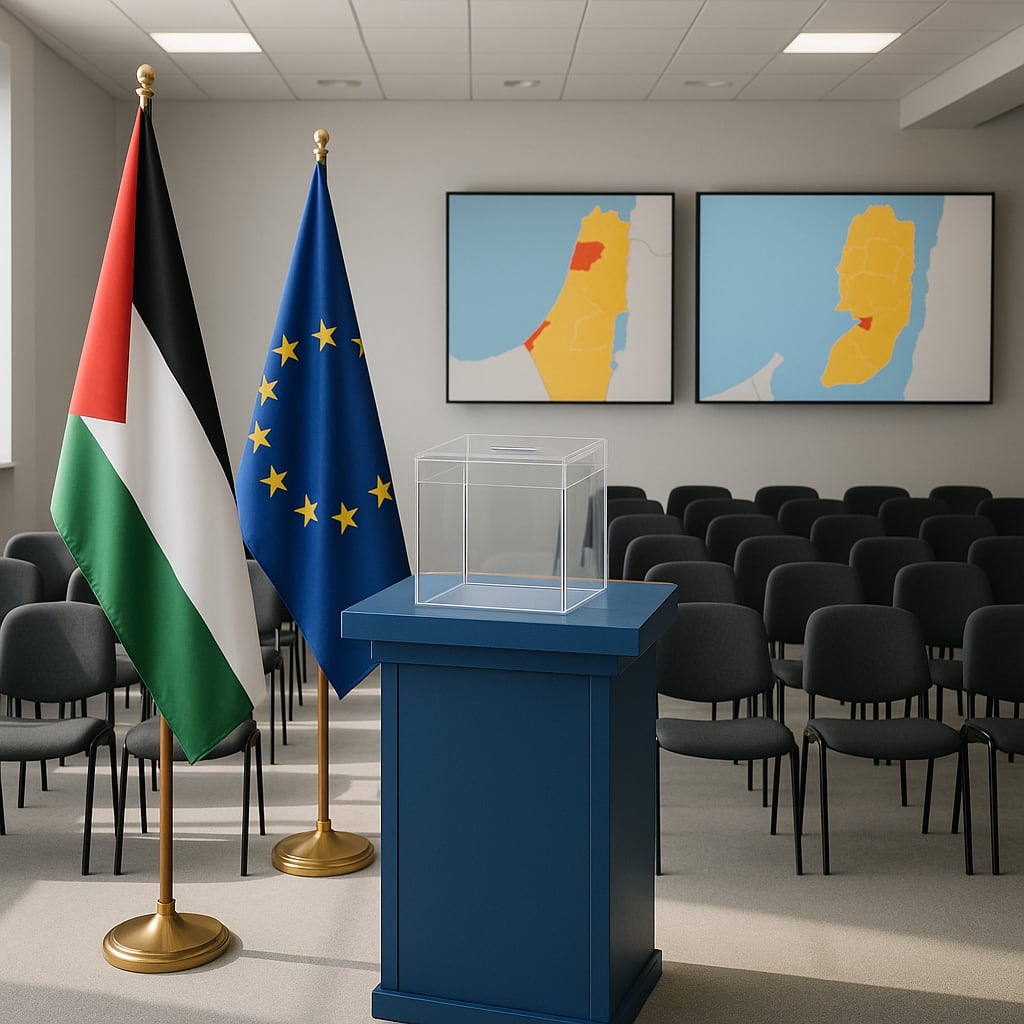
Abbas sets Palestinian legislative elections for November 28, first since 2006
Narrative Snapshot
- Broad convergence on the core facts: a presidential decree by Mahmoud Abbas sets legislative elections for November 28, the first in roughly two decades (ANSA; Clarin; Al Jazeera; Deutsche Welle; Times of Israel; TASS).
- Outlets diverge on stakes and feasibility. Deutsche Welle and the New York Times center doubts about capacity and follow-through, citing the 2021 cancellation. The Times of Israel foregrounds European reform pressure and domestic corruption criticism, while TASS highlights procedural sequencing toward a later presidential vote.
- Politika stresses intended territorial scope—Gaza, the West Bank, and East Jerusalem—an emphasis others do not develop, pointing to unresolved operational details across jurisdictions.
- The coverage collectively situates the announcement at the intersection of institutional renewal, donor expectations, and contested governance—what is at stake is the Palestinian Authority’s ability to translate a decree into administrable elections with credible participation.
What Happened
On July 9, Palestinian Authority President Mahmoud Abbas issued a presidential decree scheduling legislative elections for November 28, 2026, the first parliamentary vote since 2006 (ANSA; Clarin; Al Jazeera; Times of Israel; Deutsche Welle). Politika reports the decree envisions voting in Gaza, the West Bank, and East Jerusalem. TASS adds that a presidential election is planned for the first quarter of next year, with the precise date to be set later in accordance with Palestinian law. The New York Times notes that Abbas announced and then canceled a similar election in 2021. Multiple outlets emphasize the long hiatus since the last legislative vote, underscoring the significance of formally reactivating the electoral calendar after nearly two decades (Times of Israel; Deutsche Welle; Al Jazeera).
Why It Matters
The decree reopens a dormant electoral pathway central to the Palestinian Authority’s institutional legitimacy and succession planning. By sequencing a parliamentary vote now and indicating a presidential ballot next year (TASS), the move could reset strained governance arrangements after years without national elections (DW; Al Jazeera). It also intersects with external expectations: European partners have tied engagement to reform and accountability, a backdrop explicitly highlighted by the Times of Israel. Yet Deutsche Welle’s question of whether the PA has the “means and legitimacy” to conduct a vote—and the New York Times’ reminder of the 2021 reversal—signal enduring capacity and credibility gaps that international donors and diplomatic stakeholders must factor into planning. Territorial inclusion—stated to cover Gaza, the West Bank, and East Jerusalem (Politika)—will test claims of representativeness and could influence how multilateral and bilateral actors calibrate support and conditionality.
Diverging Narratives
Coverage clusters around distinct frames. A procedural-institutional frame (TASS) treats the decree as the first step in a sequenced return to national balloting, with a presidential vote to follow under legal provisions. A feasibility-legitimacy frame (Deutsche Welle; New York Times) questions whether the PA can organize credible elections at all, with the 2021 cancellation presented as precedent for slippage. A pressure-and-reform frame (Times of Israel) situates the announcement amid European demands for change and intensifying domestic criticism over corruption, implying political incentives behind the timing. Politika’s emphasis on including Gaza, the West Bank, and East Jerusalem surfaces territorial scope as a salient claim, while other outlets neither reiterate nor detail how voting would occur across these areas. Wire-style reports (ANSA; Clarin) and Al Jazeera’s straightforward account establish the baseline facts without extending into contested operational or political terrain, underscoring that the principal tensions lie in implementation, legitimacy, and external conditionality.
What Happens Next
- Follow-through on implementation: The decree must be matched by subsequent legal and administrative steps. If these materialize on schedule, it would signal momentum toward November 28; if they stall, skepticism highlighted by Deutsche Welle and the New York Times—anchored in the 2021 cancellation—will intensify.
- Territorial scope in practice: Politika reports plans to include Gaza, the West Bank, and East Jerusalem. Clear official guidance on how voting in each area will be conducted would indicate intent to broaden participation; absent clarity, questions about representativeness and feasibility will persist (DW).
- Sequencing the presidential vote: TASS notes a presidential election is anticipated in the first quarter of next year, with the date to be set per law. Timely scheduling would reinforce an institutional reset; delay would reinforce concerns about durability (NYT; DW).
- External signaling: The Times of Israel links the announcement to European reform demands. Watch donor statements and engagement to gauge whether reform benchmarks are being tied to electoral progress.